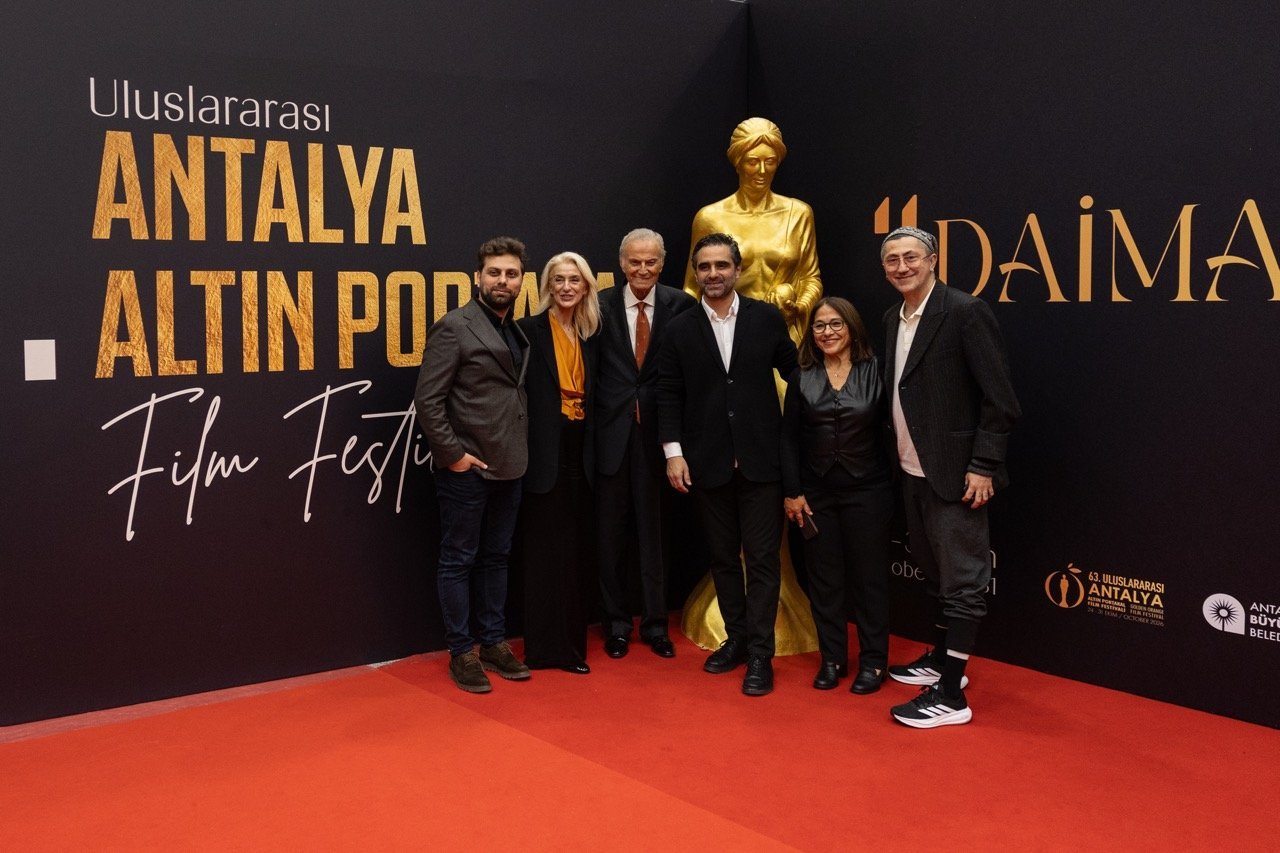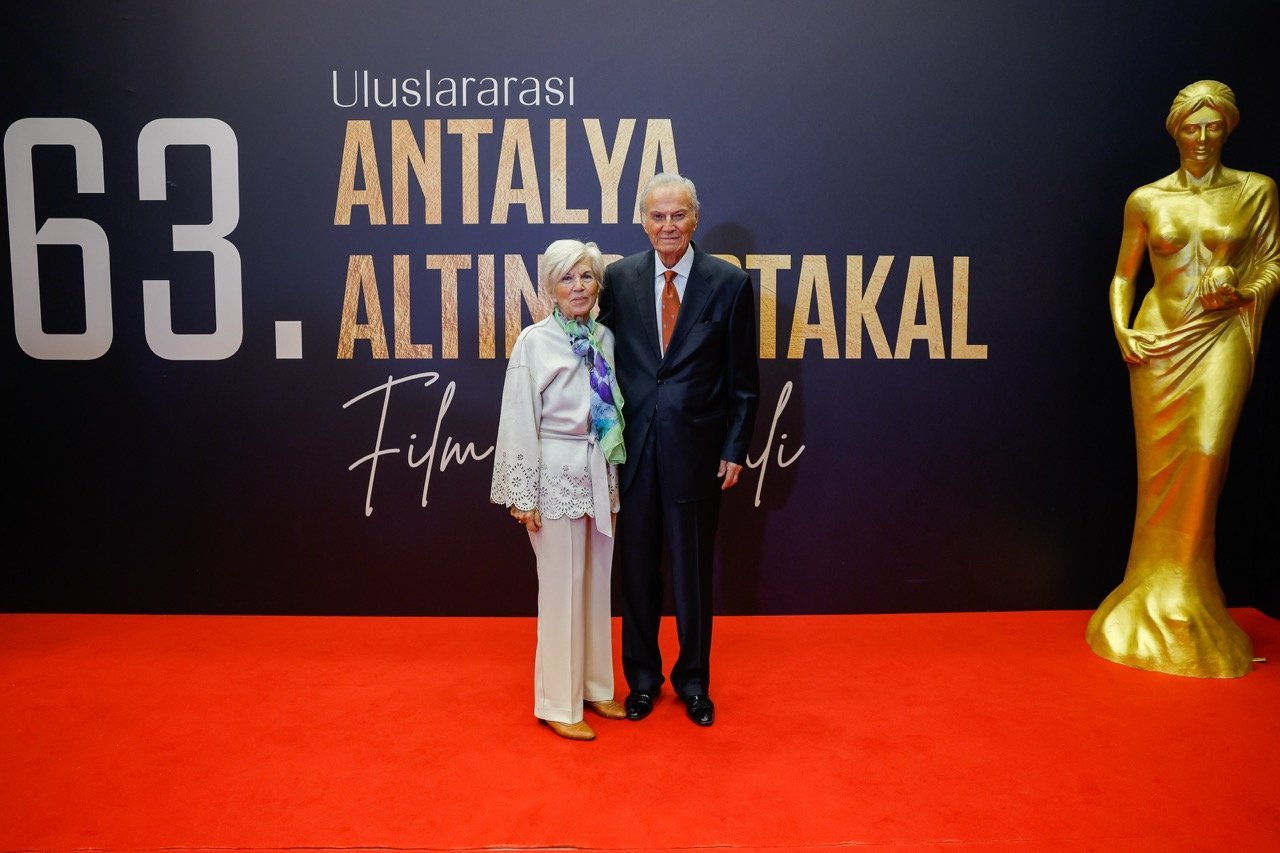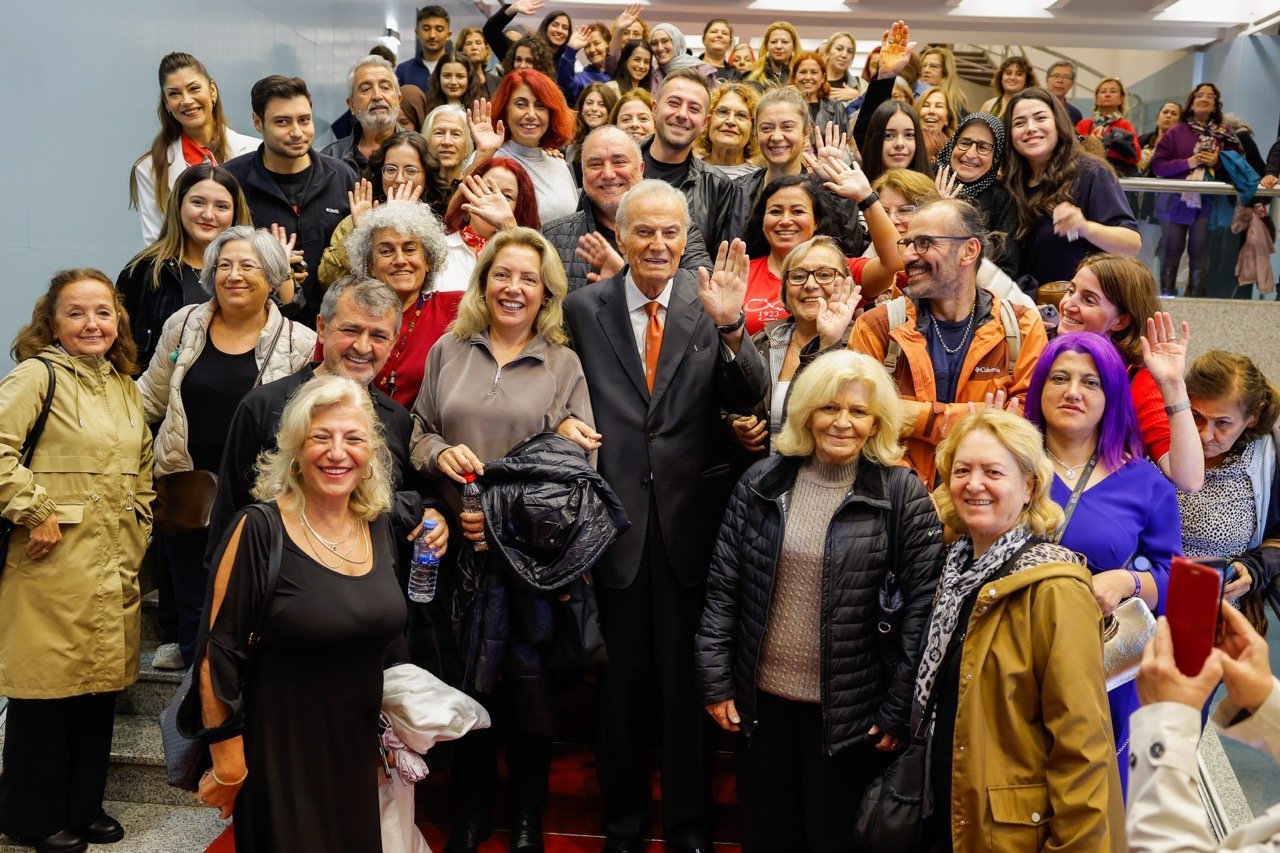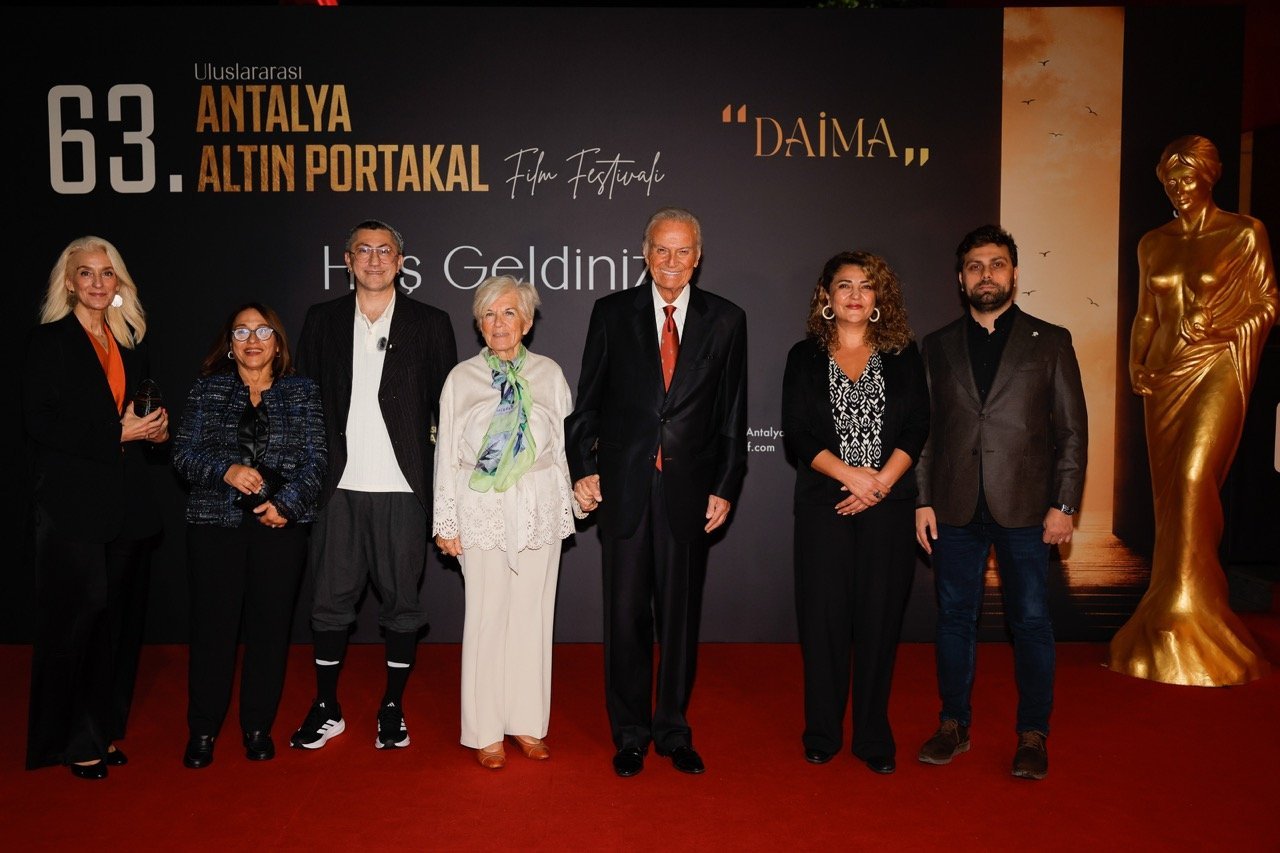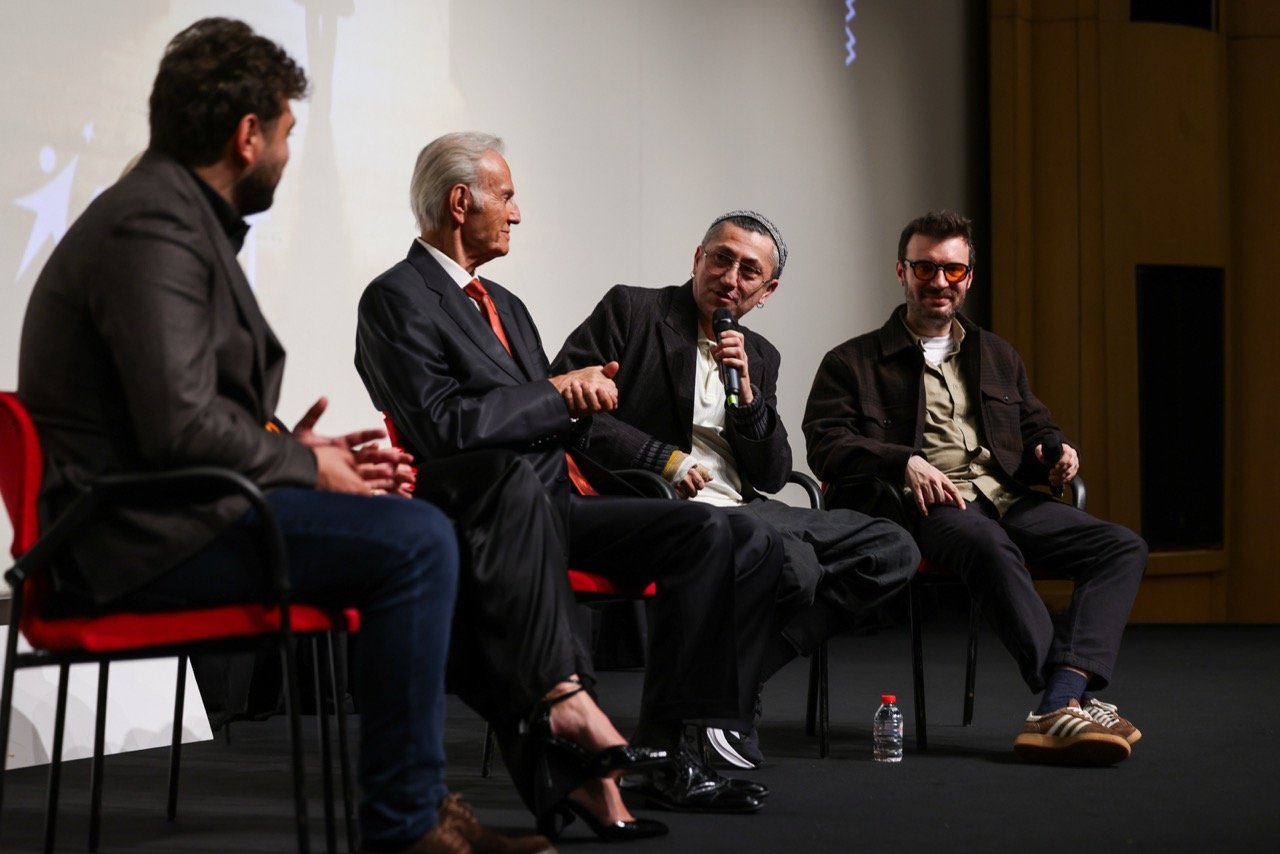
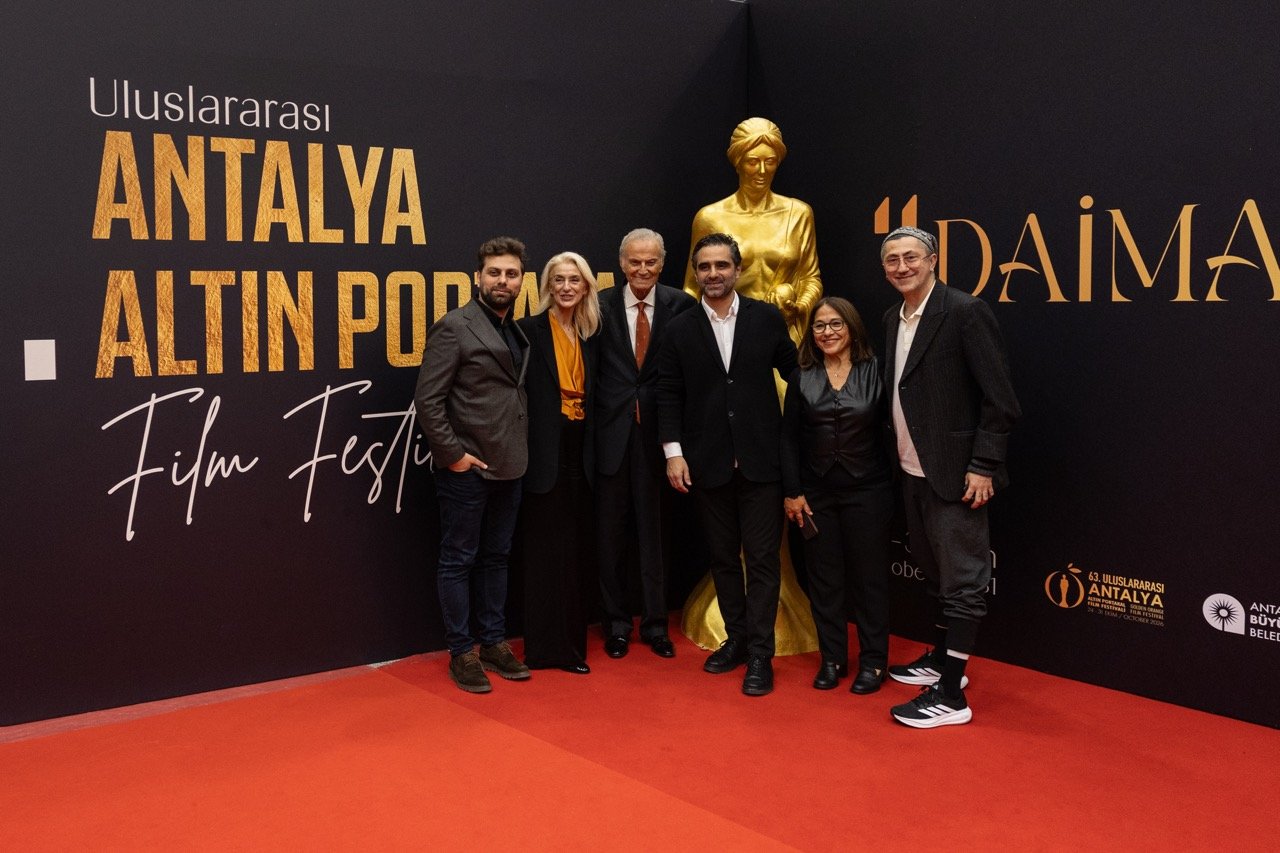
One of the legendary leading men of Turkish cinema, Ediz Hun, reunited with audiences at the Golden Orange Film Festival after many years with Son Oyun (The Last Game), a documentary made in his honour.
Produced by Filiz Emre and Yunus Emre Tolan and directed by Tunç Topçuoğlu, the gala screening of Son Oyun, held last night at the Aspendos Hall of the Atatürk Cultural Center (AKM), was the setting for historic moments.
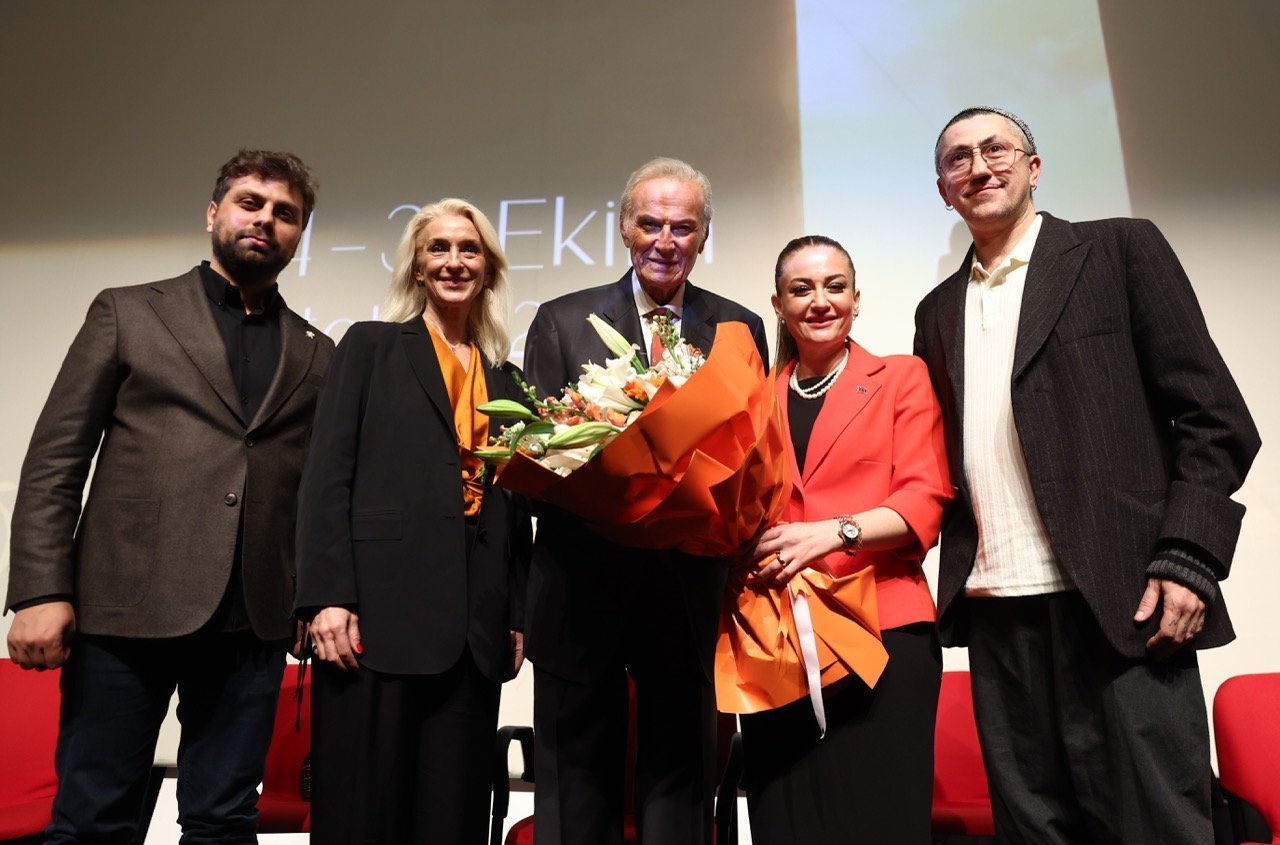
As the towering figure of Turkish cinema, Ediz Hun, was welcomed with the audience’s enthusiastic affection, he accepted the flowers presented to him by Büşra Özdemir, Deputy Mayor of Antalya Metropolitan Municipality, with the following words: “I dedicate these flowers to all the ladies here with us. Happy Republic Day! We remember our beloved Father, the great Atatürk, with profound gratitude, appreciation and respect. We remember with mercy that beautiful soul who illuminated the world.”
Beginning her speech with the words, “We are together on the 103rd anniversary of our Republic. On this occasion, I remember our beloved Father and all the soldiers of the War of Independence with respect, mercy, longing and gratitude,” Özdemir introduced the master artist as follows:
“Ediz Hun is a name synonymous with the Golden Orange. The awards he has received here over the years, the affection shown to him by the people of Antalya during the festival’s parade, and the bond he has established with the people of this city have made him one of the most important figures in the history of our Golden Orange. It is particularly meaningful for us to have him with us today and to host the first screening of this documentary in Antalya.
Dear Ediz Hun, through his art, gentlemanly character, grace and contributions to Turkish cinema, he has earned a special place in the hearts of generations. We are so glad you are here and that you are with us.”
Ediz Hun then addressed the audience with the following words:
“First of all, thank you for honouring me with your presence and for taking the time to come here. You have truly made me feel special, and I am very happy. My eyes filled with tears; I was deeply moved. This is my first time watching it. I had seen the teaser, but today was the first time I watched the fully edited version together with you. I would particularly like to congratulate the director, who has achieved great success; he is a young friend of ours with a promising future. I am someone who has appeared in 134 films, and I have been in this profession for more than sixty years. I am still willing to work as long as my health permits, should a good role come along. There have been many significant moments in my life, but tonight is also very special. I will never forget it.”
Speaking about his initial concern, when the idea of making the documentary first came up, that audiences might grow tired of seeing Ediz Hun throughout the film, the master actor went on to deliver a speech that was almost a lesson in the history of Turkish cinema:
“There is something that saddens me. I teach courses on world cinema and Turkish cinema at Cyprus American University in Kyrenia. Turkish cinema dates back to 1914. It began on November 14, with Fuat Uzkınay, a reserve officer, filming the demolition of the Ayastefanos Monument. After 1922, we see the era of Muhsin Ertuğrul; many very important figures came and went. Among them was Cahide Sonku, who portrayed Aysel in Bataklı Damın Kızı Aysel and was a tremendous star. Then came Suavi Tedü and Rahmi Öztoprak, the first leading man to play a leading role in İstanbul Sokakları. Then Muzaffer Tema, Nedret Güvenç, Mahir Özerdem, Kenan Artun, Turan Seyfioğlu, Sezer Sezin, and later Göksel Arsoy, the blue-eyed golden boy. Göksel ushered in the golden age of Turkish cinema; he was the one who drew female audiences into cinemas. Of course, there was Ayhan, and Orhan Günşiray, too… But today, very few of us remain. You have just watched İzzet, who is now in his nineties; İzzet and I entered the world of cinema together through Ses Magazine. Yeşilçam is extremely important. The producers of that era worked tirelessly to reach an audience of seventy million people across Türkiye. Some might say I am exaggerating, but just as Italian cinema had actors such as Marcello Mastroianni, Sophia Loren and Gina Lollobrigida, and directors such as Visconti and Fellini, we too had our own directors, including Lütfi Akad, Metin Erksan, Orhan Aksoy, Halit Refiğ and Osman Fahir Seden. We had Türkan Şoray, whom you have seen. There were Hülya Koçyiğit, Filiz Akın and Cüneyt; later, Kadir and Tarık joined them. These names are extremely important to Turkish cinema, and Turkish cinema is a significant cinema in its own right. Perhaps the younger generation will never fully understand this. I consider myself fortunate that Tolan Film, Ms. Filiz and Mr. Yunus gave the green light to such an initiative.”
Hun also spoke about the documentary’s filming locations, explaining that scenes were shot on the island where he currently lives, in Istanbul and in Norway, where the University of Oslo, at which he studied, is located. On this occasion, he shared a memory, visibly moved:
“I studied at the University of Oslo. We went there for the filming, but unfortunately, we did not have the opportunity to meet my professors; they were wonderful people. My professor used to tell me, ‘Don't get nervous, Ediz. If you cannot write in Norwegian, write in English or German. Write to the embassy in Oslo. If you cannot write in any of those languages, write in Turkish. I will go to the embassy and have it translated, and I will find out your grades.’ Just look at the quality, kindness and elegance of that man!”
“Later, while I was teaching ecology at Marmara University, Bulgaria was under the rule of a despot named Todor Zhivkov. He pursued an assimilation policy and forced Muslim Turkish children there to adopt Bulgarian names. The children could no longer endure it and came to Türkiye. The Ministry of National Education gave them the opportunity to enter university without taking an entrance examination. I had thirty students from Bulgaria sitting in front of me, and their Turkish was very limited. So I told them, ‘Don't worry at all; write in Bulgarian, and I will go to the Bulgarian Embassy and have it translated.’”
When asked whether he had ever considered turning the cactus collection featured in the documentary into a museum, Ediz Hun explained that such a museum had been established at the request and through the initiative of Ekrem İmamoğlu, and went on to recount the story:
“As you saw in the film, Ekrem İmamoğlu is a wonderful person whom I love and respect very much. He came to visit the island and kindly honoured us by accepting our invitation to our home. He said, ‘Mr. Ediz, I hear you have a cactus collection. May I see it?’ He is a very energetic person, very warm-hearted, always sweating, very romantic, emotional and elegant; simply a wonderful person. We went up to the terrace, and he said, ‘These are magnificent plants. Our people should be able to see them, too. If I were to build a glass enclosure, would you be willing to donate some of them?’
That is how the project began, on June 19, 2028. There was a park next to Bostancı Pier, and a glass enclosure was built there. I donated three truckloads of cacti from the island. A forestry engineer was appointed as director, along with a very distinguished gardener. This is a first for Türkiye! I particularly want to emphasise this: the person behind this initiative is Ekrem İmamoğlu. The most important thing in life is loyalty, dear friends; we must remain loyal. We must never forget the kindness shown to us.”
Director Tunç Topçuoğlu, meanwhile, remarked, “I have never seen anyone live a life quite like my professor Ediz’s! The cactus house opened while we were in the editing process. Apparently, he is now making a television programme, too; his is a never-ending story!” Noting that the film features both archival footage and AI-generated images, Topçuoğlu added, “There are scenes from the 1950s and 1960s, as well as AI-generated scenes. It is actually a hybrid documentary. That is why we are so excited.”