The 63rd International Antalya Golden Orange Film Festival brought the world’s wounded regions into the spotlight with its special section, “Roots, Light and Camera.”
This year, guided by a sense of responsibility inherent in the art of cinema, the 63rd International Antalya Golden Orange Film Festival created a special section titled “Roots, Light and Camera,” expressing its solidarity with filmmakers telling stories from regions around the world in urgent need of solutions.
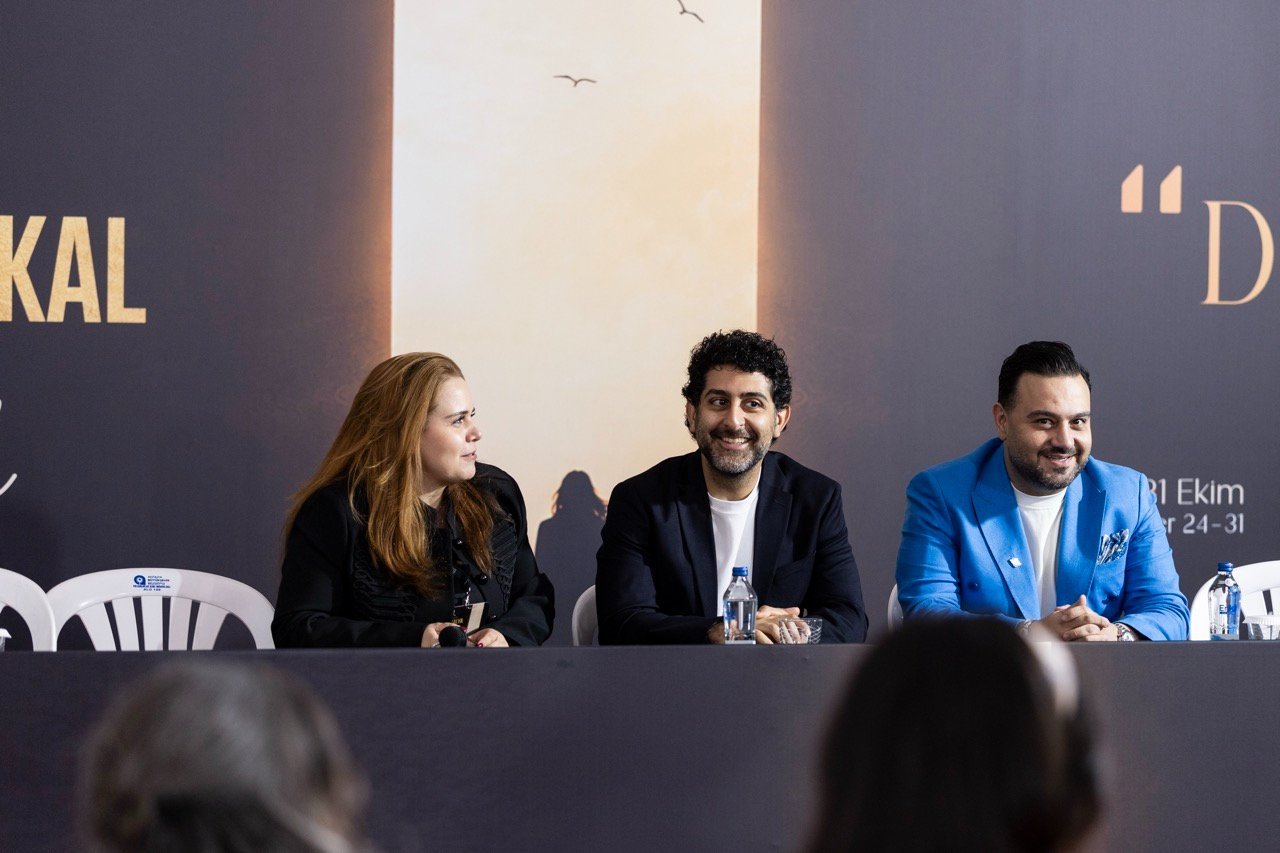
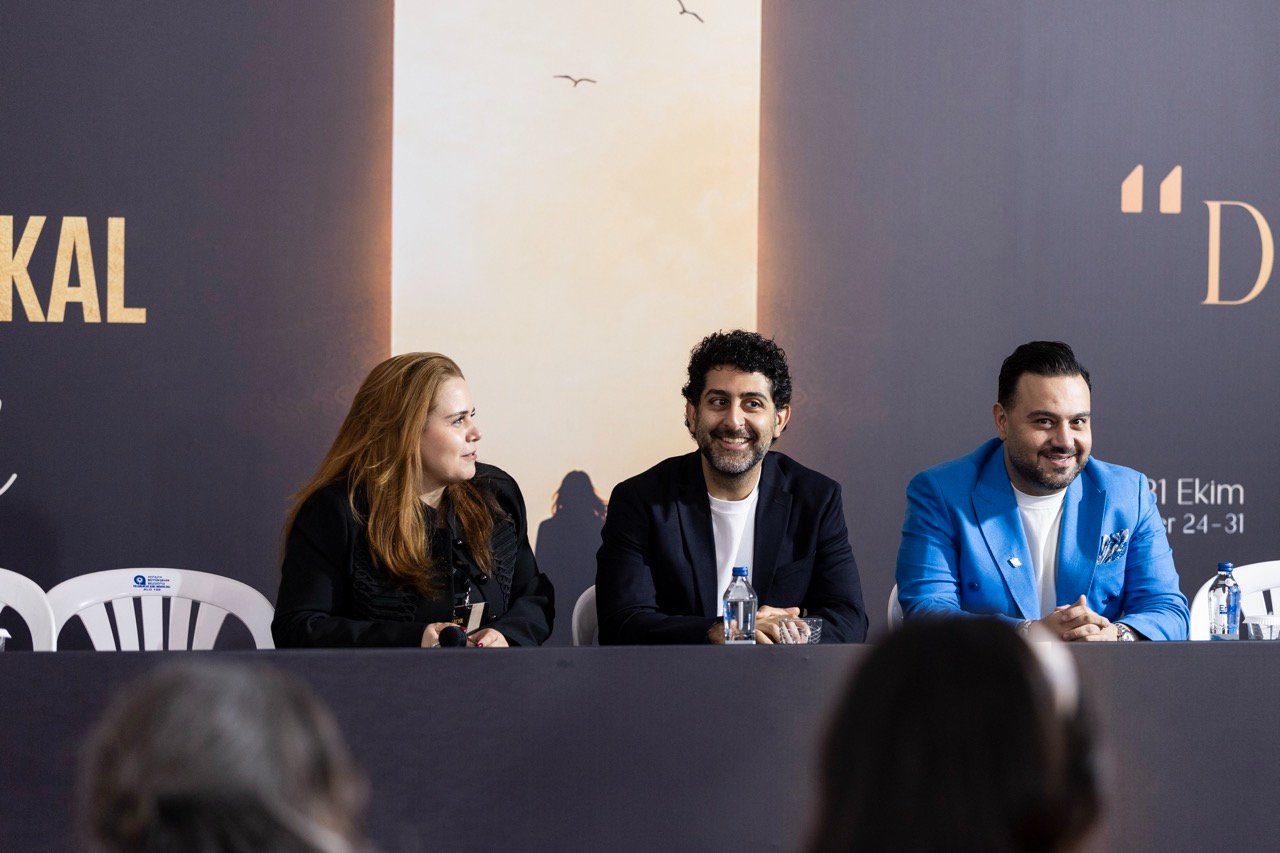
The first screenings in the section, featuring works by filmmakers from Iran, Lebanon, Ukraine and Palestine, took place today at the Perge Hall of the Atatürk Cultural Center (AKM). Following the screenings, the film teams answered questions from the audience.
Yasmin El-Masri: “We knew we were making history as we filmed”
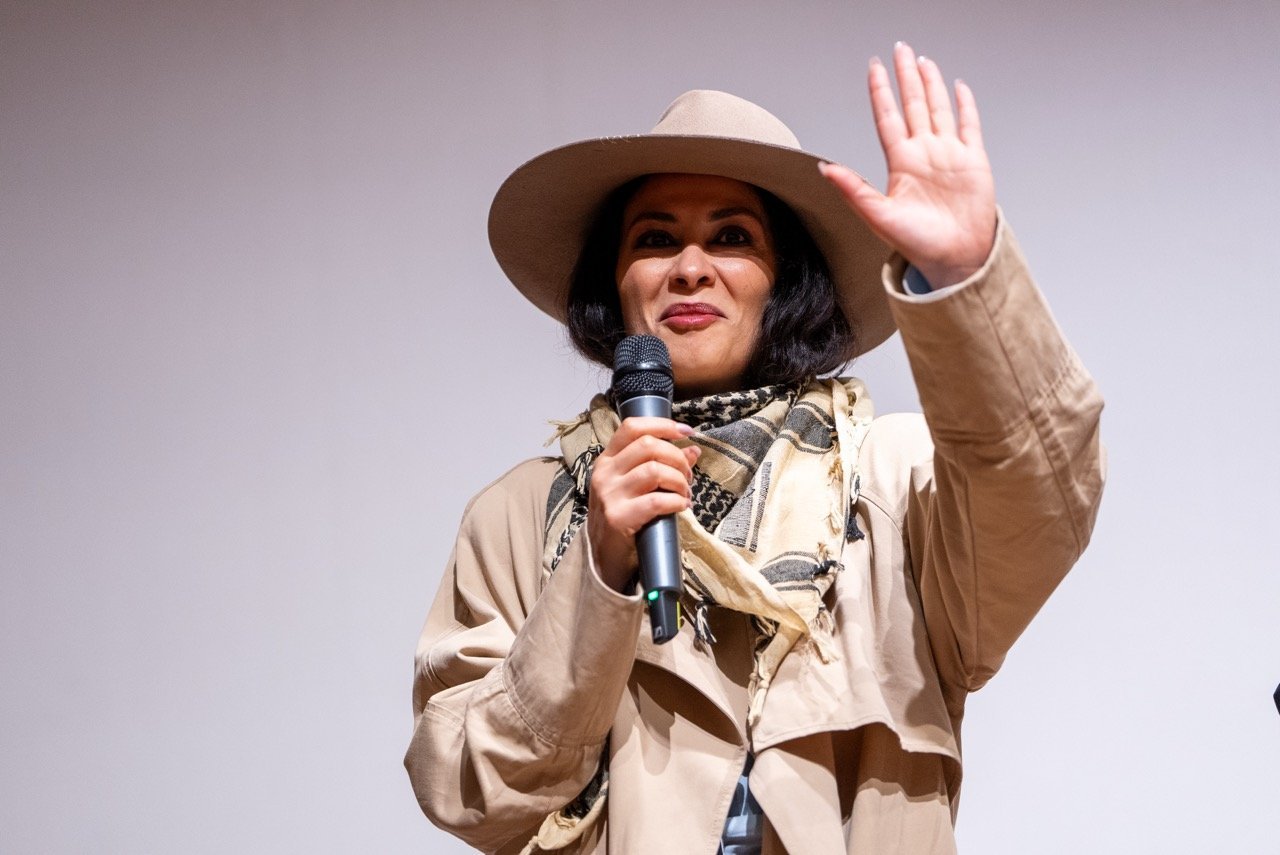
Following the screening of “Palestine 36,” directed by Annemarie Jacir and featuring Yasmin El-Masri—who is also a member of the festival’s International Jury—Yasmin El-Masri shared her feelings as follows:
“To be honest, I am amazed by the journey this film has taken and the life it has found. We premiered it a year ago, last September. To see a film emerging from Palestine reach this point, without the backing of a film studio or a big-budget marketing team, and driven only by our belief that we were doing the right thing, is incredible.
The film was originally planned to be shot in Palestine, but just as we were about to begin filming, Gaza began bleeding before the eyes of the whole world. We had no plan and were forced to wait. We waited for about six months, then moved the entire production to Jordan. We went to work every day because we knew it was the only thing we could do. If you are not in Gaza, if you are not within its borders as a Palestinian fighting to survive, you have to go to work and take Palestine with you. That is exactly what we did. The actors, the sound team, the lighting team—everyone involved in this film knew that we were making history. We were explaining the ‘why’ to the world: why you are watching a genocide on your phones today, why you are seeing the lifeless bodies of children and mothers clinging to their children’s bodies. The world simply watches, enables it, and negotiates trade agreements. This inhumane situation drives people to seek a solution, understanding, or knowledge that can help them understand. In my view, this film is one of the things that can help you understand.
“The process of dehumanisation began in 1936, during the British Mandate over Palestinian land and Palestinian bodies. What is happening today is only an echo and an extension of that. Presenting this film to you means far more to me than an ordinary screening. What I really want to know is what you feel and what you think, because this is my life. I travel around the world talking about Palestine 36 and explaining what it feels like to be Palestinian at a time like this. Your being here and wanting to watch this film means the world to me. I am deeply grateful and honoured to be here with you. Thank you.”
A tribute to women: Ne Ses Ne Seda
Making its world premiere at the Golden Orange, “Ne Ses Ne Seda” is inspired by a true story. Set in Tehran under heavy bombardment during the June 2025 conflict between Iran and Israel, known as the Twelve-Day War, the film follows the real-life story of a grandchild trying to care for her grandmother, who has Alzheimer’s disease. Blending fiction and reality, the film was discussed by its director, Yazdan Tabrizi, who said:
“A large part of the story was real. We decided together with the film crew where the documentary would end and the fiction would begin, and where and how the two would blend. For that reason, the blurring of fiction and reality continued in my own life while we were making the film. This film is a tribute to women.”
“What keeps us going is this immense love for cinema”
“Sunshine Express,” directed by Amirali Navaei, also met audiences at AKM’s Perge Hall. Following the screening, the director answered questions.
Navaei first said that he wanted to dedicate his film to seven people: “I want to dedicate this film to the profound exhaustion and despair experienced by the people of Iran, and to the seven people who died by suicide while working in Iranian cinema. Life in Iran is so suffocating right now that I have personally lost three very close friends. Like the man who dies by suicide at the end of the film, they also took their own lives. That is why I dedicate this film to those beautiful people who worked in Iran’s film industry and ended their lives.”
The director explained that when he began making the film two years ago, before the war, people asked him, “Why do you think this is a war? Why would there be a war in the film?” He said, “But that was exactly what I felt, and strangely enough, a major war broke out six months after I finished the film.” He added that, with the outbreak of war, the warehouse they had rented as a studio was also razed, amid concerns about being monitored by the Iranian authorities.
Navaei noted that the film, which competed for the top prize at the Rotterdam Film Festival and has screened at numerous festivals around the world, was made entirely independently and with their own resources. “This film was made entirely with my friends’ money. One day, at a film screening, they all came up to me and said, ‘We were together last night and decided to invest in your next project. Do you have a new project?’ I said, ‘Yes.’ So the entire budget came from my friends’ personal funds,” he said.
In response to an audience question about how Iranian cinema manages to produce powerful works despite financial hardship and political restrictions, the director began by noting that “Iran was the fourth country in the world to encounter cinema.” He continued:
“Iran has a very deep-rooted and strong cinematic tradition. One of the first New Wave movements in Asian cinema also emerged in Iran. We owe a great deal to Abbas Kiarostami and Amir Naderi. As a new generation of filmmakers, we have decided to make our films truly independently and accept no funding or financial support from official institutions. Because if you accept that money, you have to make propaganda films. They can put a blank cheque in front of you and say, ‘Write whatever amount you want and we’ll sign it.’ That happened to me, too. But we chose not to accept it. The only force that allows you to keep going is your passion for cinema. I don’t know what would remain of us without that passion. What keeps us going is this immense love of creating images; our commitment to the visual world is a pure passion.”
“There is no alternative to independence if we want to make the cinema we believe in”
Following the screening of “Living Twice, Dying Third,” members of the film team Umran Hashemi and Alireza Heydari Rad appeared before the audience and read a written message from director Karim Lakzadeh. In his message, the director shared the following about the film:
“We made this film independently in Iran. It was shot over the course of a year, across four different periods. Filmmaking in Iran is a very collective process; we made this film together with our friends. We believe this approach is relatively rare not only in Iran but in many parts of the world. However, if we want to make our own films and bring the kind of cinema we love to the screen, we have few alternatives to working this way. Our crew consists of just ten people. During filming, everyone takes on several different responsibilities. When needed, someone acts in front of the camera; behind it, they help with production, technical work, set design, lighting and even cooking for the crew.
“The issue of the headscarf is another example. We cannot obtain permission from the authorities in Iran to make this kind of film, because they would not allow us to make a film in which women appear without headscarves. But that is not how we live, and it does not reflect the reality of our own lives or of the people whose lives unfold in the world of our stories. So we decided to make the film independently, in secret and without headscarves. This was our way of remaining faithful to the reality we wanted to portray.
“After each day of filming, we sat together and watched the footage we had shot that day. We discussed everything: how the film was taking shape, how the performances were working and which direction the story should take. For example, the character played by Alireza emerged during this process. At the time, Alireza was helping with cinematography.”
“The Land of Angels” tells the story of Gaza through the eyes of children. The film’s producer, Elaheh Nobakht, said they had deliberately chosen both to tell events from the children’s perspective and to make the main character a teacher:
“We wanted to approach the subject not from a military or political framework, but directly through the world of children and from an entirely human perspective. We deliberately made the main character a teacher, too, because a teacher is the one who can instil resilience, strength and positive thinking in children. A teacher was the right figure to pass this struggle and resilience on to future generations.”
Nobakht emphasised the importance of reaching Western audiences, noting that the film would soon screen in Barcelona and that plans were being made for it to become Iran’s Oscar submission.
Alongside feature films, the “Roots, Light and Camera” section also included short-film screenings. The post-screening discussion was attended by Ana Maria Pirvan, producer of “Bir Gün Çocuk”; Ali Andarz, director of “Haniye”; and Vahid Mezrae, director of “Nasaz.”
Producer Ana Maria Pirvan said that “Bir Gün Çocuk” had originally been made as preparation for a feature film, but went on to win the Best Short Film award at the Berlinale. Ali Andarz, director of “Haniye,” said he wanted to tell a universal story rather than one confined to Iran. To this end, he made a film about a child who takes on a major undertaking alone, demonstrating courage and the impact of that courage on the child’s family. Asked why the lead character in “Nasaz” expresses himself only through whistling, director Vahid Mezrae replied: “When I first wrote the screenplay, the main character did not speak at all. During development, I decided that instead of communicating through dialogue, he would express himself only by whistling. I planted visual clues from the beginning of the film: the flower and bird motifs on his box, as well as the cage and window details in the house, were all symbols of this. I came to see the character almost as a bird: he does not speak in words; he exists by whistling and singing.”
https://antalyaff.com/tr/