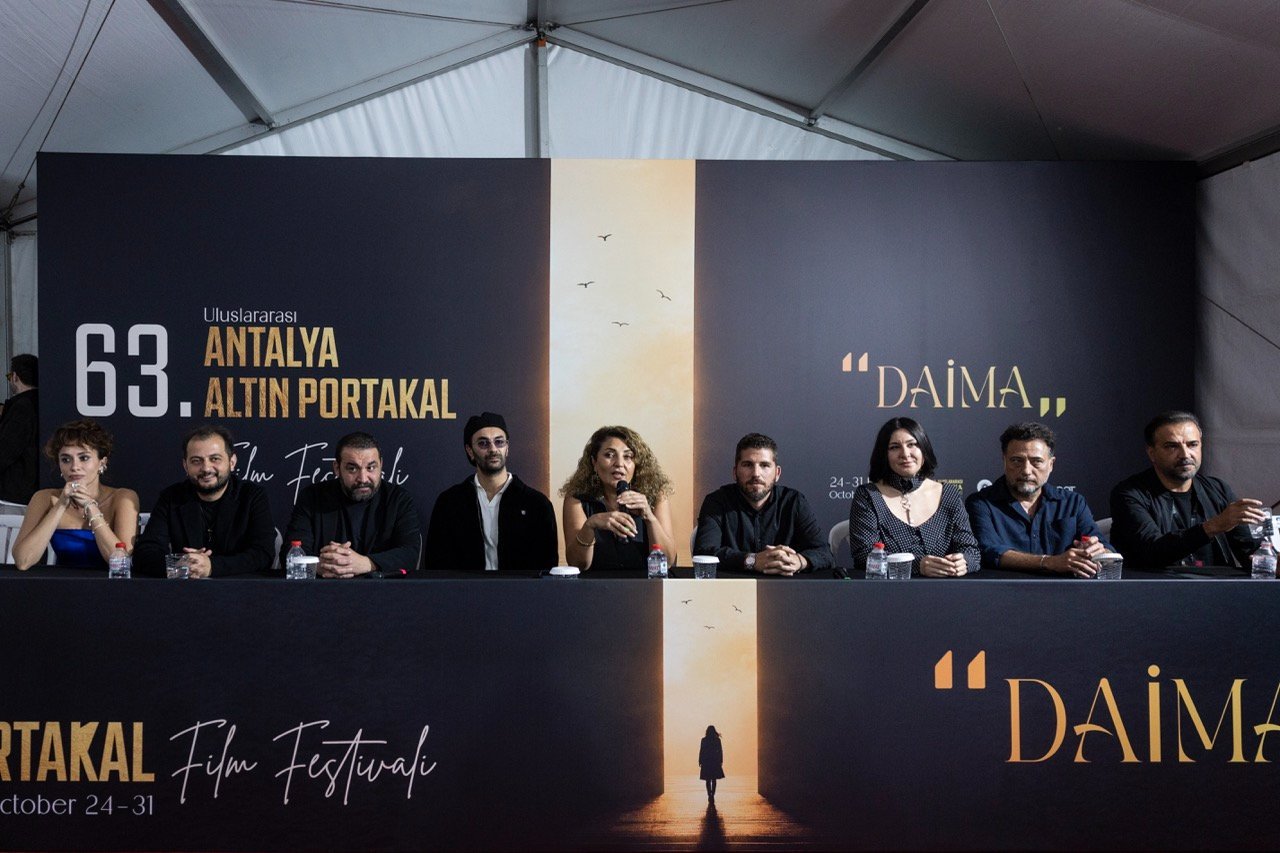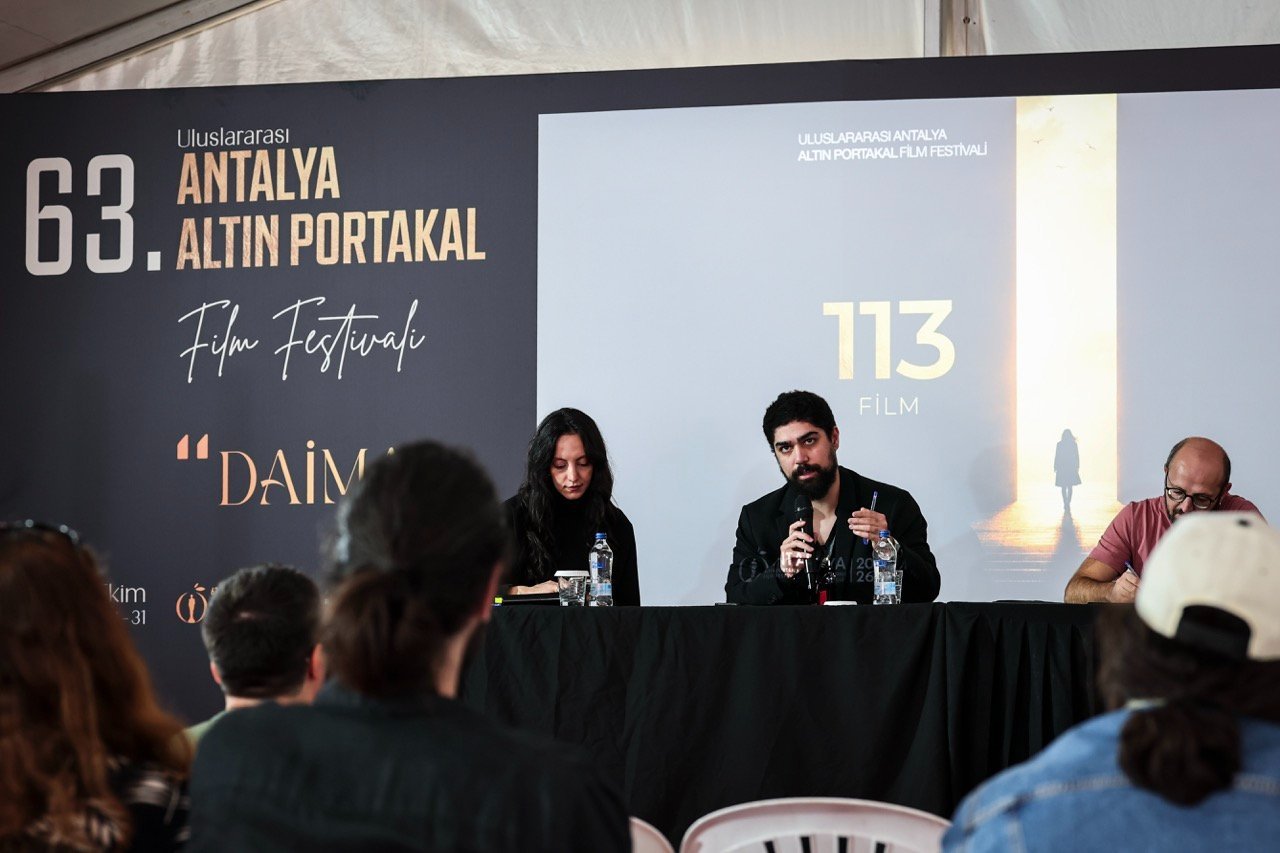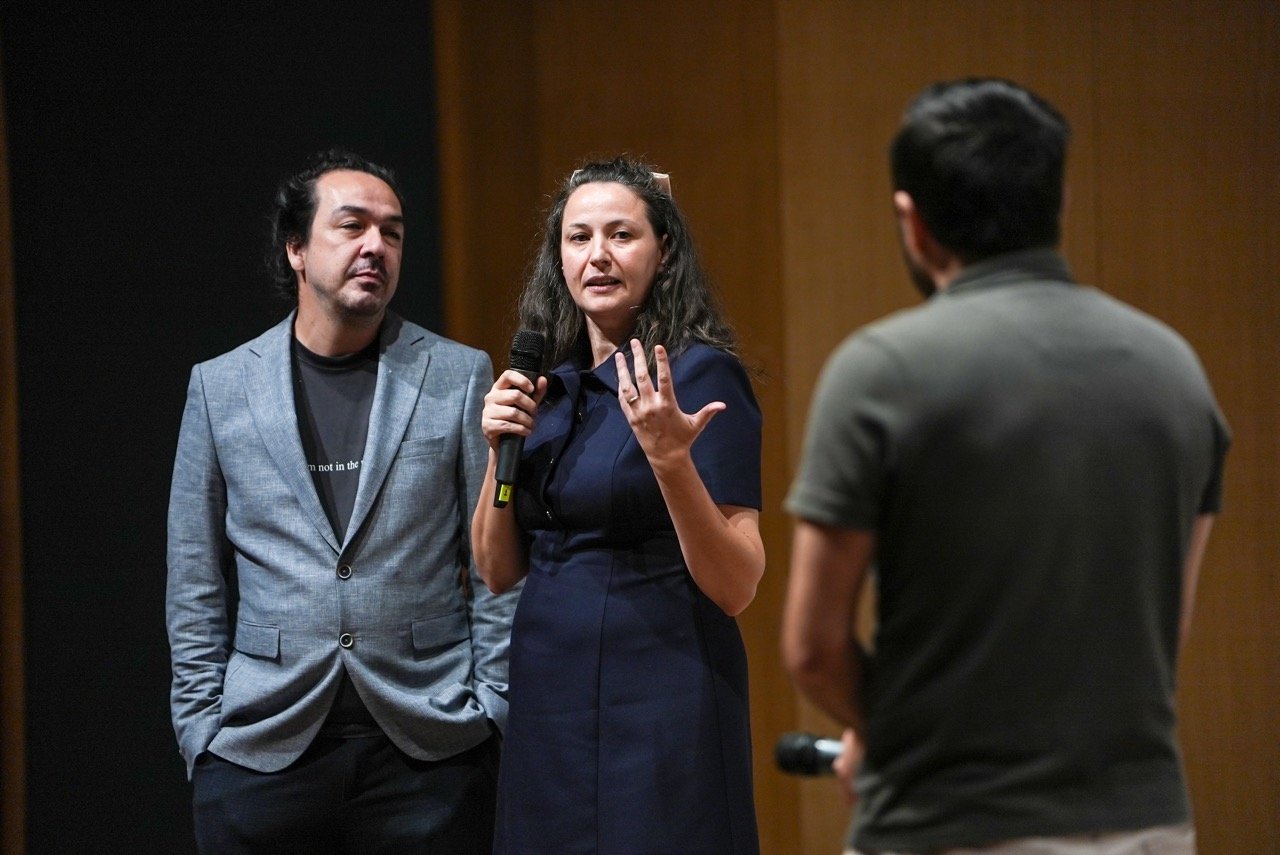
The 63rd Antalya International Golden Orange Film Festival welcomed the crews of national and international competition films on Monday, October 26. Special screenings and a panel discussion on editing were also part of the day’s program.
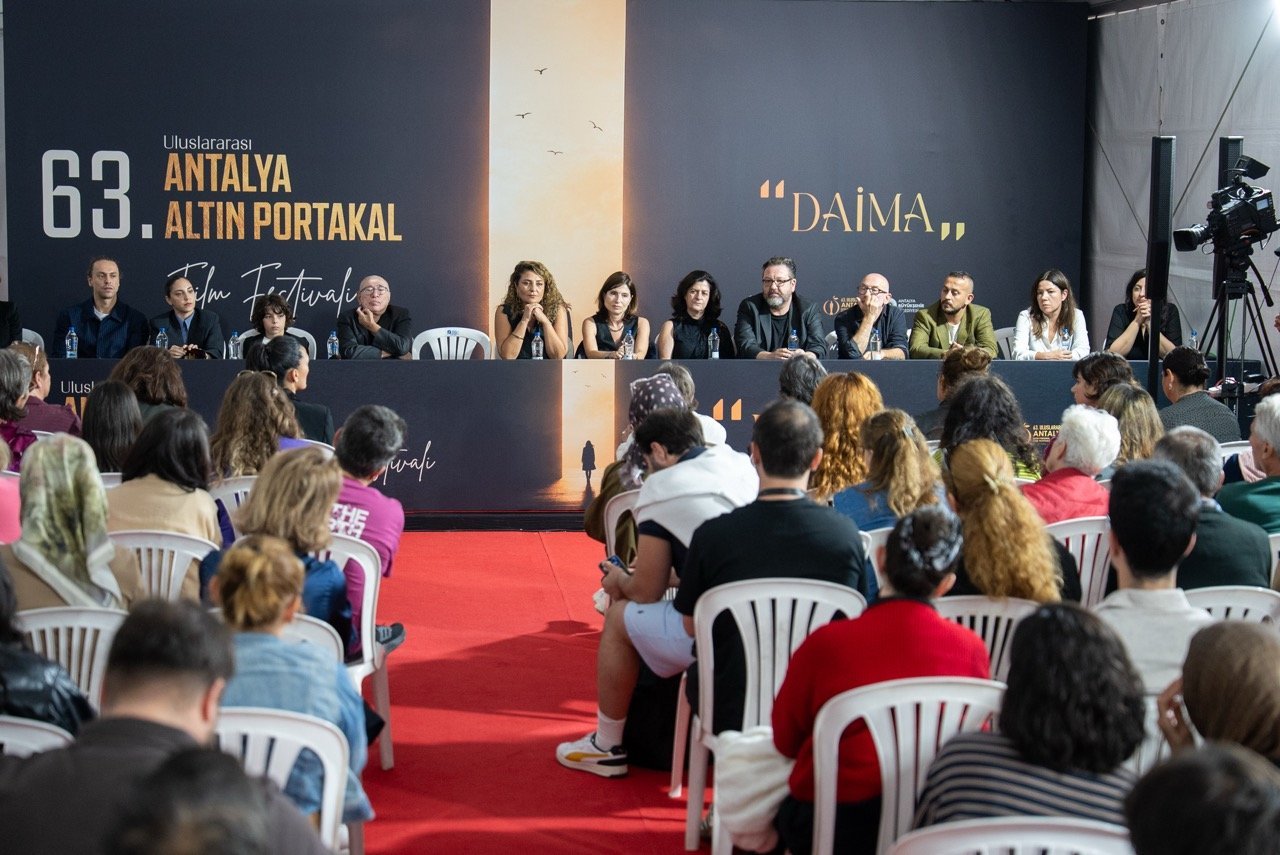
The 63rd Antalya International Golden Orange Film Festival kicked off the new week with discussions bringing film crews and audiences together. On Monday, crews from two films each in the National Competition and Special Screenings (Out of Competition) sections, as well as one film from the International Competition section, took the stage to meet with the audience following their screenings.
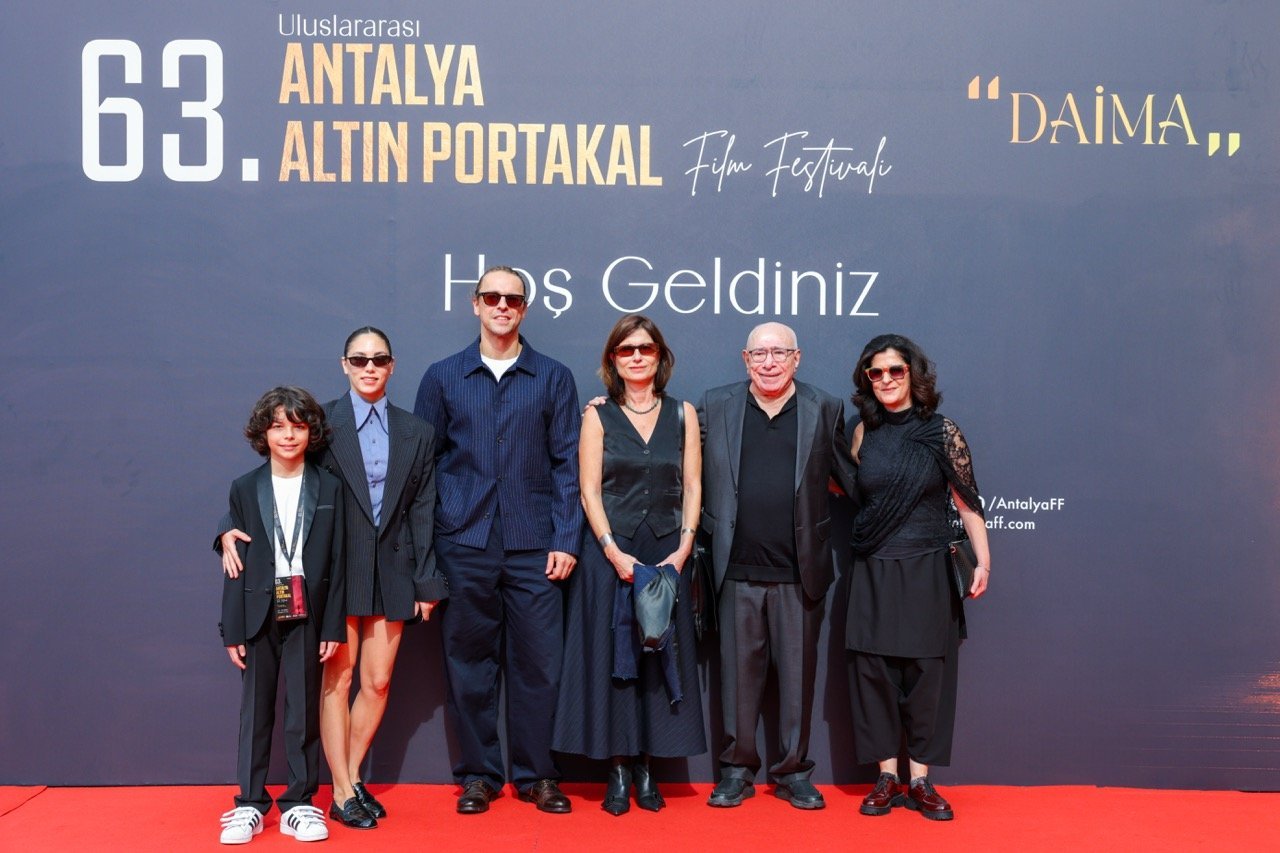
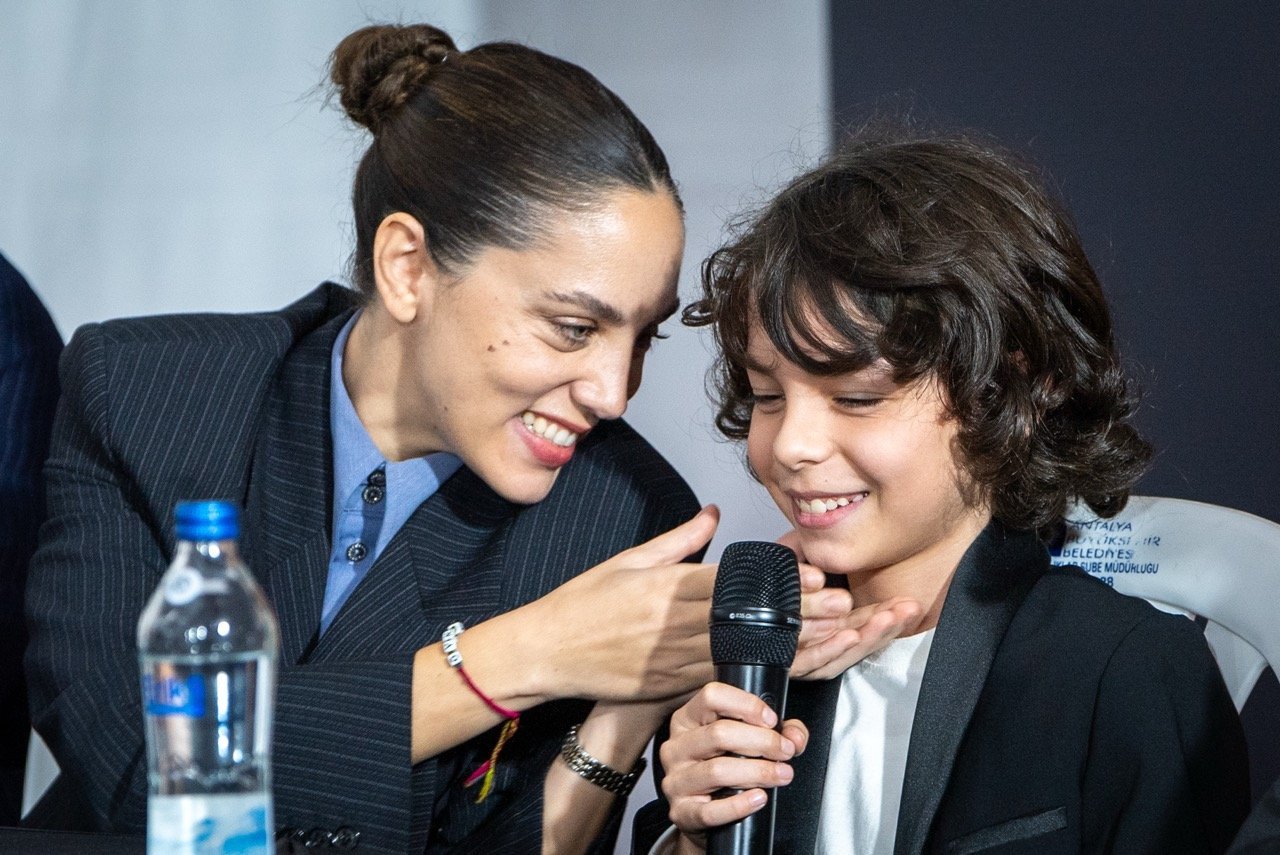
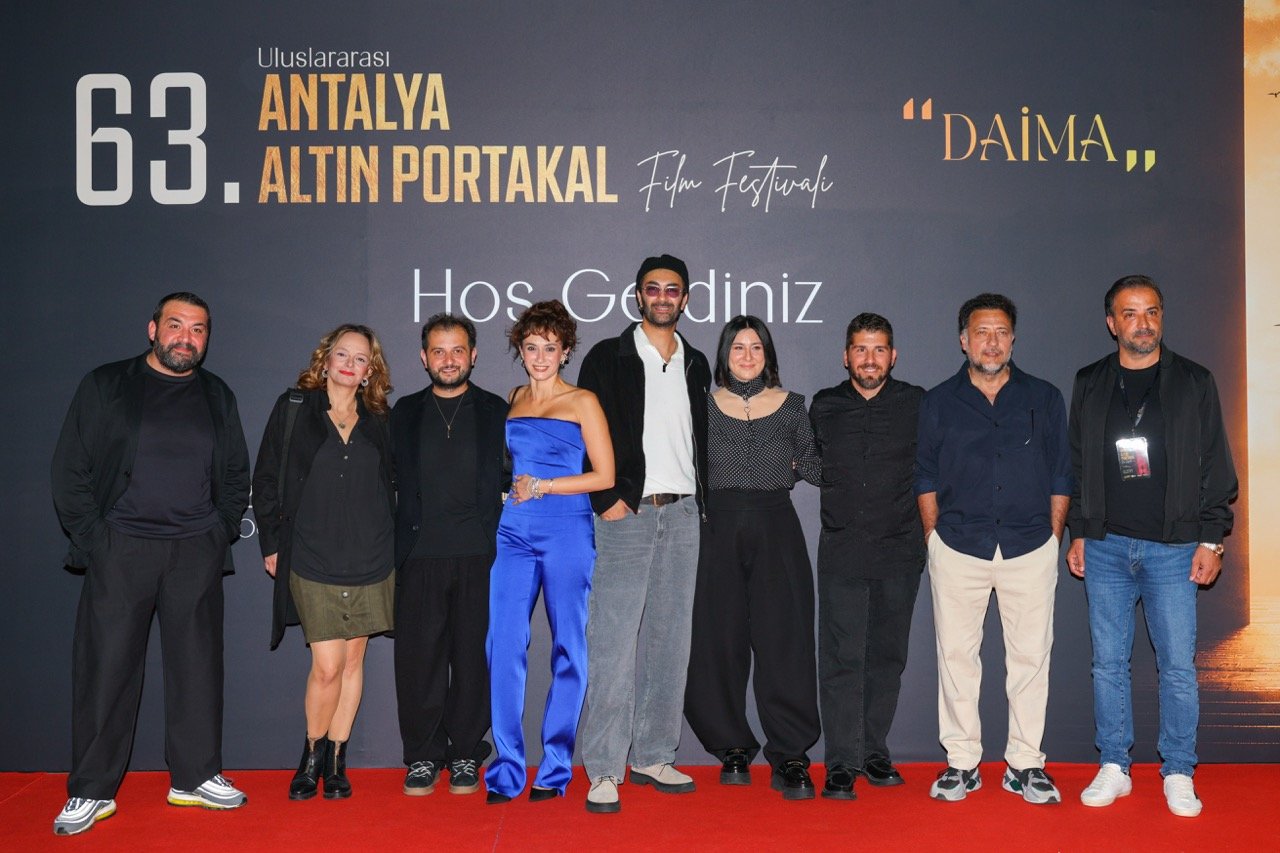
As part of the National Competition, the cast and crew of “Artakalan”—which was first presented to film enthusiasts at the Aspendos Hall of the Atatürk Cultural Center (AKM)—answered questions from the audience. The discussion was attended by director Yeşim Ustaoğlu; actors Öykü Karayel, Metin Akdülger, Ali Kayra Kul, İlyas Salman, and Ayşegül Cengiz Akman; musician Şevket Akıncı; producer Anna Maria Aslanoğlu; and co-producer Yağmur Ünal.
Director Yeşim Ustaoğlu, whose film “Artakalan” focuses on the marriage of a female poet and a male musician, said the following:
“Actually, I suppose one of the questions many people sitting here right now—not just women, but virtually everyone—are asking each other and themselves is: How will we, on our own, find our way out of all these impasses and dead ends? How will we all find our way out? The film shows that we can emerge not by constantly complaining, but by finding a way forward. Because the confrontations and lessons the characters experience are rooted in their very essence. We need to make the most of every moment: What is life telling us? What are people telling us? How do we see, touch, and hear? I wanted to let the audience experience this as well.”
Öykü Karayel, who plays the poet Elif in the film, described her relationship with the character in these words:
“Elif recites Birhan Keskin’s poem ‘Taş’ in the film, and that alone truly defined the character for me in all its depth. Beyond that, I can say this was a very personal film for me—something that rarely happens. And in terms of character traits and the period she goes through, I think I found a great many commonalities. That’s why the journey she embarks on in the film became, in a way, my own personal journey as well—as Öykü.”
Metin Akdülger, who plays Mehmet—the poet Elif’s husband and a musician—offered the following insight about his role:
“We see Mehmet at a point where he’s somewhat redefining his identity. He undergoes a transformation through his relationship with his work and his wife, and subsequently, we experience where he draws his identity—his masculinity, fatherhood, and role as a husband—and how these roots connect to his core. He isn’t very aware of what Elif is going through. So Mehmet is a musician, but even though he works with listening and soundscapes, we don’t see him really listening to the person he shares his life with. He’s constantly standing there with his answers all prepared. I think that’s part of his behavior and the irony of it. That’s why, once he’s fully come to terms with his own life, I think he’ll start to understand Elif’s poems better too.”
Yasemin Sakallıoğlu: I want to do comedy, but producers keep offering me daytime shows
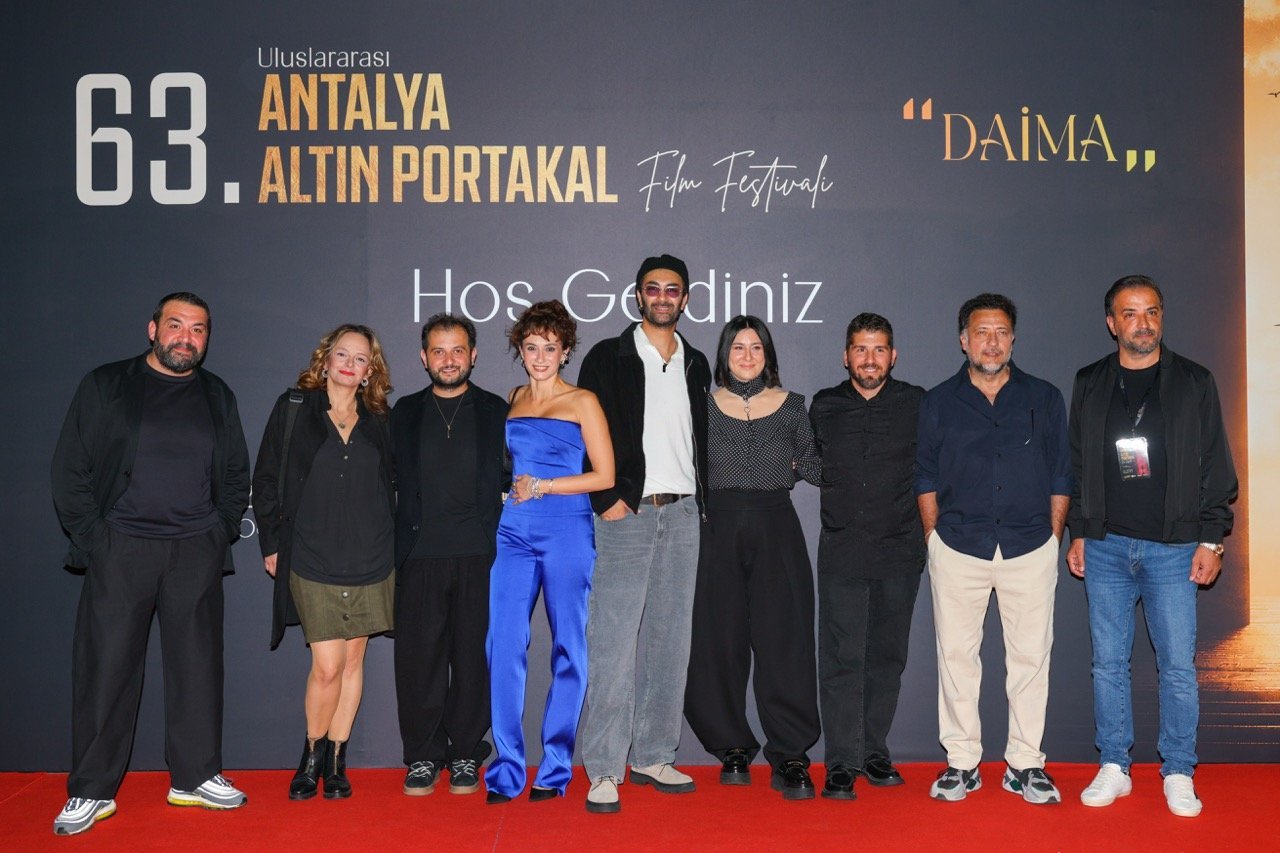
The other discussion at the National Competition was for “The Wedding Singer.” The discussion, held after the film screening, was attended by director Emre Aybek; actors Yasemin Sakallıoğlu, Yiğit Özşener, Mehmet Korhan Fırat, Şahin Eryılmaz, and Hande Doğandemir; screenwriter Erdi Işık; and producer Rodi Kayım.
When asked how much of the characters in the film—which tells the story of Şahnaz, a young and successful jazz soloist forced to sing at weddings—was based on reality and how much was fictional, screenwriter Erdi Işık responded:
“Are Şahnaz and Muzaffer real-life characters? Both yes and no. The film spans a period of about twenty-three years, and since music is Şahnaz’s starting point, you can think of her as any contestant on the music shows of that era. Şahnaz isn’t a character who chose to be there, but she ends up as a guest on the very show she criticizes. I’d say I drew inspiration from the modern-day equivalent of a musician from that era.”
When asked how she prepared to portray the character of Şahnaz, Yasemin Sakallıoğlu replied, “I didn’t have to look for Şahnaz—she was already there!” implying that her own experiences weren’t all that different from the character’s:
“As a female comedian in my industry, I have so much I want to say, yet my dear producers keep offering me daytime talk show gigs! They always want to see me as a daytime talk show host. So I’m already living this, which is why I didn’t reach out to Şahnaz. But I really struggled while acting. Because I’m a comedy-based actress. But thanks to Emre Hoca; I struggled a lot, but I guess a film like this needed a tough director.”
The actor also mentioned that she sang all the songs in the film herself, but because she got so emotional while singing the song “Küçüğüm,” they had to reshoot the scene many times: “That scene was very hard to shoot because I empathized so deeply… I even told my director, ‘I can’t sing in this scene.’ And we must have shot that scene thirty times.”
Yiğit Özşener, meanwhile, described the character of Muzaffer, whom he portrays, with these words:
“He’s a character with intense inner turmoil. The storms raging inside him are very different from his actions; on one hand, he knows how important it is to dream and pursue those dreams, but on the other hand—to speak specifically about this film—he doesn’t want Şahnaz to disappear. I think Şahnaz also finds fulfillment in her dreams, which is why he wants her by his side. Because he’s in a lot of pain; he, too, has had to give up so many things.”
“I saved up money for two years to make this film; we shot it for 9,600 euros.”
The first International Competition entry to be screened today was “Six Weeks On” (A Six-Week Farewell). Director Jacqueline Jansen and cinematographer Markus Ott answered questions following the screening at the AKM Aspendos Hall.
Describing her film—which she drew from her own experiences—as “an auto-fiction,” director Jacqueline Jansen said: “Six years ago, I experienced the passing of my mother, who was living in a nursing home. Through my own experiences and by witnessing things I hadn’t known before, I gained insights and learned a great deal. I wanted to turn this into a story and share it with people who haven’t gone through similar experiences,” she said.
Explaining that “6 Weeks of Farewell” refers to a traditional mourning period observed in the region of Germany where she lives following a death, the director added, “However, this isn’t something people talk about much in Germany, so we wanted to address this issue.”
In response to a question, cinematographer Markus Ott noted that the main challenge they faced while bringing the film to life was cost, and he described the process as follows:
“I saved money for two years to make this film. I applied to many places to secure funding, and we completed the film with a budget of 9,600 euros. Aside from me, none of the people who contributed financially to the film were from the film industry.
There were also challenges during the shooting phase stemming from having to take on various roles on set. Despite the low budget, we strove to create a very distinct visual language. We didn’t want viewers to think, ‘They tried to create a different visual language but ran out of money.’ Every decision we made was based on a conscious artistic choice, not a lack of funds. While working with a low budget had its challenges, it also had a liberating side.”
Director Jansen also supported Ott, saying, “Since there was no one to finance us, we solved everything with our own resources. No one working on the film received a salary. So, by making a film like this, we actually broke many rules—we didn’t follow the rules.”
“My role changed as the film took 15 years to shoot”
Bart Klever, an actor in the film “A Messy Tribute to Motherly Love,” which screened as part of the International Special Screenings, answered questions following the screening at the AKM Perge Hall.
Klever began his remarks by noting that they had started making the film 15 years ago, and described the process they went through due to financing difficulties as follows:
“The initial idea for the film dates back 15 years. However, the process took so long because it’s very difficult to secure funding in independent cinema. Due to budget constraints, revisions had to be made to the story and locations; for example, there were plans to shoot in Thailand, but circumstances changed. The interesting thing is that when the director first conceived this story 15 years ago, he had planned for me to play the lead role. But after 15 years had passed, I was a bit too old for that character. That’s why I took on the role of the puppeteer.”
The actor noted that the screenplay has an extremely personal and emotional structure, drawing from the director’s own losses and deep sorrows in life, and said that for this reason, he couldn’t fully grasp the script on his first read-through and had to discuss it at length with the director.
Klever also shared the following insights about the puppeteer character he portrays:
“The puppet scene represents one of the story’s darkest layers: it carries an extremely tragic theme through the metaphor of a mother killing her own son. The puppeteer character, on the other hand, symbolizes a higher, guiding figure who stands against this tragedy and holds the strings in his hands. In mainstream American cinema, male characters are generally overly aggressive; conflicts are resolved with fists, physical violence, and action. The characters in our film, however, are troubled, introverted, waiting, observing men with emotional depth. While I was studying theater, my dramaturgy professor explained that Shakespeare’s Hamlet was the first male figure in Western literature who did not act immediately, but rather paused to think and doubt. The ‘to be or not to be’ dilemma is precisely this: instead of striking out reflexively, he first pauses, questions, and weighs his options. It was precisely this ‘Hamlet reflex’ that guided me in building the character in this film.”
The actor offered his own interpretation of the film with these words:
“Actually, this film, in broad strokes, offers a powerful critique of modern Western culture and lifestyle. In Western society, people spend a fortune just to learn how to ‘stay in the moment.’ While constantly trying to plan things and organize every detail, they accumulate immense anxiety and stress, and eventually burn out mentally. Our film is, in a way, an ironic confrontation with this modern mindset that cannot let go of control.”
“What we need to do in the face of artificial intelligence is to nurture our intuitive and feminine sides.”
At the National Special Screening program, the team behind “The Sleeping Woman”—a film created entirely by artificial intelligence—took the stage before movie lovers. Following the screening at the AKM Perge Hall, a discussion was held featuring director Gizem Avcıoğlu (who goes by the name Vikki Bardot in the film industry) and producer Alkan Avcıoğlu.
Noting that she drew inspiration for the film from Georges Perec’s “The Sleeping Man,” the director said:
“Of course, there are autobiographical elements in the film. My husband and I worked in the film industry together for 15 years. However, I approached the autobiography in the style of Georges Perec. According to Perec, the objects in our room—books, records, or our daily morning tea ritual—are all part of the autobiography. In Perec’s The Sleeping Man, there is a single man, and the viewer can label him a ‘troubled character’ and distance themselves from him. I, on the other hand, used multiple artificial/synthetic female figures instead of a single woman. Amid today’s barrage of data, I wanted to create a shared sense of alienation where the viewer might say, ‘I think I see myself here; I’m falling into this trap too.’”
Gizem Avcıoğlu explained the reason all the female images in the film are white/European: “I was deeply influenced by the aesthetics of the French New Wave and the visual language of that era. If I had tried to include different ethnic identities or body types simply for the sake of ‘diversity,’ they would have looked very out of place and artificial in the aesthetic world I created.”
Producer Alkan Avcıoğlu added, “This film doesn’t establish a realistic world model; it operates entirely on a symbolic and allegorical level. Just as the absurd corridors—which open up to more and more rooms the more one tries to leave—are unrealistic, the characters there are not real people but symbolic models. The representational mechanisms of this kind of abstract/allegorical film must be evaluated differently from the representational politics of popular narratives, TV series, or Hollywood cinema,” he said.
In response to the question, “While the alienation and state of consciousness in Perec’s The Sleeping Man are more individual in nature, the alienation in the film stems from an external influence. In this age when we cannot completely escape technology, how can we create our own meaning and path forward?” the director replied as follows:
“Perec wrote this book in the 1960s; therefore, we cannot attribute this psychological isolation and alienation solely to cell phones or social media. This issue was discussed in the 1950s as well as the 1980s; people have experienced it in every era.
Instead of surrendering to technology, taking short breaks from life and turning toward softer realms could be a way out. Artificial intelligence can, in a way, replace the analytical and rational side of our brain; what we need to do is nurture our more intuitive and feminine aspects—especially creativity, emotion, and spirituality. I believe the way out lies in emotions and creativity.”
When asked why the theme of love was not addressed at all in the film, the director stated that this was a conscious choice:
“That’s a very accurate observation; the film was deliberately structured around repetition, and the theme of love is intentionally absent. I wanted to reflect the mood of our times, the flood of information we’re exposed to, and our disconnection from spirituality. Crowds live in herds, on autopilot. As Adam Curtis has also noted, humanity is increasingly becoming mechanized and automated. We live in an age where people even ask artificial intelligence how to respond to a message from their lover; therefore, lovelessness and mechanization were at the heart of the narrative.
I also worked on the visual language for two years. At first, artificial intelligence produces very bright, advertisement-like images. I, however, deliberately distorted the image by utilizing that blurriness, shallow depth of field, and light refractions to achieve that eerie, atmospheric texture that lies between dream and reality.”
Editors Gathered at the Golden Orange Festival
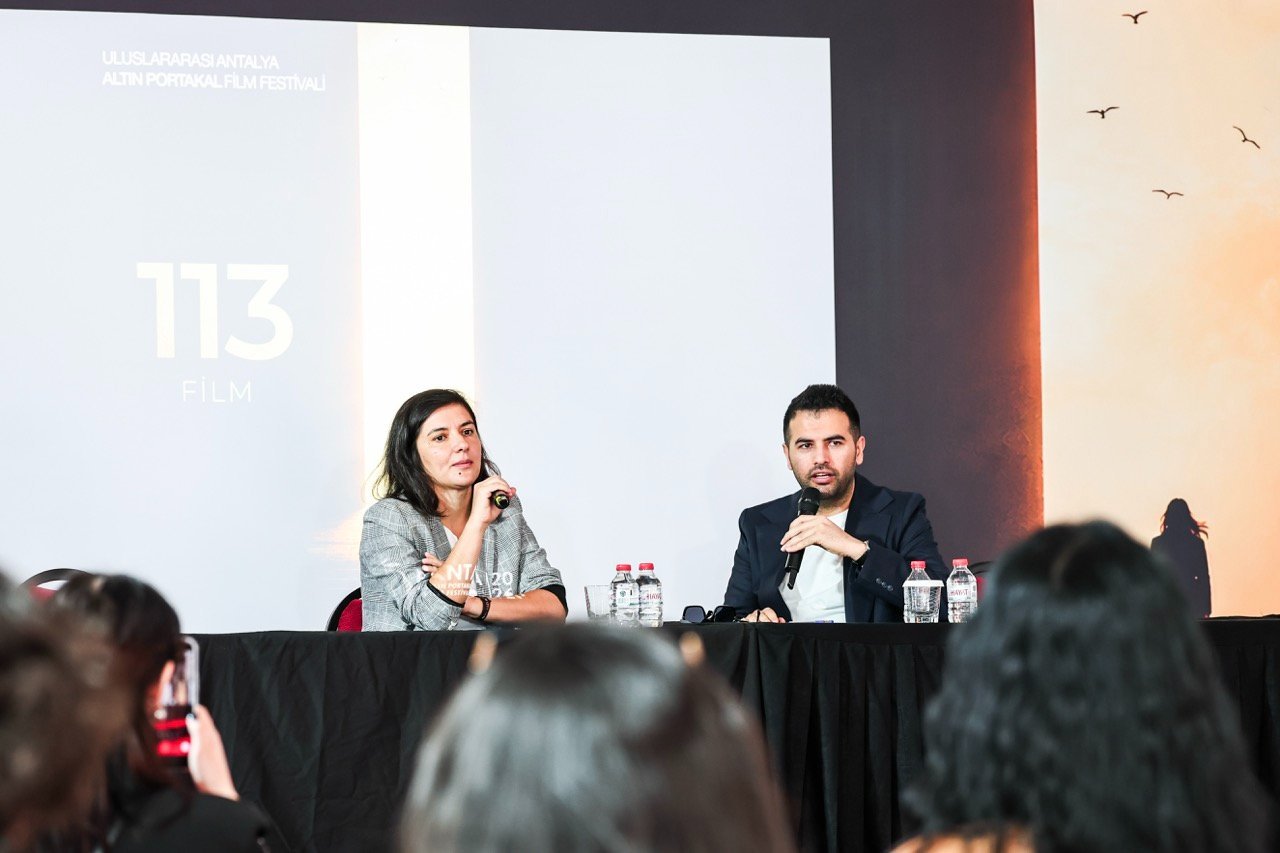
Today, the festival also hosted an important event for the industry. “The Director-Editor Relationship in Film Production” was discussed in depth during a panel featuring Melike Kasaplar, İsmet Araç, and Naim Kanat from the Editors’ Solidarity (KUDA).
Contrary to common belief, Melike Kasaplar noted that editing begins during the screenplay phase, not in post-production, and described her own working preference as follows:
“If I’m working with a director for the first time, I prefer to get involved specifically during the screenplay stage. Having the editor involved during the screenplay stage helps them understand whether they can establish a shared cinematic language.”
İsmet Araç, meanwhile, pointed out that failing to establish the right balance between closeness and distance can lead to professional burnout over time, and shared his own experience with these words:
“When I first started in the profession, I approached films somewhat as a learning exercise. I’d try to watch all the reference material—wondering what the director liked and what the director’s style was. But those references began to work against me. Because I’d watch them and ask myself: ‘Am I editing this based on those references, or am I creating this world to bring out something original here?’”
The panel also addressed the professional rights of editors. Melike Kasaplar, noting that editors in Turkey have organized under the name “Editors’ Solidarity (KUDA)” within the framework of the TEMPO Editors’ Union—which brings together editors worldwide—said, “Our biggest challenge is working to improve our working conditions. We’re trying to make ourselves more visible so that our problems can also become more visible.”