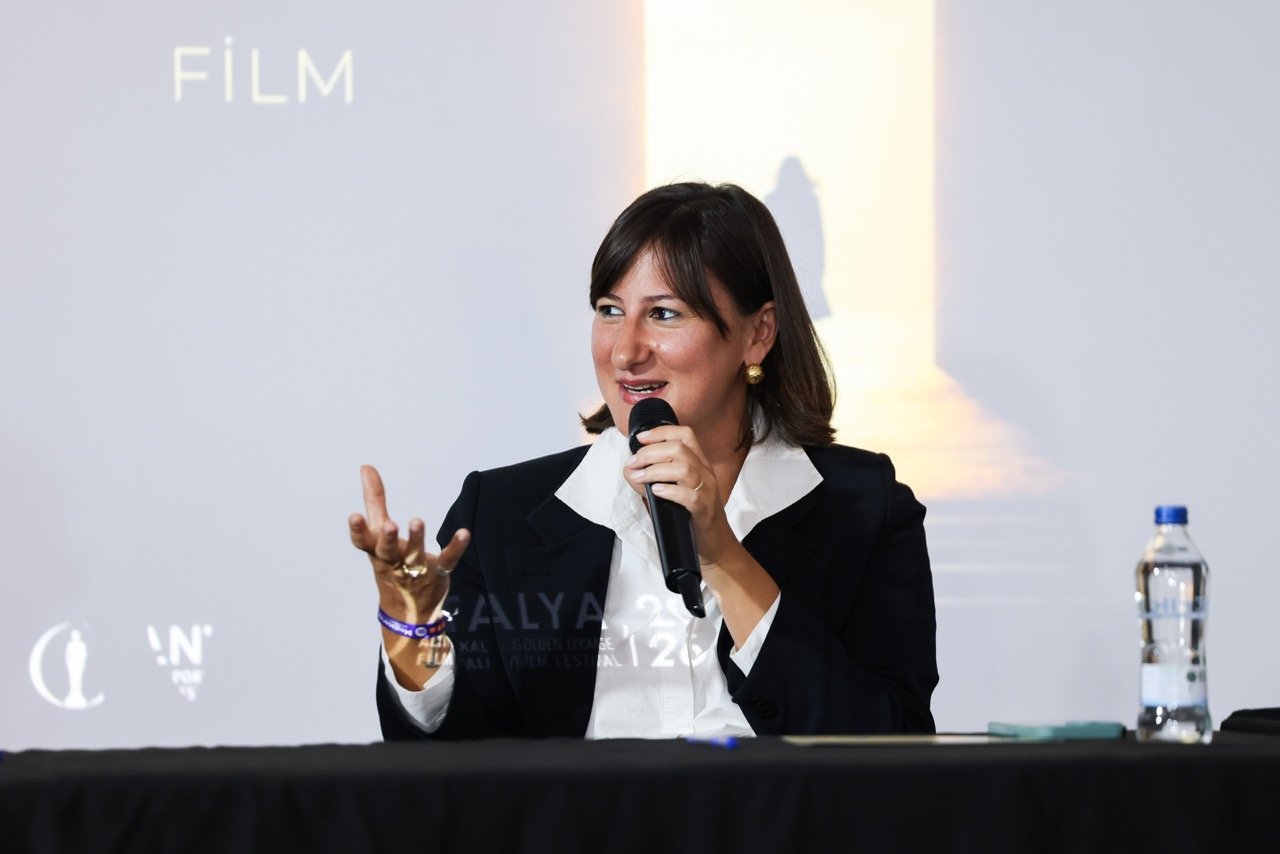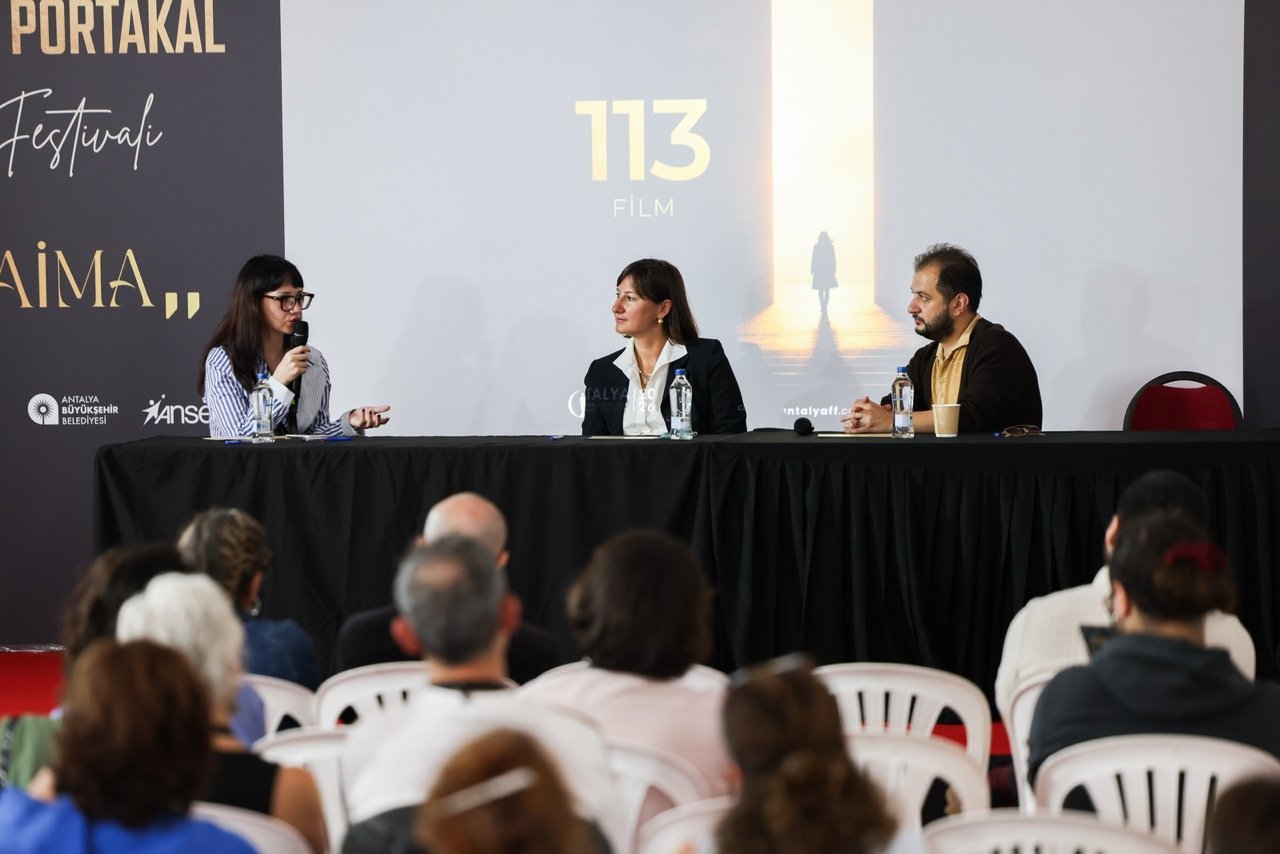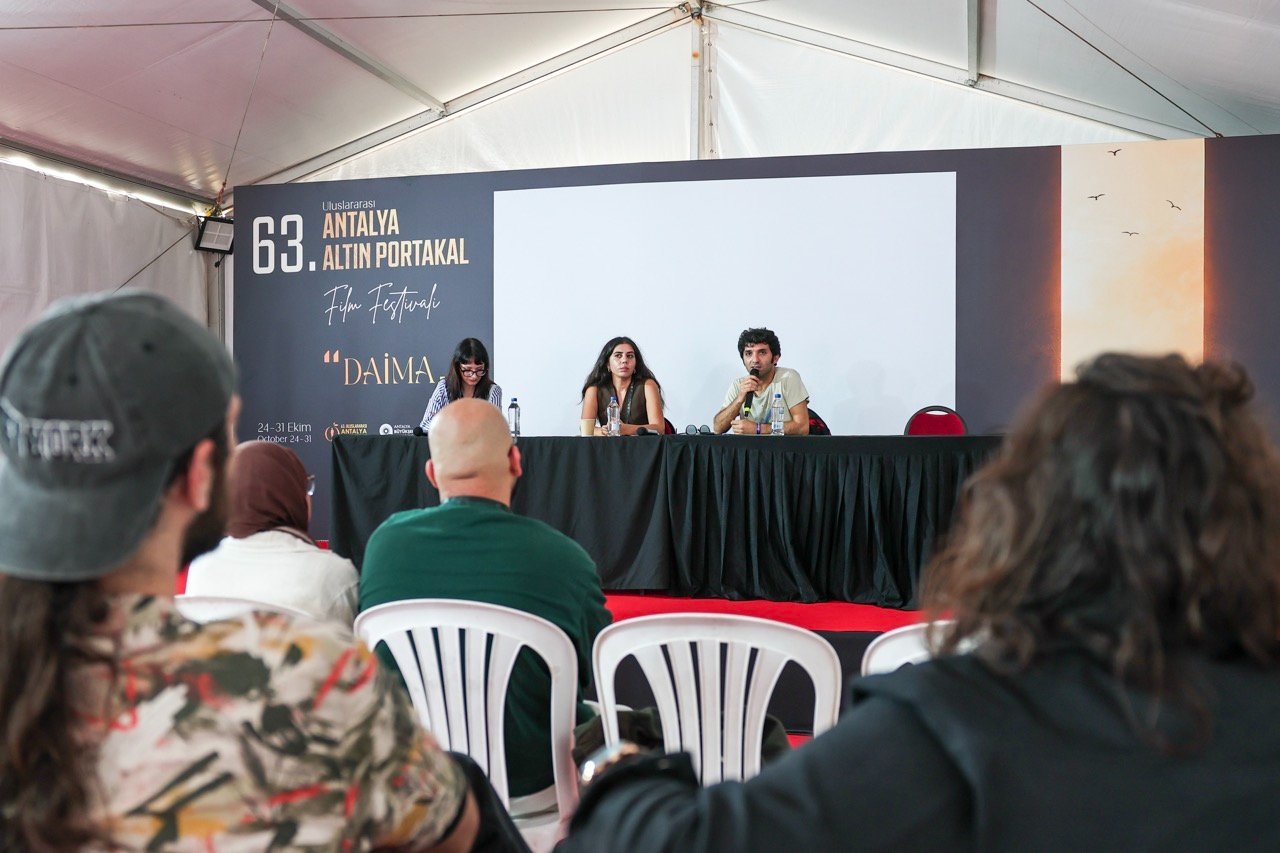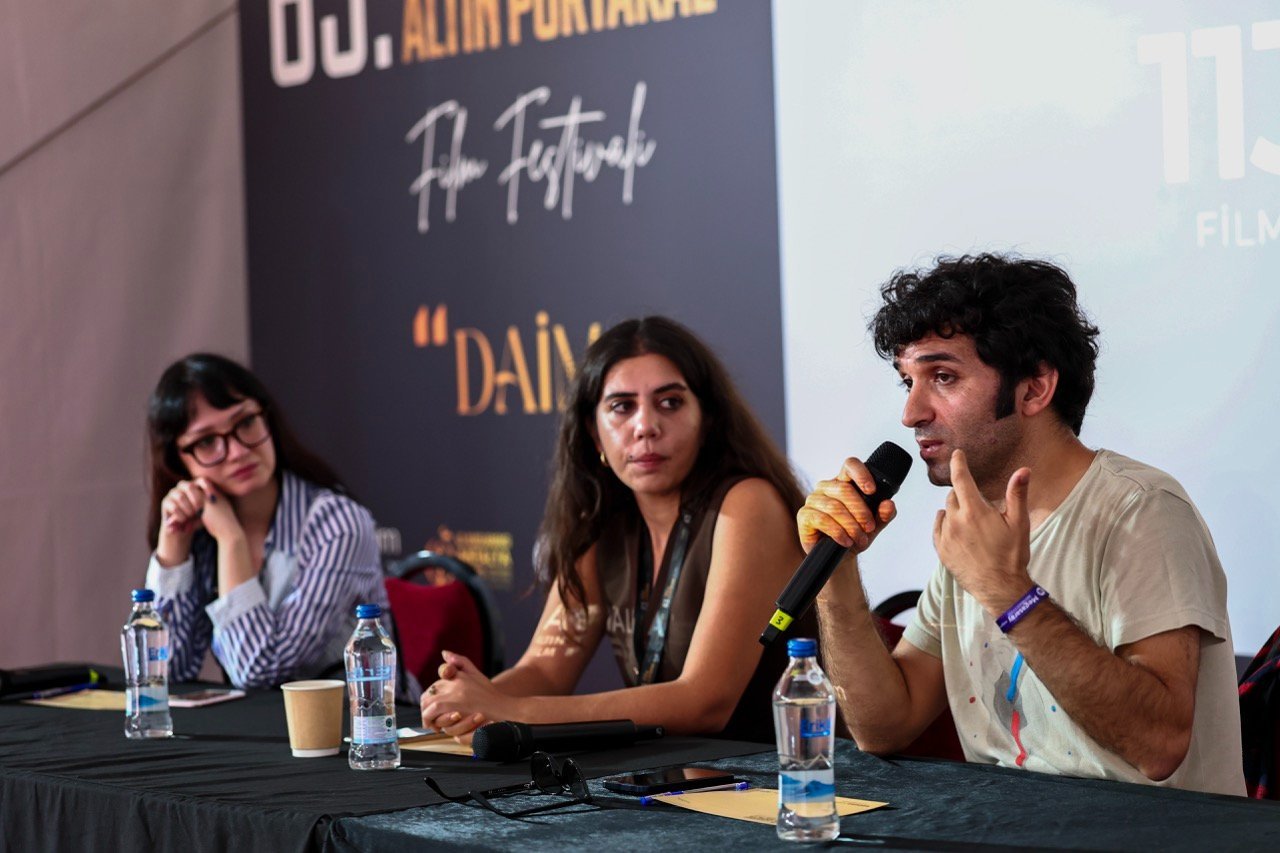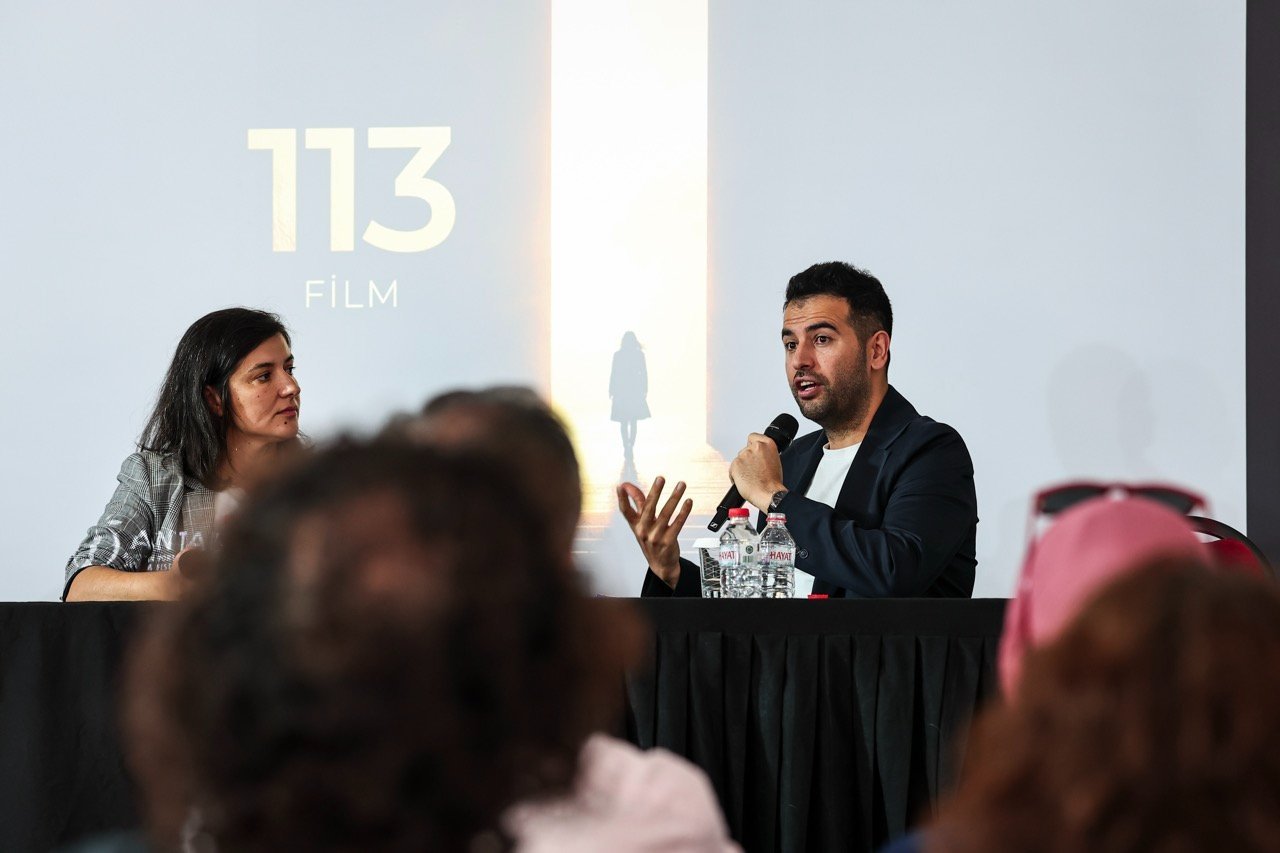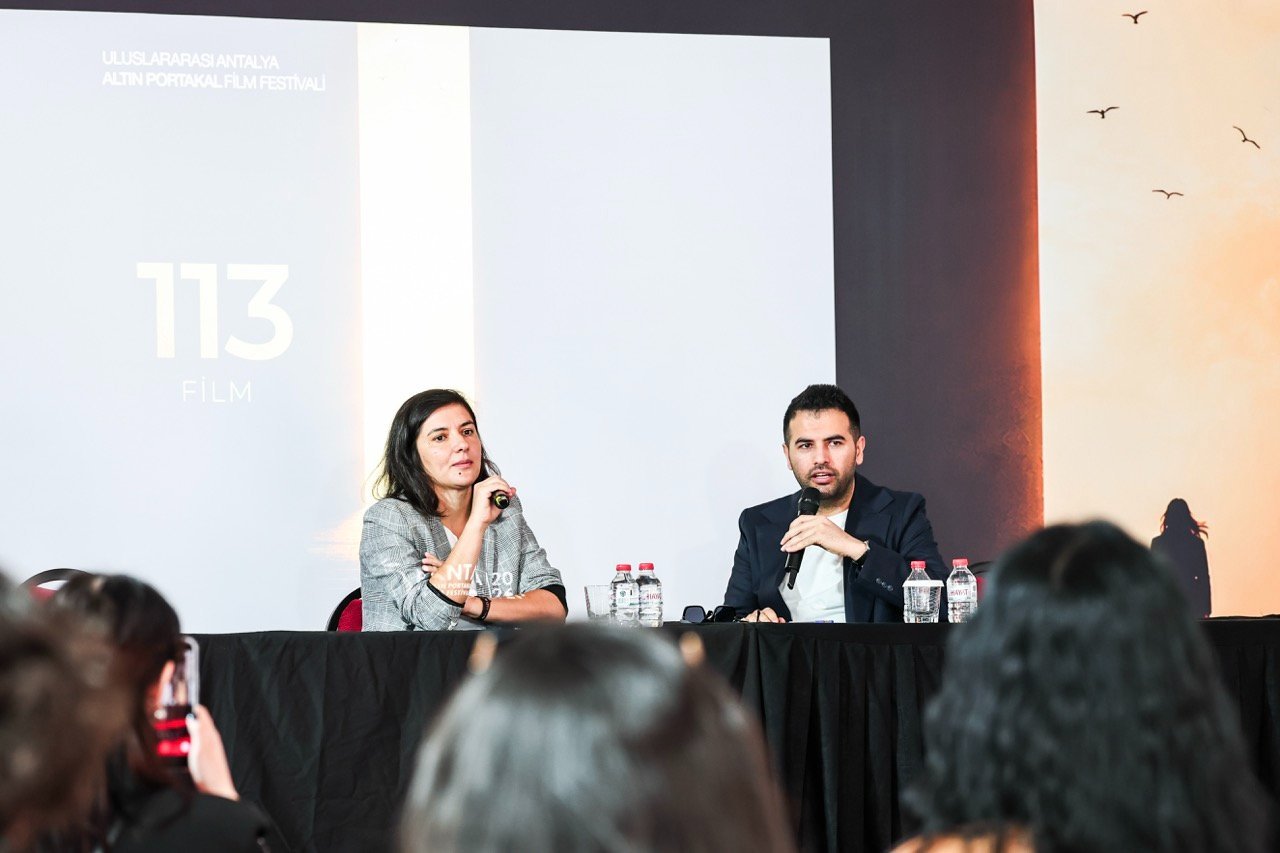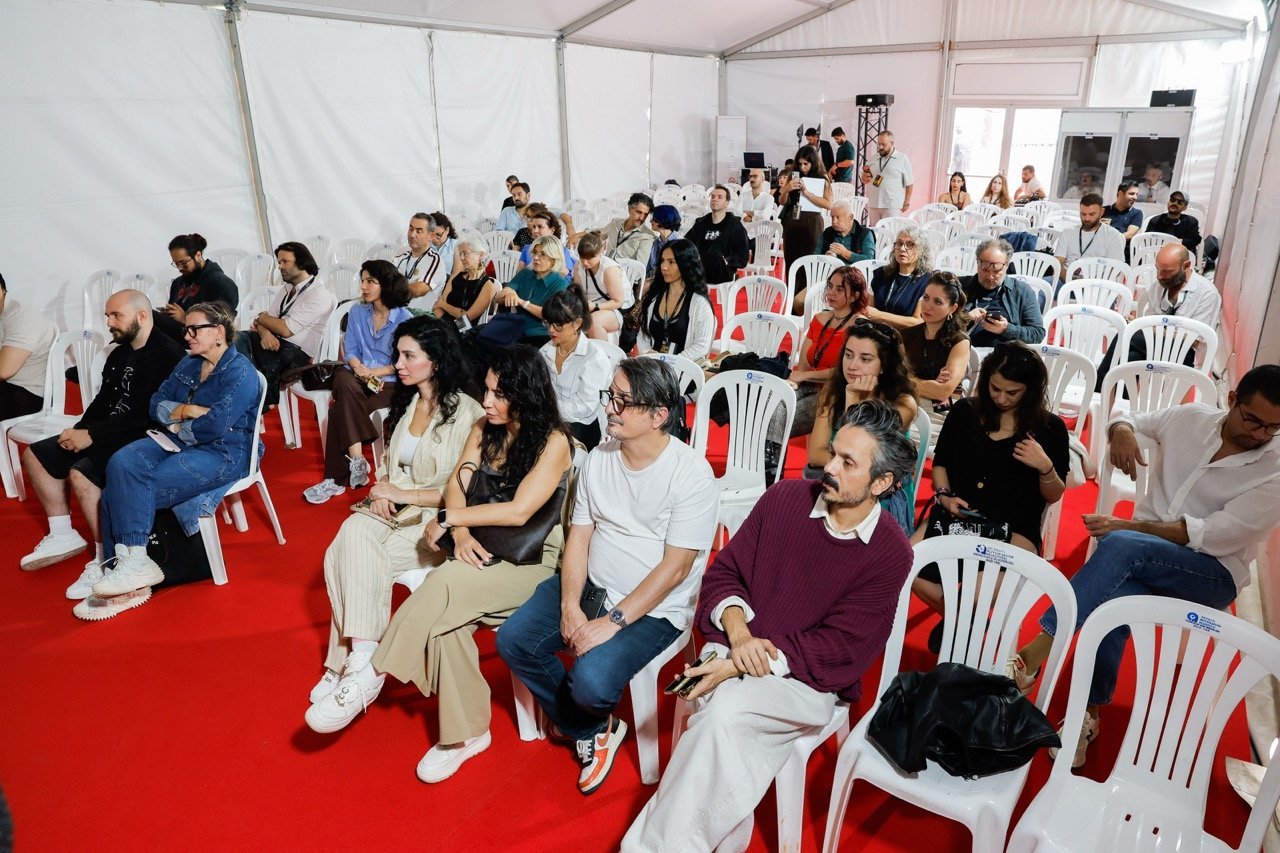
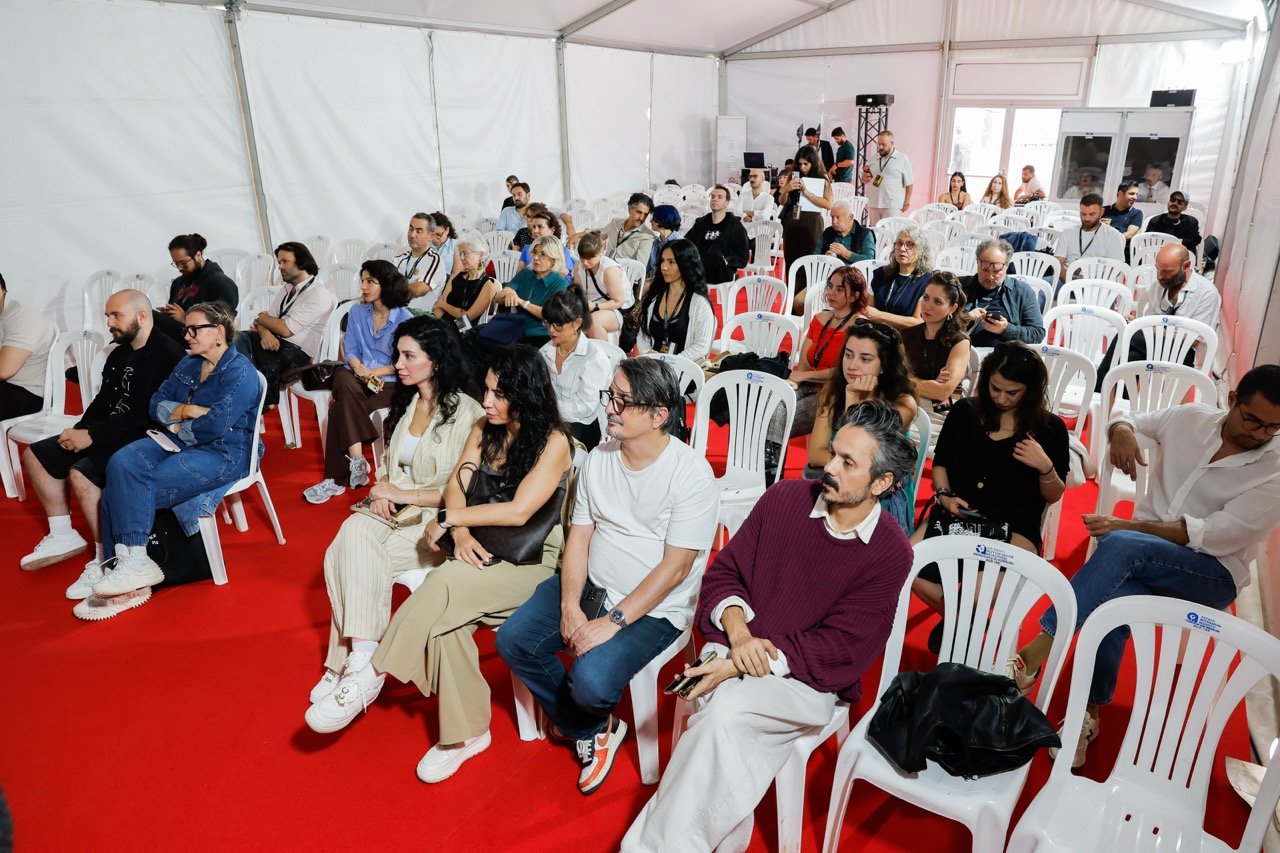
Film Forum, the Antalya Golden Orange Film Festival’s cinema support platform, brought together Turkish and international industry professionals over two days. Panels and talks addressed numerous issues across different areas of cinema and explored the opportunities available.
Film Forum, the industry meeting point of the 63rd International Antalya Golden Orange Film Festival, once again hosted important panels and talks this year. The first was titled “From Local to Global: International Co-Productions Through a Producer’s Lens” and featured award-winning producers Milad Khosravi and Ana Maria Pirvan.
Milad Khosravi explained that he has produced numerous fiction, documentary and animated films, but that censorship has prevented his work from being screened in Iran, meaning it reaches audiences mostly abroad. “My co-producer Ana and I aim to bring local stories to the world and connect with audiences from different cultures by telling them through a universal cinematic language,” he said. Pointing to the recent achievements of Romanian cinema, Khosravi added: “We see how even small countries and industries with limited resources can make a significant impact internationally through the right partnerships, strong directors and universal stories.”
“Some directors rush their films for Cannes and end up damaging them”
Asked what advice she would give directors preparing to make their first feature, Ana Maria Pirvan said they should not let expectations of success tie them to festival schedules. She said:
“One of the biggest mistakes first-time directors make is becoming fixated on the festival calendar. Many feel pressured to think, ‘This is my first film; it absolutely has to make it to Cannes, Venice or Berlin.’ I even know directors who rushed their films just to meet the Cannes premiere deadline and ended up compromising them. This is a very misguided approach. My biggest advice to directors is to be honest with themselves and their films, rather than obsessing over dates and schedules.
We had a similar experience with our Romania-Lebanon-France co-produced short film. The year before, we tried to get it ready for Berlin, but we were not satisfied with the sound mix. Rather than force a submission, we chose to wait. We carefully completed the film and submitted it the following year; it was selected and won the Golden Bear. When people asked about the strategy behind it, we said, ‘There was no special strategy; we simply waited until the film was ready.’ Films have their own rhythm and life cycle. If the entire team remains committed to a project with the same conviction and passion, the result can be far more powerful than bureaucratic strategies. One of the greatest strengths of co-productions is that teams from different countries and cultures can turn such differences into an asset.”
“Don’t rely solely on traditional funding”
Khosravi also noted that relying entirely on film funds can sometimes become an obstacle rather than a form of support, explaining:
“In international co-productions, particularly those involving Türkiye, the Balkans and Western Europe—including France, Germany and Romania—traditional funding mechanisms can take at least three to four years. Each fund opens for applications only once or twice a year; if you are rejected in the first round, you have to wait for the next cycle. And even when all agreements are in place, political or bureaucratic obstacles can arise. On a project we previously developed with partners in Spain and France, television channels had issued letters of intent but withdrew at the last minute, saying, ‘For political reasons, we cannot support a project connected to Iran.’ Yet the project had no connection to the state. A structure you have worked on for years can collapse overnight. That is why you must develop alternatives instead of relying exclusively on traditional funds.”
As alternatives, Khosravi recommended the following approaches:
“There are two key elements. The first is adapting the production structure and concept: designing a production around creative constraints rather than huge budgets. To cut costs, for example, you can shoot entirely indoors, in a single room, or keep the crew more flexible and compact. The second is finding alternative financing and private investors. Rather than waiting for funding committees to approve a project, reach out to independent arts supporters or private investors. We did exactly this with a film about refugees in Türkiye: we secured support from an independent investor, streamlined the crew and accelerated the process. The clearest example was a project we worked on with Ali Asgari. In the wake of Iran’s difficult political and social climate, making a film had become almost impossible and the industry had ground to a halt. I was at EFM (the European Film Market) at the time. When Ali called and said he wanted to make the film, I immediately told him I would support it. We had no time to wait for traditional funding mechanisms; we urgently needed $10,000. I spoke to producers I knew in the EFM corridors, explained the project and secured the budget through an independent co-producer. We shot the film in just one week, in a single location and without taking the risks associated with exterior shoots. As soon as the edit was finished, we contacted festival directors Thierry Frémaux and Christian Jeune directly. The film was selected, received strong reviews in the international press, was released in France and reached 100,000 viewers; it was also sold to more than 20 countries. If we had waited for standard funding processes and avoided taking risks, this film would never have been made. The greatest strength of independent filmmakers lies in their ability to boldly apply alternative production models that can adapt to circumstances when necessary.”
Despite all these uncertainties, both producers agreed that consistency is the most important factor for filmmakers. Khosravi said that continuing to create, whatever the circumstances, is the only way to survive, and shared his own experience:
“The financing process for our documentary-hybrid film, which screened at IDFA, began around 2019–2020. Finding a co-producer in Spain, securing funding and completing the film took us around four to five years. But we did not spend those years simply sitting and waiting; in the meantime, we made five different short documentaries and fiction films. One cost around $3,000, went on to screen at festivals and was sold to television. We sold work to PBS and won an award at Hot Docs. While the feature was being financed and produced, these short films helped finance both the company and our lives, while also keeping the director’s cinematic voice alive and providing opportunities to practise.
When the first feature was completed, we hoped it would be selected by Cannes or IDFA, but it wasn’t. Hot Docs didn’t select it either. However, the film premiered in Shanghai, then travelled to many festivals and secured television sales. Even though doors initially closed in our faces, we did not give up and successfully saw the process through.
Keeping a company alive is like raising a child: it constantly costs money, but it does not generate income every month. In fact, it is difficult even to speak of a standard business model in this industry. Our approach was to generate cash flow through short projects produced in between and television sales. Providing services for other productions, joining co-productions or offering external support with management processes are also ways to keep a company going. Every producer has to find their own model for survival; otherwise, closing the company after the first feature becomes inevitable.”
“At major festivals, everything depends on the first 10 minutes”
Another question raised during the talk was whether thousands of festival submissions are actually watched, and whether personal relationships with festival management influence the selection process. Khosravi said that A-list festivals, including Cannes, Venice and Berlin, do watch the films, although problems can sometimes arise at smaller festivals. He offered the following advice:
“Smaller festivals sometimes copy well-known names and selections from other festivals out of concerns about budget and prestige, and may not watch open submissions. At major festivals, however, everything becomes clear at the beginning of a film. If a programmer does not see a strong cinematic language and vision in the first 10 minutes, they may not continue watching; we do this too. But a strong film will somehow stand out and be discovered among that enormous pool of submissions, even without a famous producer or sales agent behind it. Connections and sales agents simply help the film reach the right programmer, in the right venue, at the right time.”
“Authenticity matters on global platforms”
Another industry gathering was a talk titled “An Inside Look,” featuring screenwriter and producer Erdi Işık and Deniz Şaşmaz Oflaz, Vice President of Warner Bros. Discovery Türkiye.
The first question concerned the criteria producers use when initially evaluating a project. Deniz Şaşmaz Oflaz replied, “If it draws me into the story within five to ten pages and, in particular, makes me want to follow a character, that’s enough.” Erdi Işık summed it up as “character, story and conflict.” Işık added that he rules out projects with dystopian themes outright and that they cannot take on a project without potential for international sales.
Asked whether being a global platform influences the way projects are assessed in terms of authenticity, Oflaz commented:
“HBO, for example, has an approach of ‘the more local, the better.’ Even before HBO Max, starting with BluTV, we said, ‘We will focus on the untold stories of this region,’ and we are trying to continue that approach. It has resonated strongly over the years. Now, the first episodes of all our scripts are read by the team in the United States. So we really like that local perspective.”
Film Forum’s final panel focused on the distribution of short films. Titled “Short Film Distribution: What Happens After the Festival?”, it featured director Ramazan Kılıç and director-producer Esra Güzel.
Ramazan Kılıç noted that festivals are an important outlet because short films rarely get theatrical releases, making it necessary to work with a distributor:
“In Türkiye, directors usually submit their films to festivals themselves, but working with a distributor can save money. There are thousands of festivals around the world, and distributors know them very well. They know which ones are suitable for your film. For short films, distributors generally want to see a rough cut. Once your rough cut is ready, you can find their email addresses online and send them your film. You need to set aside money for distribution when preparing your budget from the outset, because distribution cannot be done for free.”
Kılıç also addressed mistakes made during distribution, saying:
“In our country, short filmmakers often send their films around festivals for two years and postpone sales; this is a serious mistake. You can sell your film immediately after its world premiere at a good festival. For example, if an Italian channel wants to buy your film, you can sell it because it acquires only the Italian rights and this does not affect your festival run. We cannot sell our short films to overseas channels on our own, because foreign broadcasters work with established sales agencies. These agencies follow major festivals with markets, such as Cannes, Berlin and Venice. If they like your film, they send you a contract. Promotional materials are very important. Since images will be shared on social media, avoid dark photographs; use bright, clear stills. Tens of thousands of films are submitted to major festivals. Programmers first read the logline; if it catches their interest, they read the synopsis, then watch the teaser, look at the director’s statement and finally watch the film. Internationally, films are sold by the minute. French television pays per minute; Canal+ pays €350 per minute, while Spain pays €150. You need to negotiate the contract carefully to ensure you receive money after deductions. If your film is screened out of competition or in a special screening at a festival, be sure to ask for a screening fee and stand up for your rights.”
Kılıç also stressed that being selected for a major festival or winning an award does not guarantee that a film will sell. “There are films that have won awards at Cannes and still failed to earn even a thousand dollars,” he said, continuing:
“Sales are a very different field from festivals. Television channels acquire films based on their audiences. Comedies and animation, for example, sell very quickly, while serious dramas are harder to sell. They are also reluctant to acquire films longer than 20 minutes. The ideal short-film length for television is 15 minutes. Major festivals open doors to other festivals and help films receive invitations, but they do not directly guarantee commercial sales.”