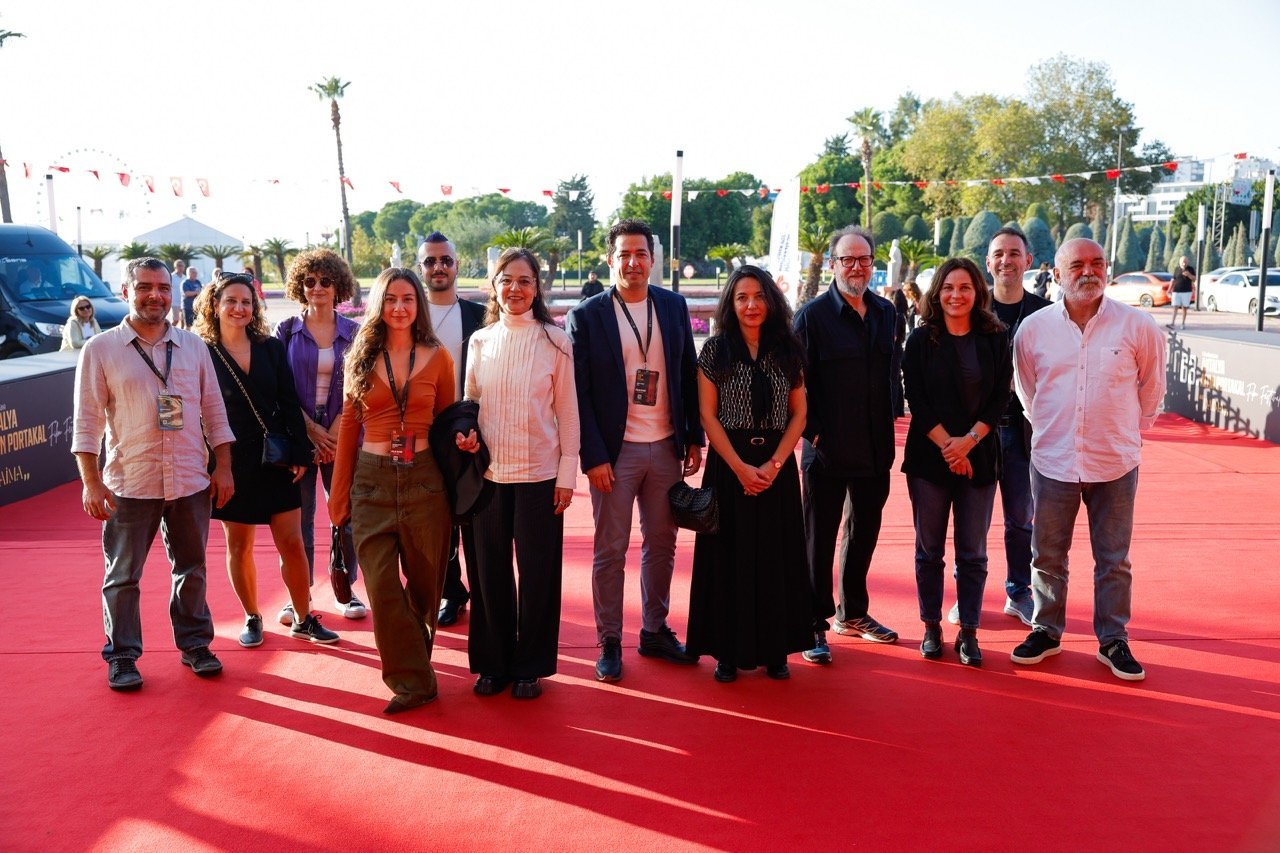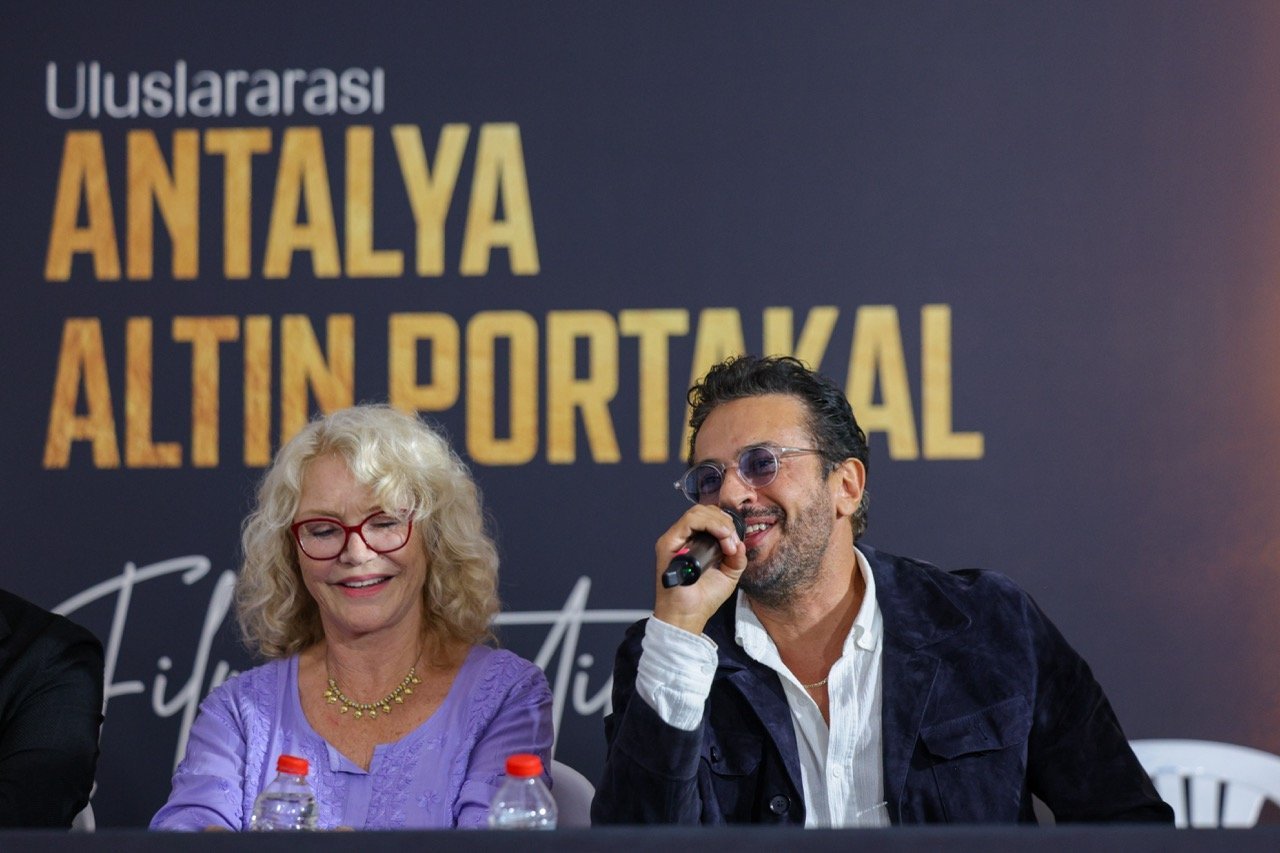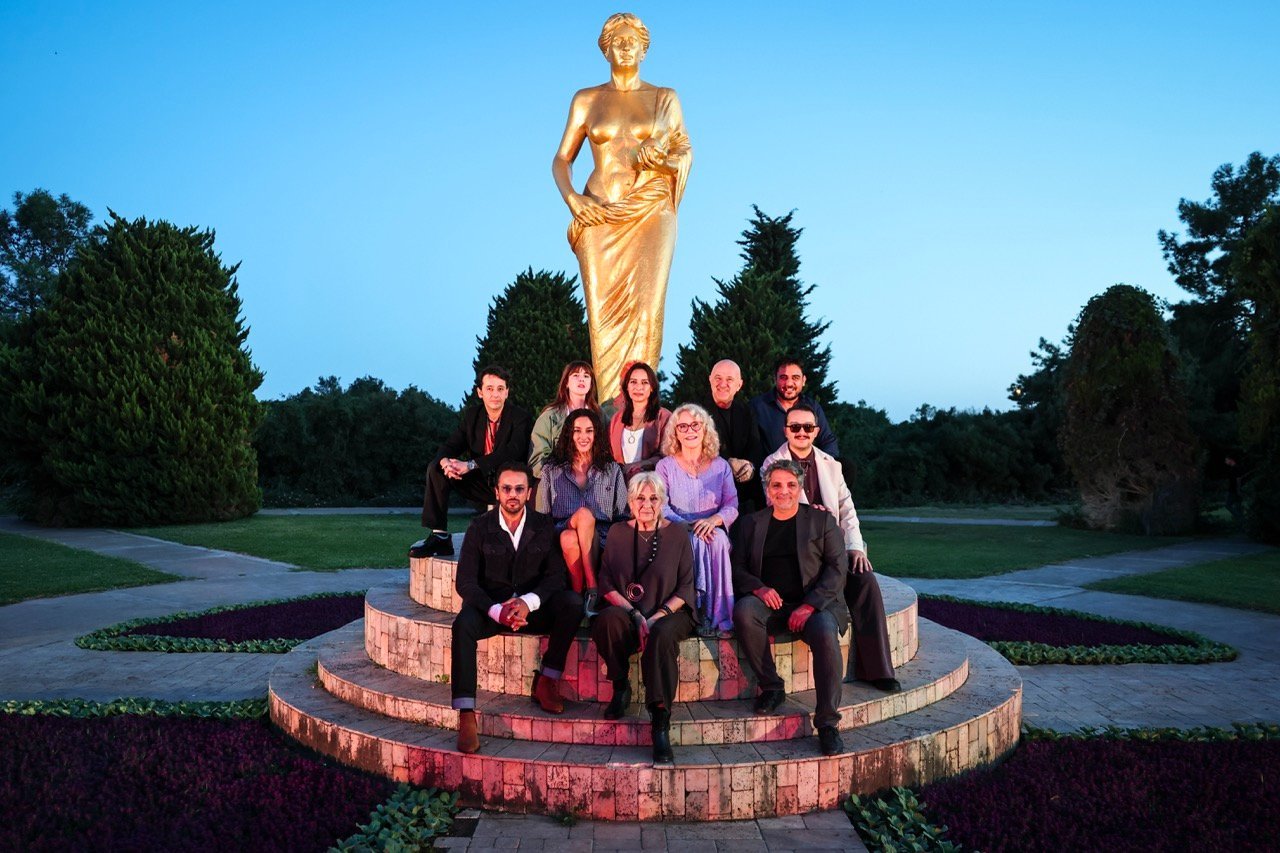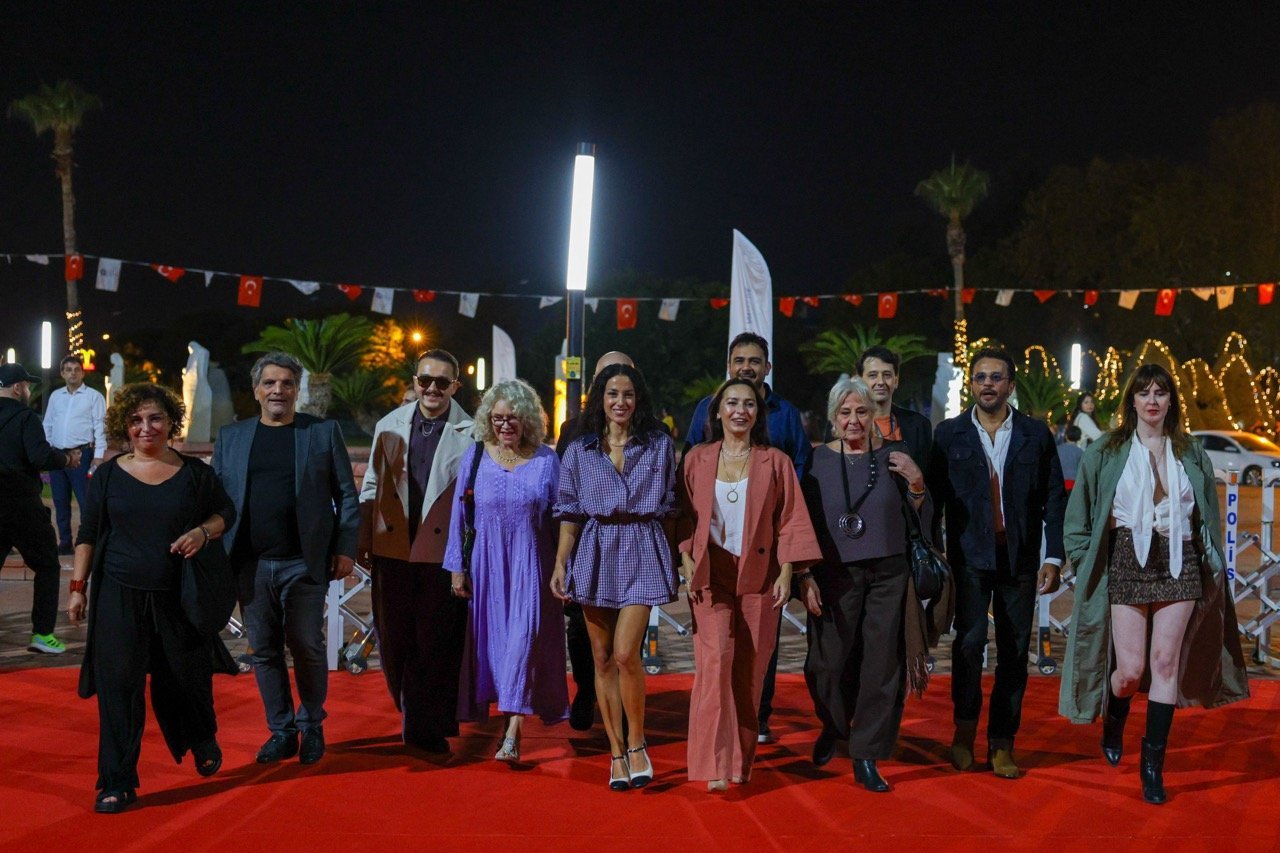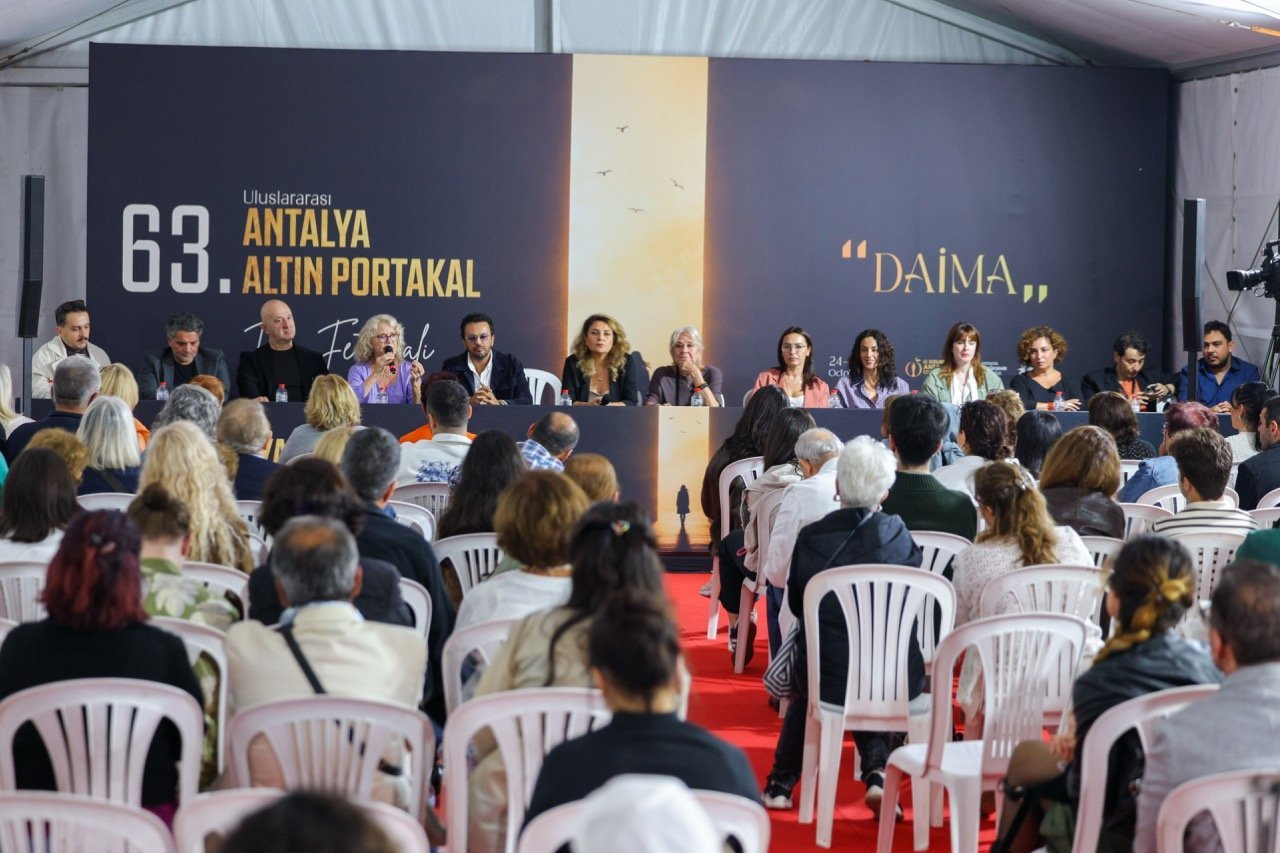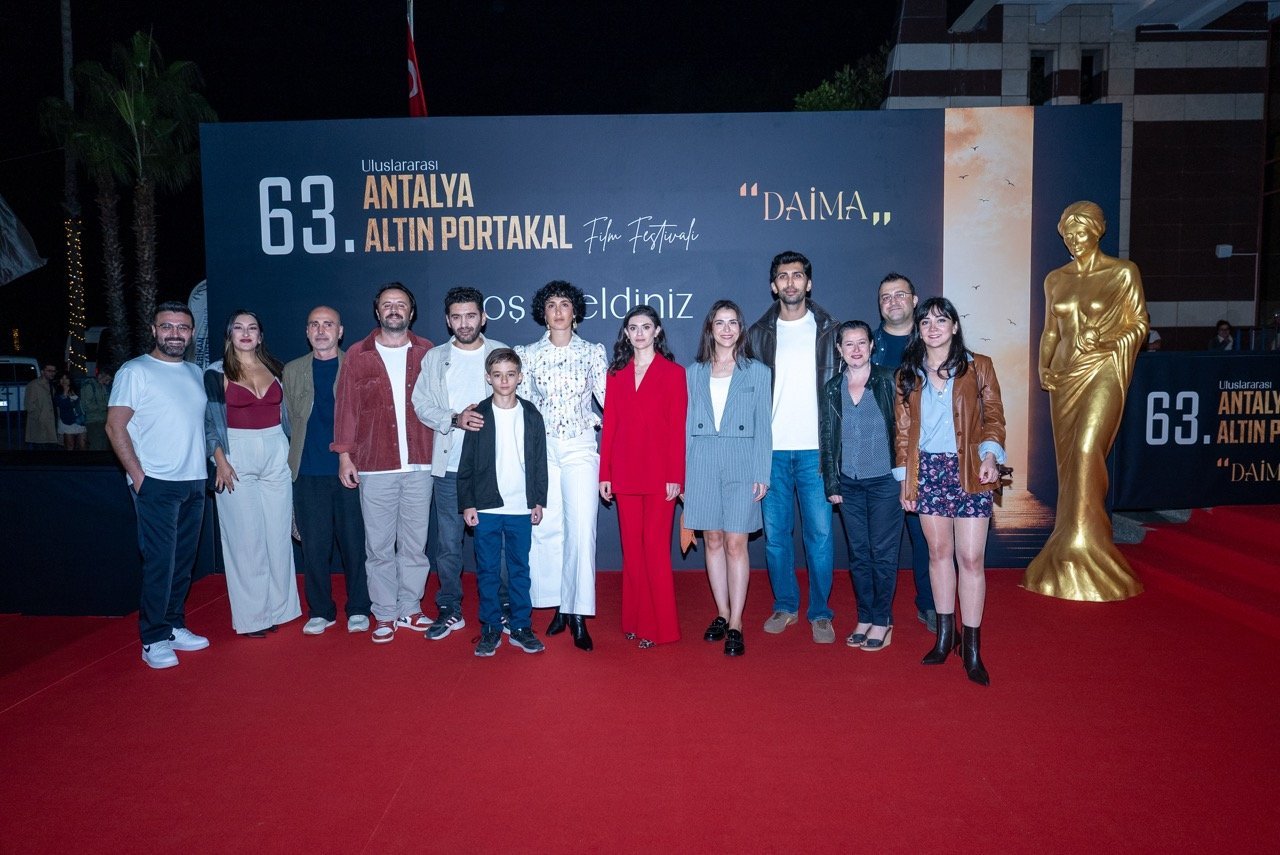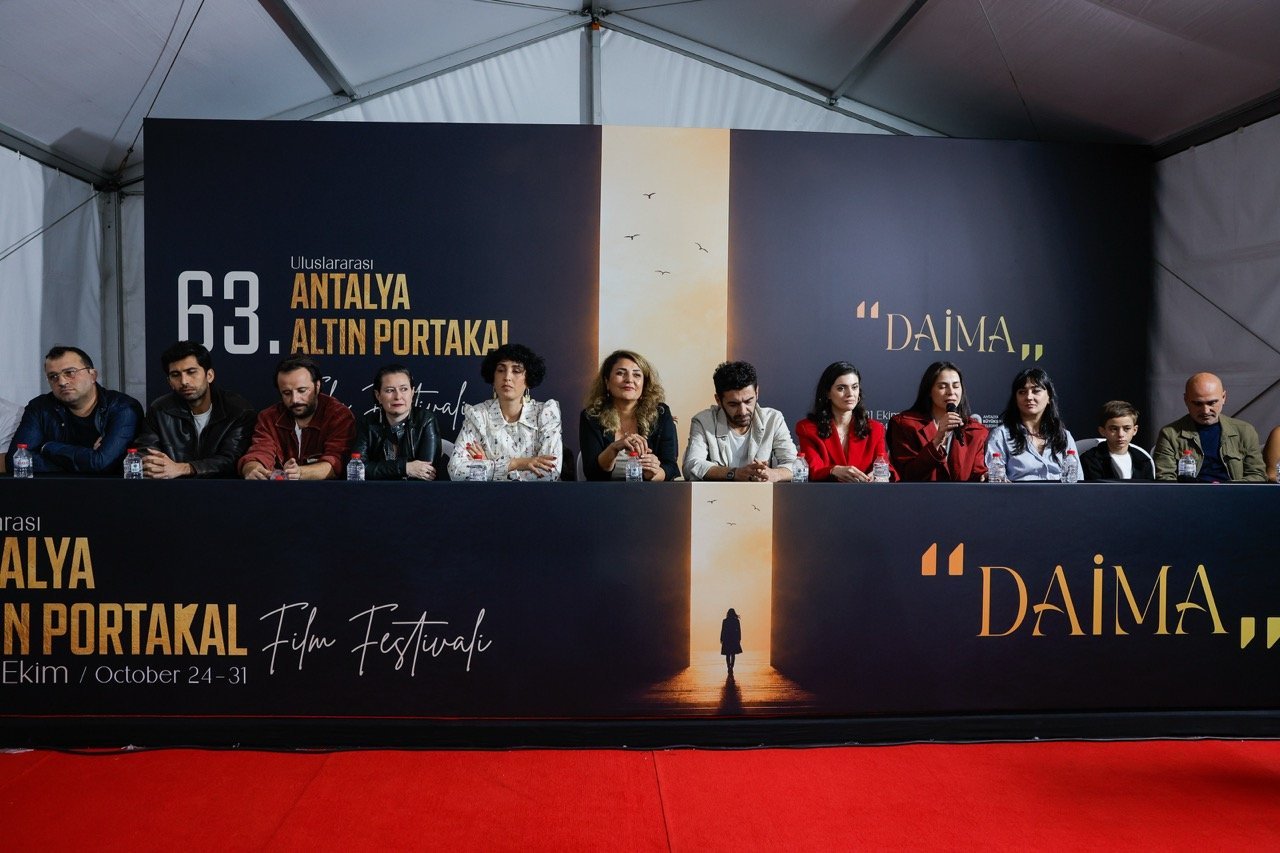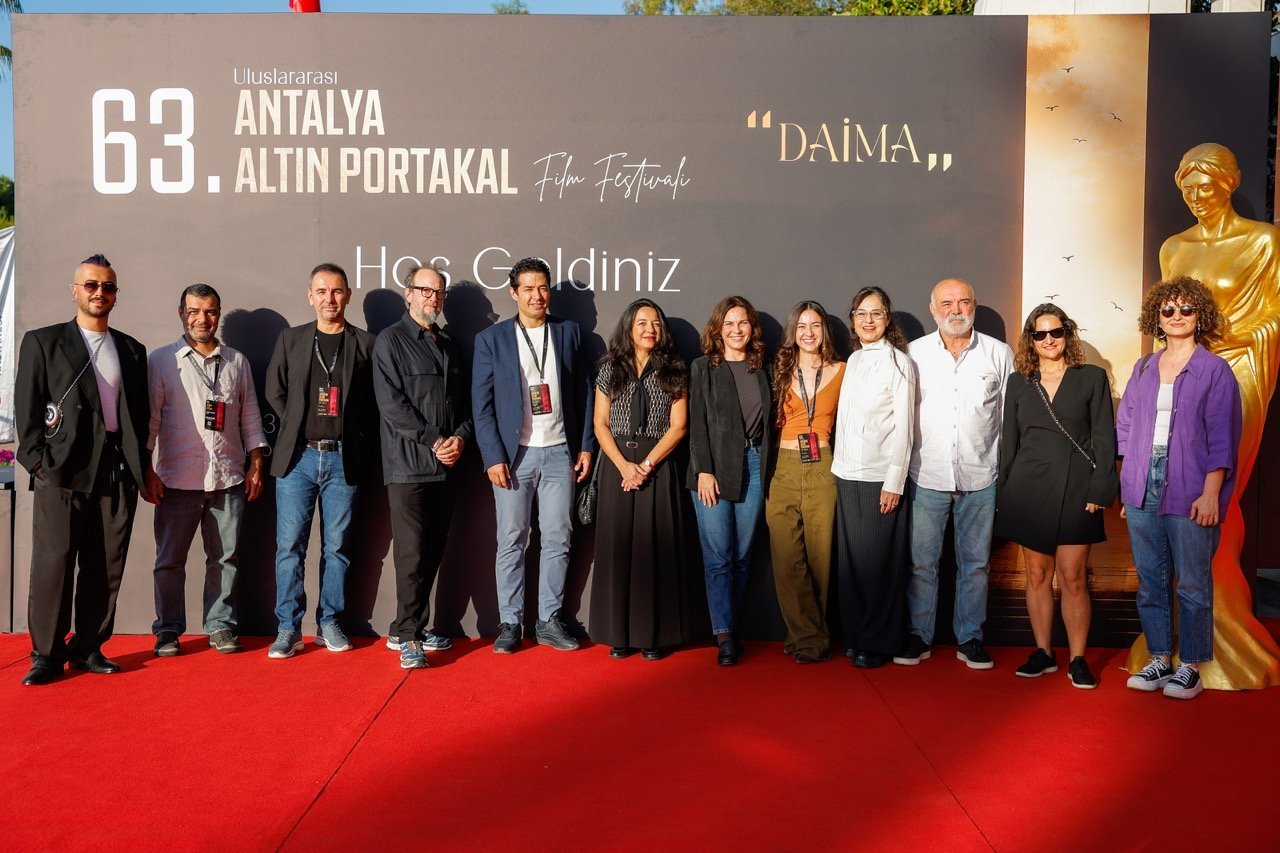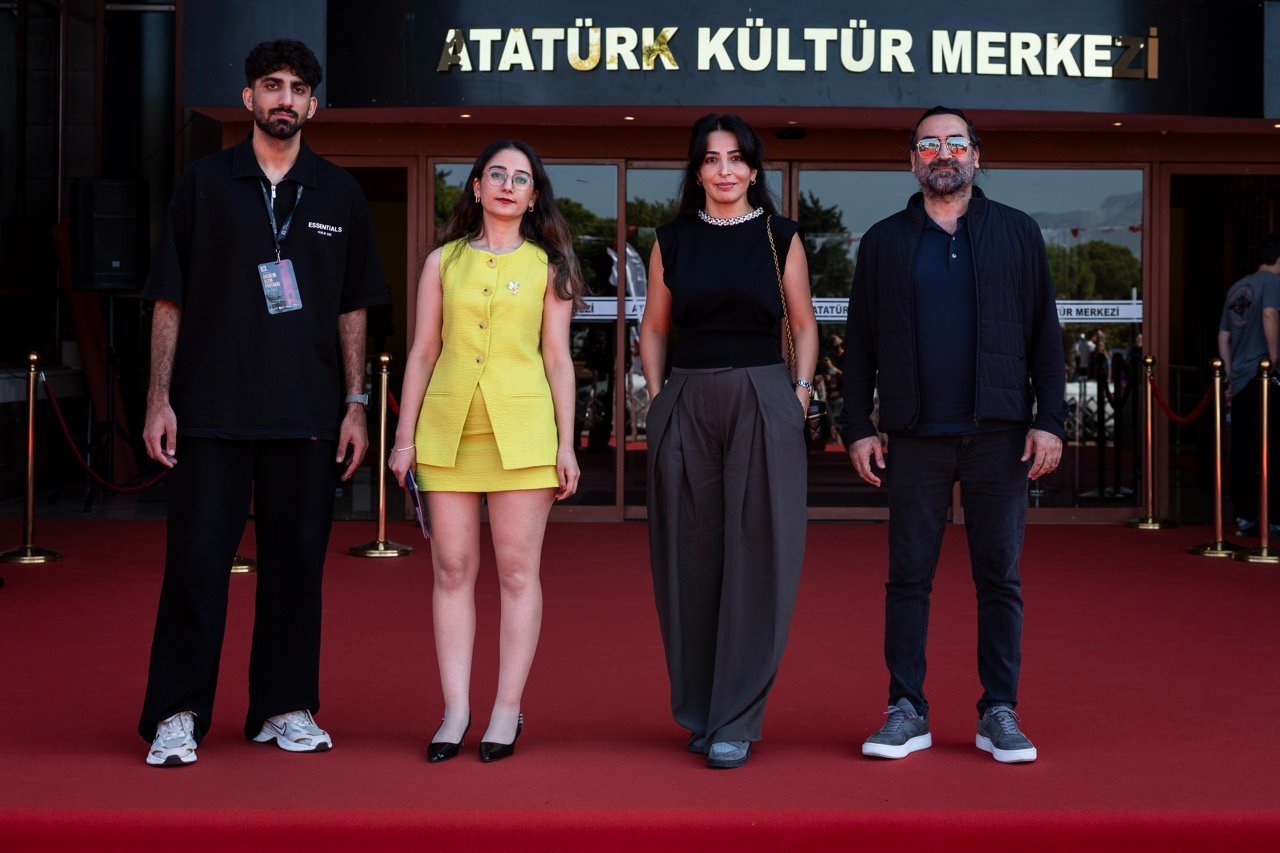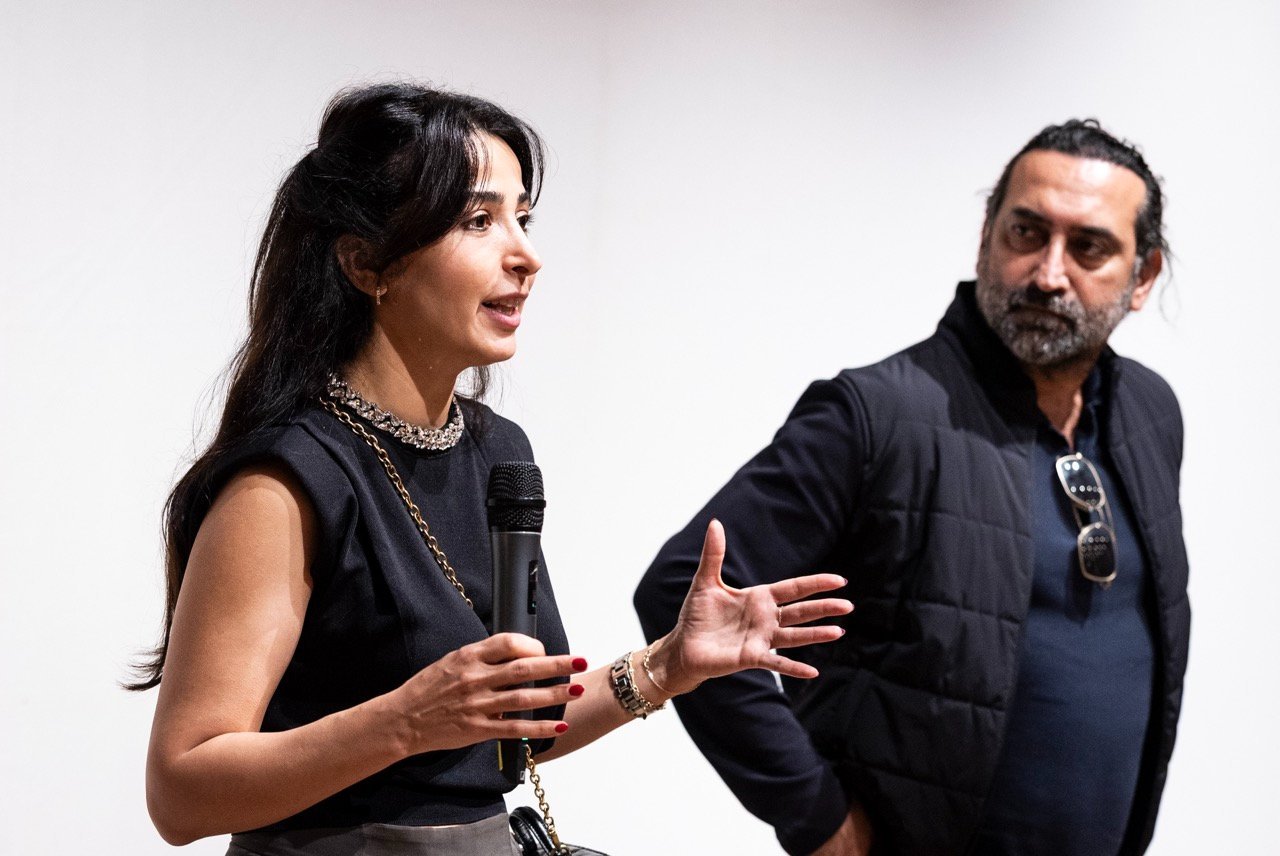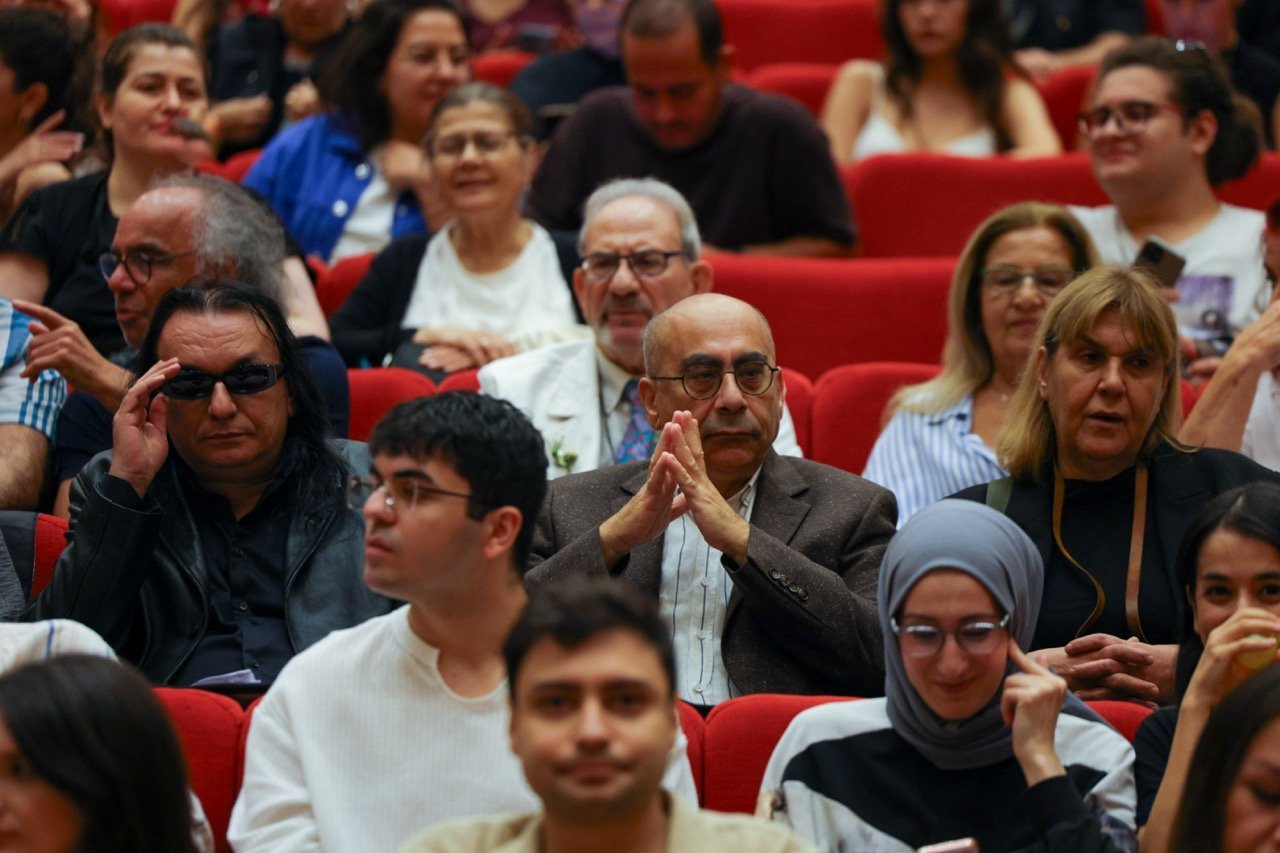
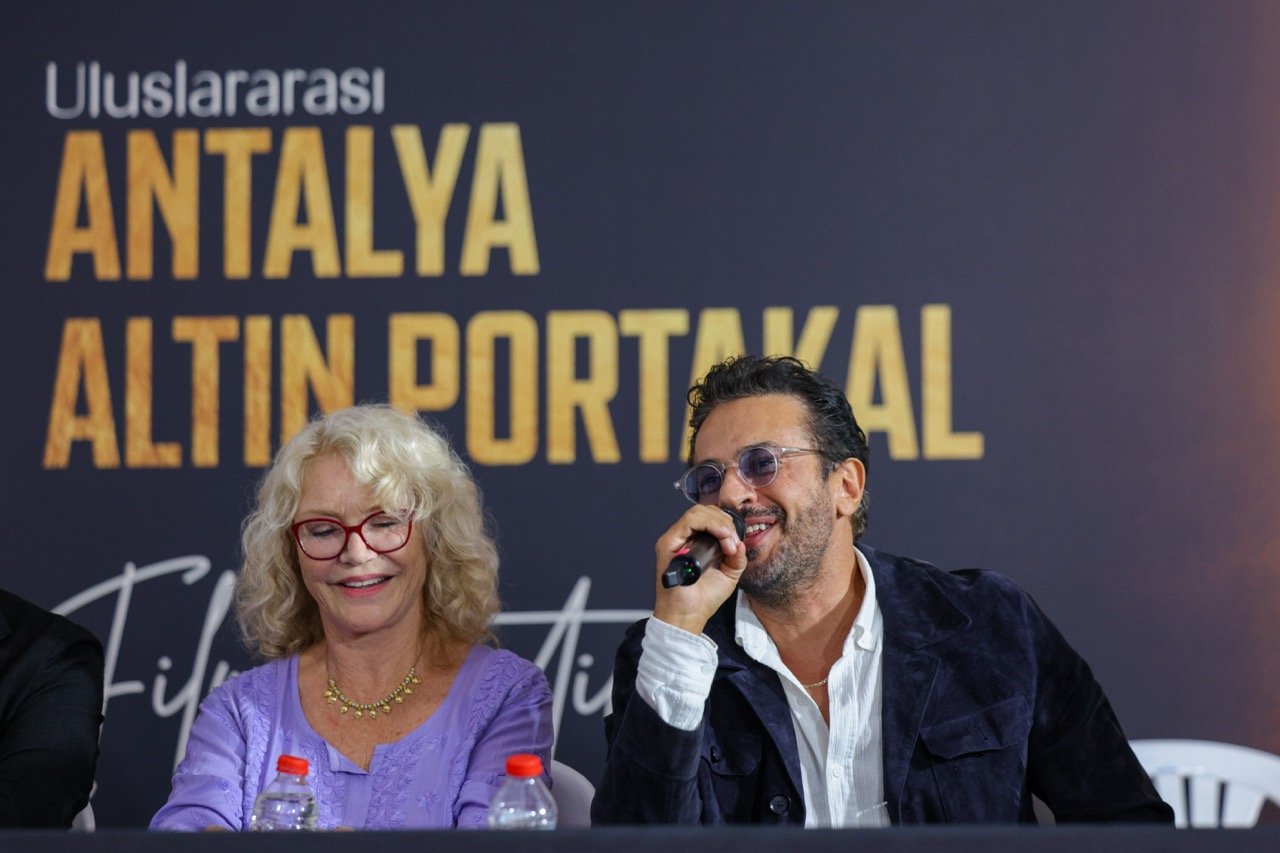
Bringing the magic of cinema to Antalya for the 63rd time, the Golden Orange welcomed filmmakers and audiences for a series of meet-and-greets on its opening day.
Following a magnificent opening ceremony, the excitement of the International Antalya Golden Orange Film Festival got underway in full swing. On the first day of the week-long celebration featuring leading works from Turkish and world cinema, the teams behind films in the national and international competition and special screening programmes met with audiences.
Şeyda Canan, director of “Women Behind the Camera,” which was screened as part of the opening day’s special documentary programme, spoke about the film’s production process after the screening:
“I had the chance to make the film with a small team but with tremendous support. I received support from women, men and everyone in the industry. Although this is my first film, I honestly never expected to receive such great support. All the production studios opened their doors to me. The directors who work with major actors are among those featured in our film. Producers and screenwriters have all worked with these people. I had interviews with each of them that lasted nearly two hours.”
A rising wave of assimilation in France
At the festival’s first Sunday gathering, Hüseyin Aydın Gürsoy, director of “A Turkish Case,” one of the International Competition films, answered questions. Explaining that he drew on his own experiences, Gürsoy said that after moving to France at the age of three, he changed his name to a French one to make life easier, and wanted to tell the story of a character caught between Türkiye and France. Emphasising that he also aimed to critique the system, Gürsoy said:
“When we wrote the screenplay, we wanted to criticise a system. And, of course, when we also raised questions about the Turkish community in France in the film, I wanted to criticise everyone to maintain a balance. Most importantly, I wanted to show whom and how the French system—and the protagonist, inevitably—serves. As the story progresses, we see that the main character is willing to do anything to avoid losing the privileges he has gained. And as those privileges slip away, he himself becomes an immigrant in the eyes of the French; he is treated like one. Assimilation and integration are among the film’s main themes. The system actually draws us towards assimilation. The French system expects assimilation from you not only in government but also in the business world. If you have a name of Arab origin, you have far fewer job opportunities. France will hold presidential elections in the next six months. The film was released in France this summer, where I held nearly 30 special screenings and Q&As. What mattered to me was that we enter the mind of an immigrant character and see what he experiences. The question I wanted audiences to take away was: ‘What would I do? What can I do to help immigrants feel at home in France?’”
Gürsoy also responded to a question asking, “We saw the position of a Turk in France in the film. What do you think it means to be Turkish in Türkiye today, given the country’s current social and political structure?”
“Actually, I don’t think the film has anything to do with Türkiye. The story I want to tell is that of the Turkish diaspora in France. From what I have observed, there is a huge difference between the life experiences of Turks abroad—especially those in France—and Turks in Türkiye. That is why the film’s main subject for me is the experience of being an immigrant in France and how we take a stand against racism. The title is ‘A Turkish Case,’ but it is more accurately an immigrant’s story. During the Q&As, I saw that many people identified with it, whether they were immigrants from Poland or from other countries.”
Asked about the film’s music, the director said they had also tried to represent the two cultures through the score: “I worked with a musician named Emrah Kaptan, who is also a Turkish immigrant raised in France. What mattered to us was the dialogue between two instruments: the guitar, representing the French side, and the saz, symbolising Turkish identity.”
A story of belonging and a father-daughter bond
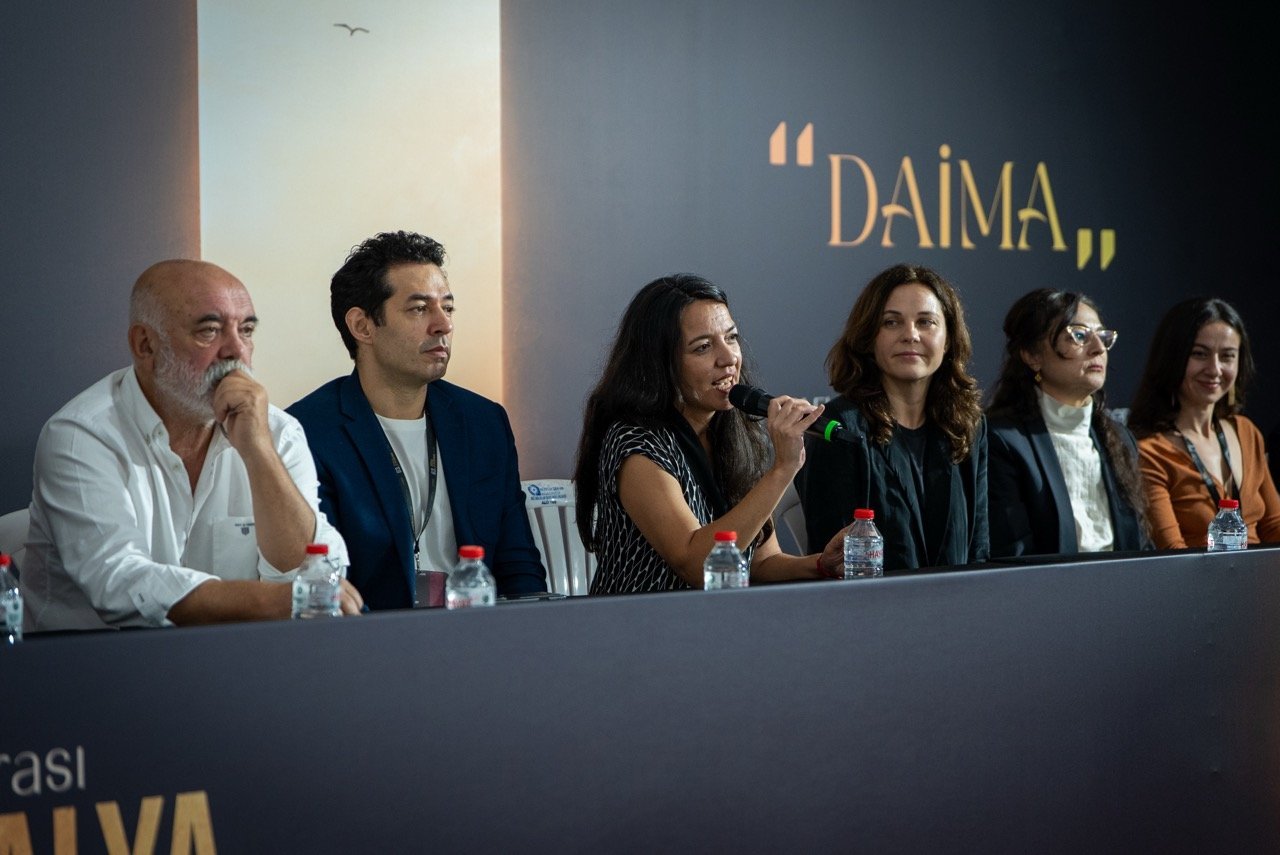
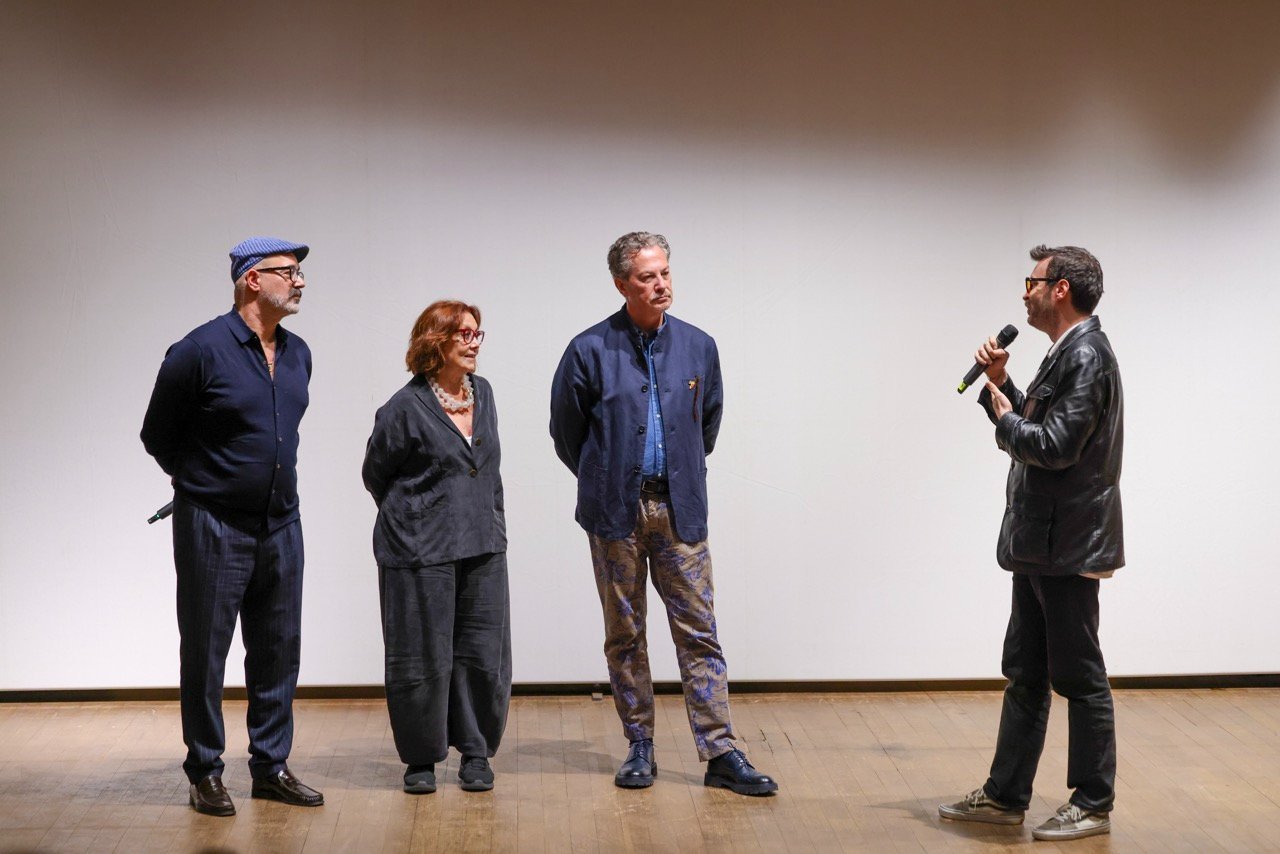
Following the screening of “Sevda,” director Ufuk Emiroğlu, actors Tülin Özen, Mert Fırat, Ercan Kesal, Süreyya Kilimci Köse and Fatma Zehra Durgut, producers Ersan Çongar and Cihan Aslı Filiz, and production designers Meral Efe Yurtseven and Yunus Emre Yurtseven answered questions. The director spoke about the film, which intertwines urban transformation with personal memory:
“While making my previous film, I began to wonder who I would be if I hadn’t known the things my mother and father had told me. It started with that question. While writing the screenplay, I often went to Istanbul. I followed the transformation of Fikirtepe neighbourhood, the changes in neighbourhoods like it, and the construction of these buildings for years.”
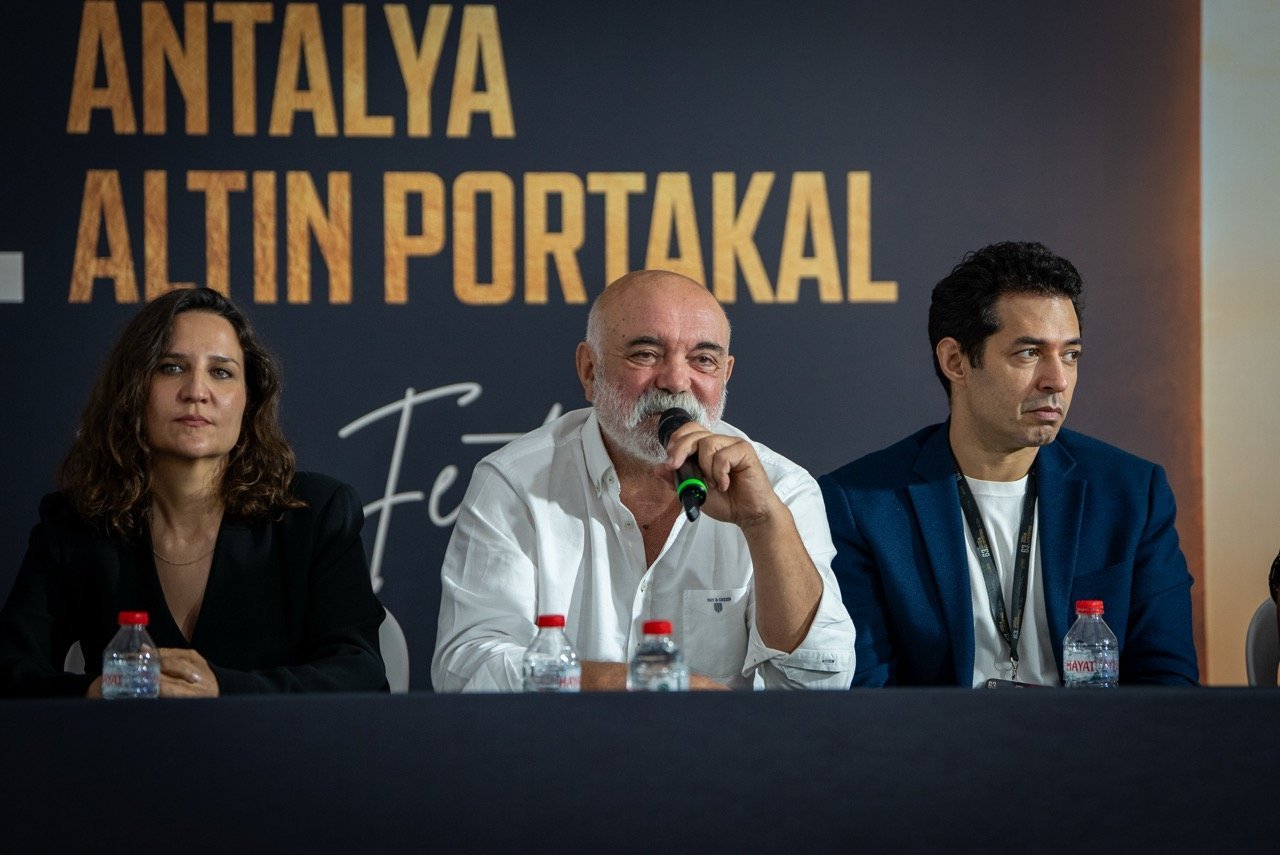
Actor Ercan Kesal, who also took part in the screenplay process, shared his perspective on the film:
“There used to be a documentary festival called Dokumentalist. Ufuk won Best Film with ‘My Father, Devrim and Me.’ I was on the jury, and that’s how we met. Our friendship continued, and he offered to make this film together. Films emerge from the turmoil within people. There is always turmoil inside me, too, and I hope it never ends. I think the emotion underpinning the film is exile: being unable to hold on, being unable to belong anywhere. If exile were a colour, it would be neither black nor white, but grey—and grey truly makes you shudder. One of the exiles in the film is Sevda’s mother. I was born in 1959; my generation lived through the 1980 coup. That is why I feel connected to what Ufuk’s parents experienced. I believe internal migration in Türkiye is still ongoing, leaving people unable to claim a place or put down roots. Many people in this room have probably changed addresses eight or ten times in their own lives. Sevda is that kind of story: a woman unable to resist transformation and change, and also a father-daughter story.”
On Sunday, 25 October, the Golden Orange also hosted two films from the National Competition. The first was “Tatlı Maya,” directed by Biket İlhan. After the screening, the director was joined for a Q&A by screenwriter-producer Nihan Belgin, actors Ayça Bingöl, Emre Altuğ, Cansu Tosun, Suna Yıldızoğlu, Erdem Ergüney and Fatih Serdar Yılmaz, production designer Natali Yeres, and co-producer Yalçın Akyıldız.
Director Biket İlhan, speaking about the film which tells the stories of three very different women, said: “When I was young, we experienced beautiful relationships in lovely neighbourhoods. I wanted to make this film out of a longing for those days. There are three women in the film, from different cultures, histories, languages and religions. And they each struggle so beautifully; we really need this.”
Actor Ayça Bingöl echoed the director: “The biggest reason I wanted to be in this film was Ms. Biket. I wanted to embark on a journey with her in my own career, considering her place and significance in Türkiye’s history and cinema, and all she has accomplished. We crowned that journey with a wonderful screenplay about women’s solidarity. I’m very happy to have worked alongside women striving for peace and unity at a time when discrimination and hatred are being fuelled so intensely.”
Cansu Tosun also said the screenplay’s emphasis on solidarity made her want to be part of the project: “I wanted to be part of this film because it clearly highlights what a person experiences when they feel othered or excluded, and because I saw how powerfully women’s solidarity was written. Our story shows that when we reach out to someone on the other side, we don’t just change and transform their life; many things in our own lives also change, transform and grow.”
Emre Altuğ: “When I heard Biket İlhan’s name, I prayed, ‘I hope I really love the screenplay.’”
Emre Altuğ, one of the film’s actors and also known as a musician, shared the moment he received the offer with humour: “Of course, Biket İlhan is the common thread among all of us. When they told me they would send the screenplay and I heard Biket İlhan’s name, I prayed, ‘God, I hope I love the screenplay’—and I did.”
Altuğ also spoke about his role as the film’s ‘narrator’:
“The fact that he was the narrator really appealed to me. It’s a tremendous contrast that a man so grounded, wise and perceptive about life still waits, without ever losing hope, for his son who disappeared in a lake—even though that hope is completely at odds with reality. It does make you wonder: what if he suddenly came back? I believe we should never lose hope. And I’d like to say something about the bad people: Erdem played it so well—what a vile guy! Erdem is a friend from school, so I can speak freely. He played the role without exaggeration, yet we hated him enough, didn’t we?”
“The film says that we all live in a life that is compressed, and that there are some bad people, too—and that part fell to me!” said actor Erdem Ergüney, who also highlighted the “Yeşilçam atmosphere” on set: “Working with Ms. Biket is very valuable, but there was also a Yeşilçam spirit, wasn’t there? Alongside our director, we have much more experienced actresses, as well as younger colleagues; I think there was a great harmony. The fact that characters of different ages come together around the same goal shows that we can unite. We sometimes get stuck on certain stories, saying, ‘That was the past, not now.’ But if we think more rationally and can access women’s perspectives, we can realise that we experience the same kind of life.”
Suna Yıldızoğlu: “I received nothing but love in Türkiye until social media came along”
Veteran actor Suna Yıldızoğlu addressed the notion of ‘evil’ in the film, drawing on her own life and the use of social media:
“I came to Türkiye in 1974, and until social media appeared, I received nothing but love. I’m speaking as an Englishwoman now; it’s a little difficult after 52 years, but I have never seen Turkish hospitality and the acceptance of people as they are anywhere else! I’ve lived in many different countries—Australia, England, France and Spain—and I haven’t seen it anywhere else. But in recent years I’ve started seeing it on social media. There really are bad, ill-intentioned people. They have found a space for themselves, and that space makes us lose hope. Yesterday, we joined the parade, and I saw the Türkiye I used to love.”
“Shelter, having and belonging”
The day’s second National Competition Q&A was for “Taş ve Tüy,” written and directed by Ragıp Türk. Following the screening, screenwriter-director Ragıp Türk, actors Duygu Aktoprak, Melda Tuzluca, Özgür Meriç, Ersen Karagöz, Tuğba Kürükoğlu and Deniz Tekeroğlu, cinematographer Emre Pekçakır, production designer Levent Uçma, producer İris Tahhuşoğlu and executive producer Alican Bektaş Katılmış answered questions.
Speaking about the film, which follows Nazire as she tries to regain custody of her son from social services after being released from prison, the director said, “I wanted it to bear witness to its time,” and continued:
“In fact, I wanted to make a film that would bear witness to the era and to things we all experience in everyday life. At its core are the housing problem, an unsettling atmosphere, and people driven by the system to commit crimes in order to do what is right.”
Actor Melda Tuzluca explained what affected her most about the film: “Regardless of our socioeconomic backgrounds, we all struggle through life alongside the burdens placed on us and many other factors.”
“The story really drew me in because it brings our most basic needs into view,” said actor Tuğba Kürükoğlu, continuing: “It revolves around shelter, having and belonging—and all three are deeply human concepts. When these are missing, how do we make them whole? How do we take that journey towards fulfilment, and overcome the obstacles we encounter in life? The film tries to answer these questions.”
Actor Özgür Meriç said the film raises many questions:
“While making the film, I kept asking: ‘Can’t the state act like a father to this girl? Life hasn’t given you a chance, my child—can’t we give you one?’ All the characters are actually alike; they are all helpless and somehow try to get what they want through that helplessness. Who is to blame? These are the questions I’m asking, too.”
Duygu Aktoprak, who plays Nazan and also produced the film, said becoming a mother changed how she viewed the character:
“Since I’ve been involved in the project from the beginning, I never felt that Nazan was very distant from me. But then I had a daughter—she’s now one year old—and I understand Nazan’s feelings much better.”
“Many male actors turned down the role played by Taner Birsel”
The day’s final Q&A was for “Çekmeceler,” screened for audiences as part of the National Special Screening programme at AKM Perge Hall. Directors Mehmet Binay and Caner Alper, along with veteran actor Tilbe Saran, who is also this year’s Honorary Award recipient, attended the discussion.
Director Mehmet Binay said the film was written based on the story of a close friend and that 13 versions of the screenplay were developed during the lengthy process. Caner Alper noted that the film was screened at a psychiatry congress, where specialists said, “We show it as a reference to all parents of children with borderline personality disorder.”
Alper, who said, “We found our way to this character by following our instincts,” especially wanted to praise Taner Birsel, who plays the father:
“We met with many male actors; they turned down the role. I think Taner Birsel is extraordinary. It isn’t easy to play a character who is impeccably dressed, charming and polite—someone everyone speaks of as ‘such a good person’—yet who is troubled by profound delusions and inner turmoil, and a narcissistic parent who makes everyone around him ill.”
Tilbe Saran backed Alper’s comments, saying, “It really was a difficult film. Ece carried a tremendous burden in it,” and continued:
“I would call it the pressure of the male world—‘becoming a man by crawling through hardship.’ My regards to Pınar Selek; it seems to echo her ideas. Watching this film again today, I felt the pressure of a masculine world on a man, its pressure on the entire world, and the very heavy toll it takes.”
Saran also spoke about working with the directors on their previous projects:
“The fire, flour and water are all yours; I’m curious, so I suppose I get involved and meddle. But I think this is the best part of cinema, theatre and art: when work is made together, it truly gains flavour and richness. Of course, Caner wrote it, and he and Mehmet worked on it for a very long time, but everyone put their sweat and effort into those rehearsals. Through improvisations, we reached places we had never thought of or planned, then decided to let some things go, saying this was too much or that was missing. Truly, an entire army contributed. These are works made with humility and wholehearted commitment, and that makes the result very valuable.”
https://antalyaff.com/tr/