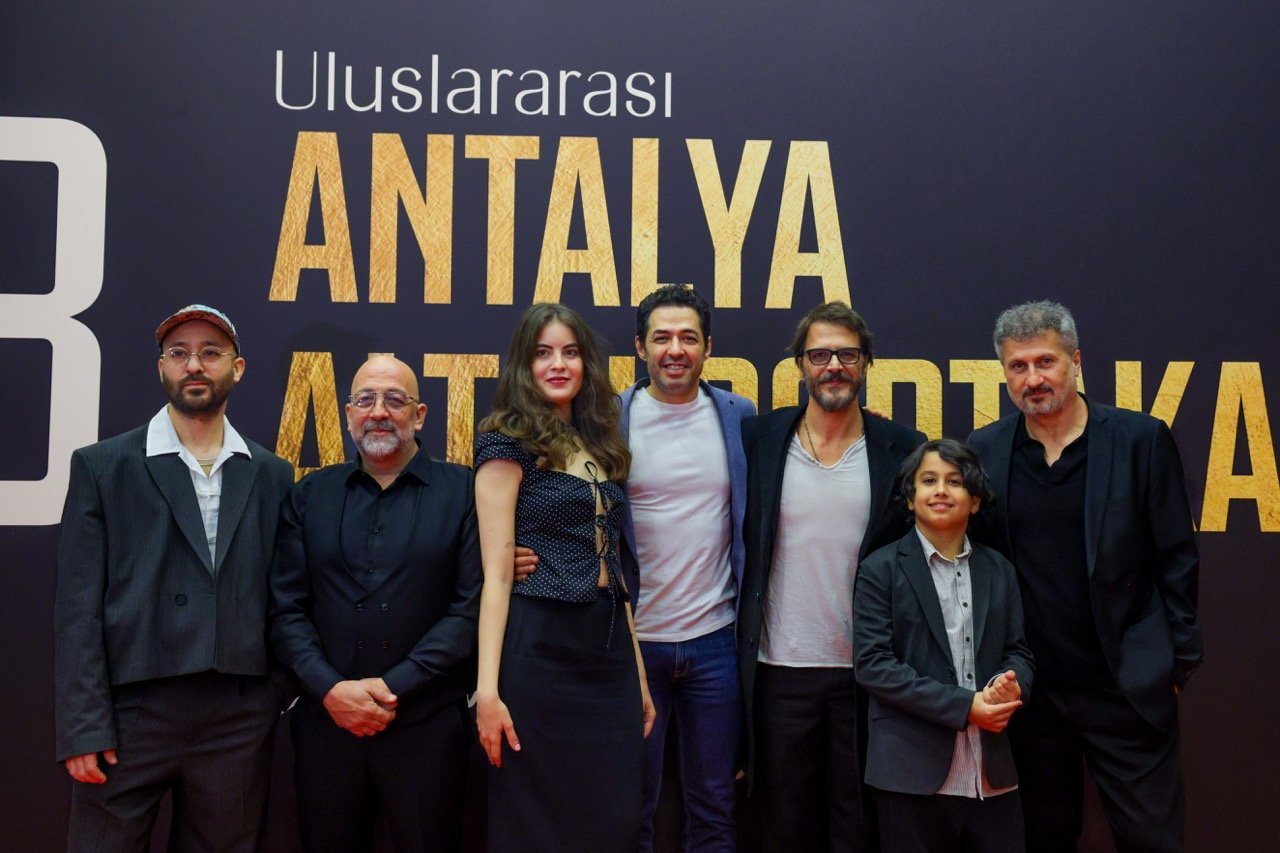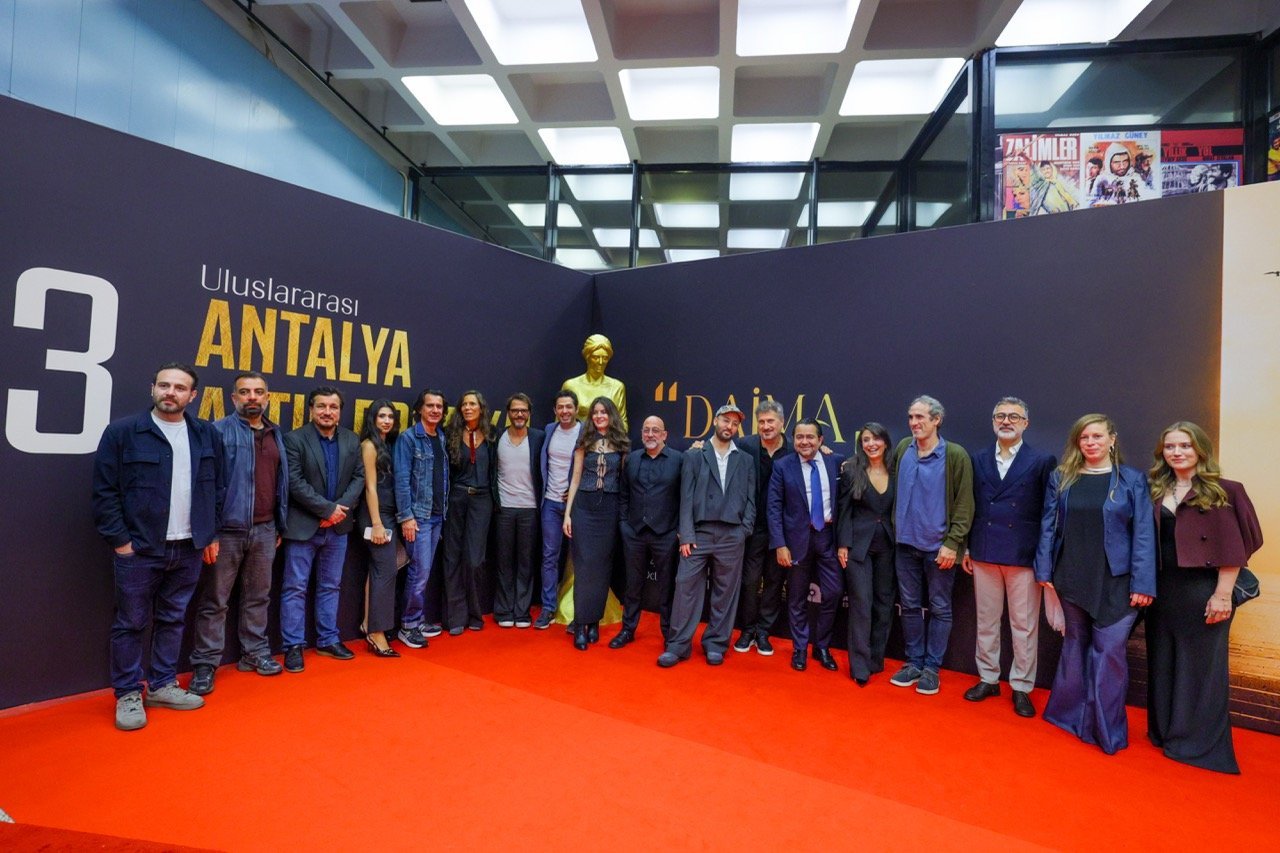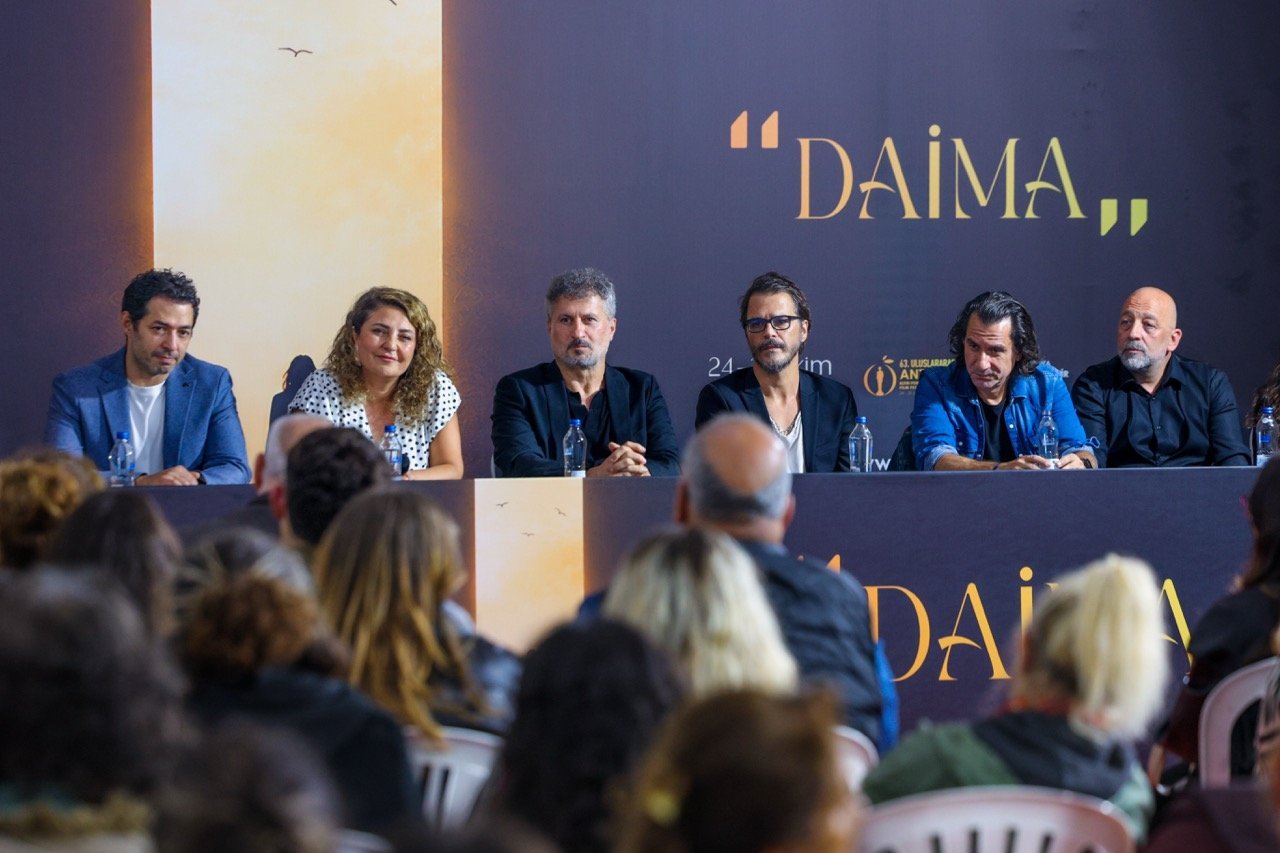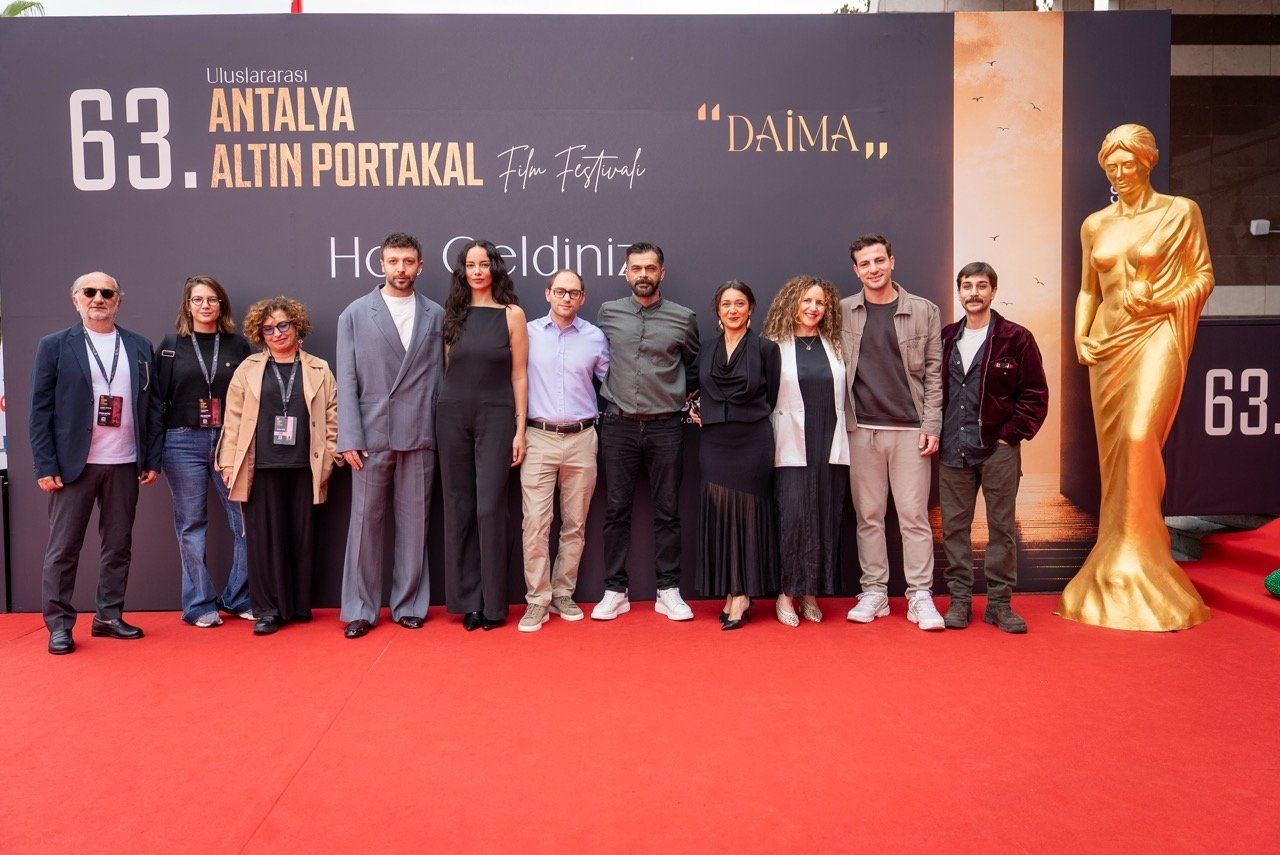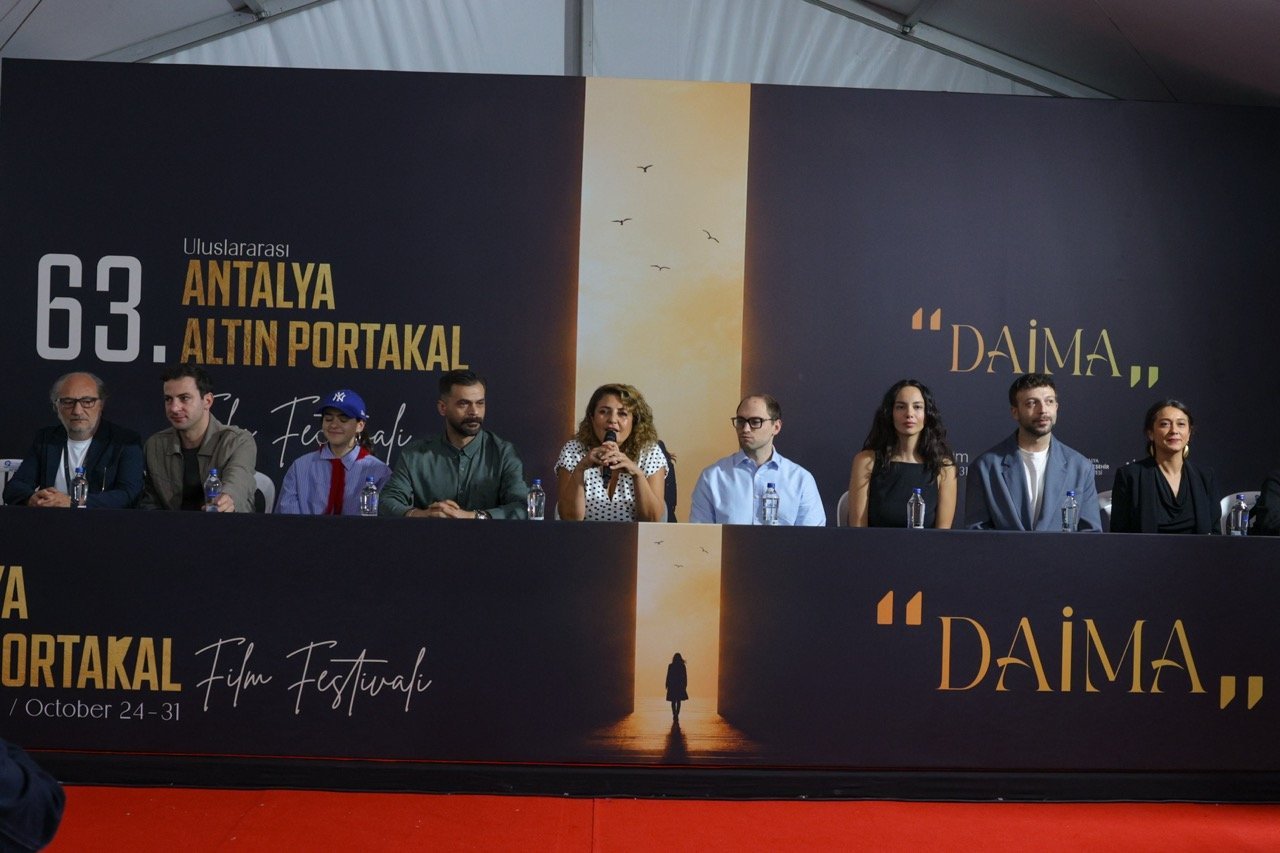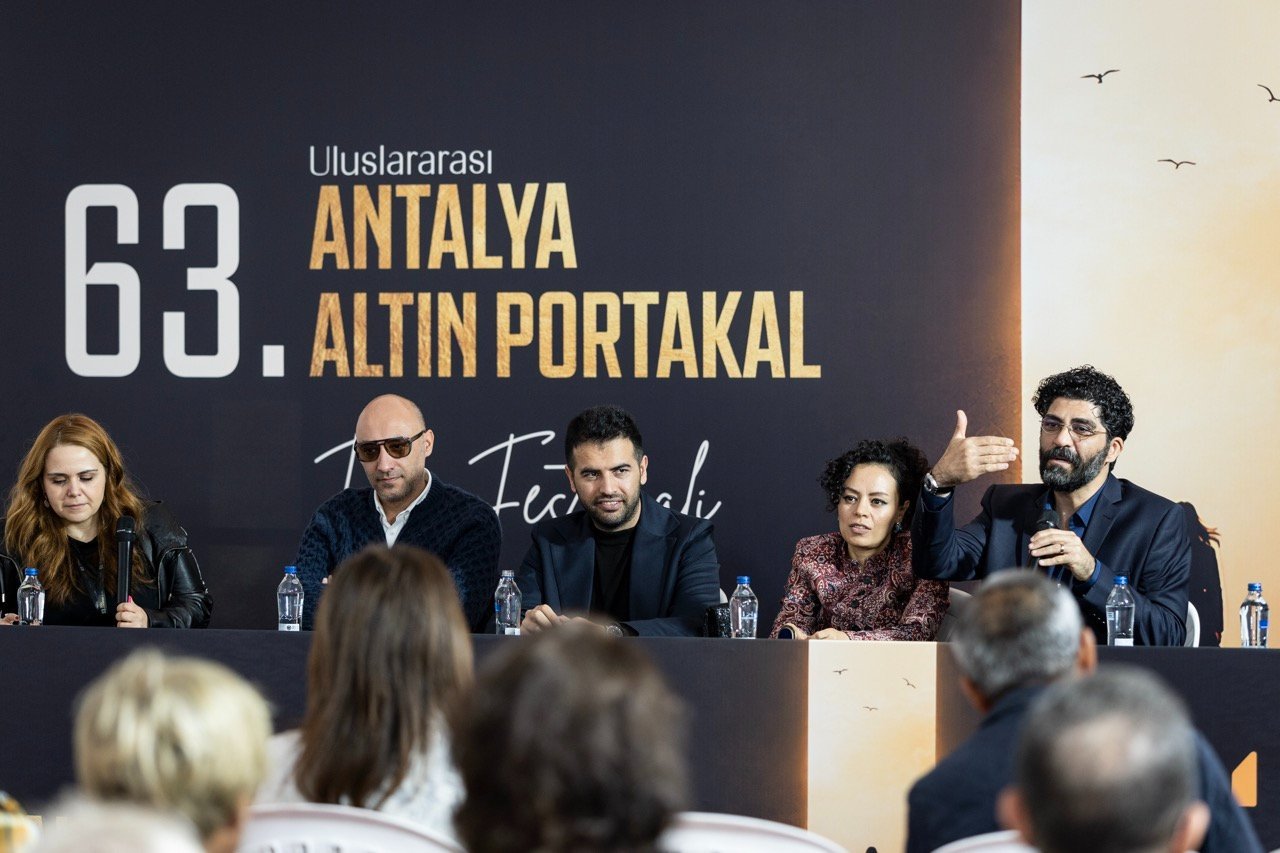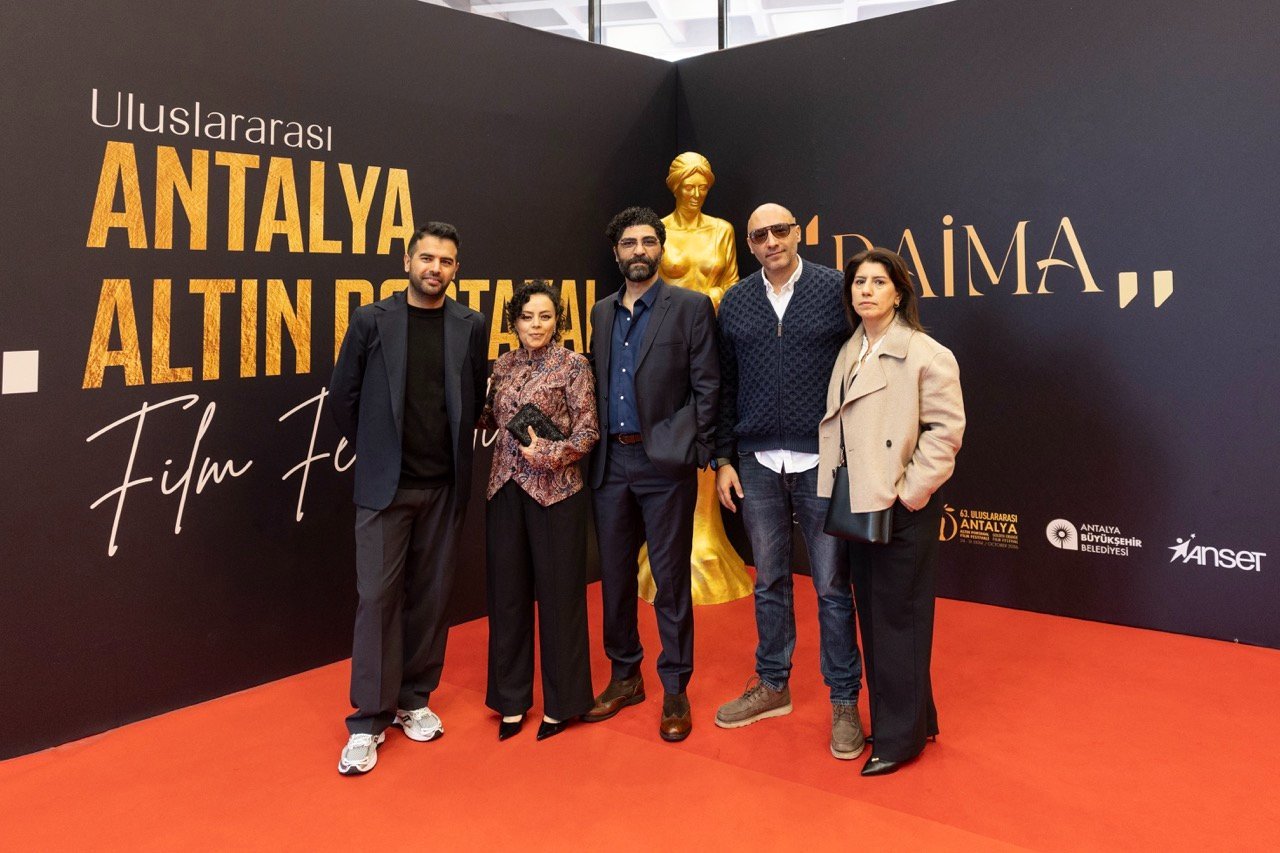
The Golden Orange National and International Feature Film Competitions are continuing with great excitement. As the latest domestic productions and some of the most successful examples of world cinema meet film lovers, filmmakers are also coming together with audiences in Antalya.
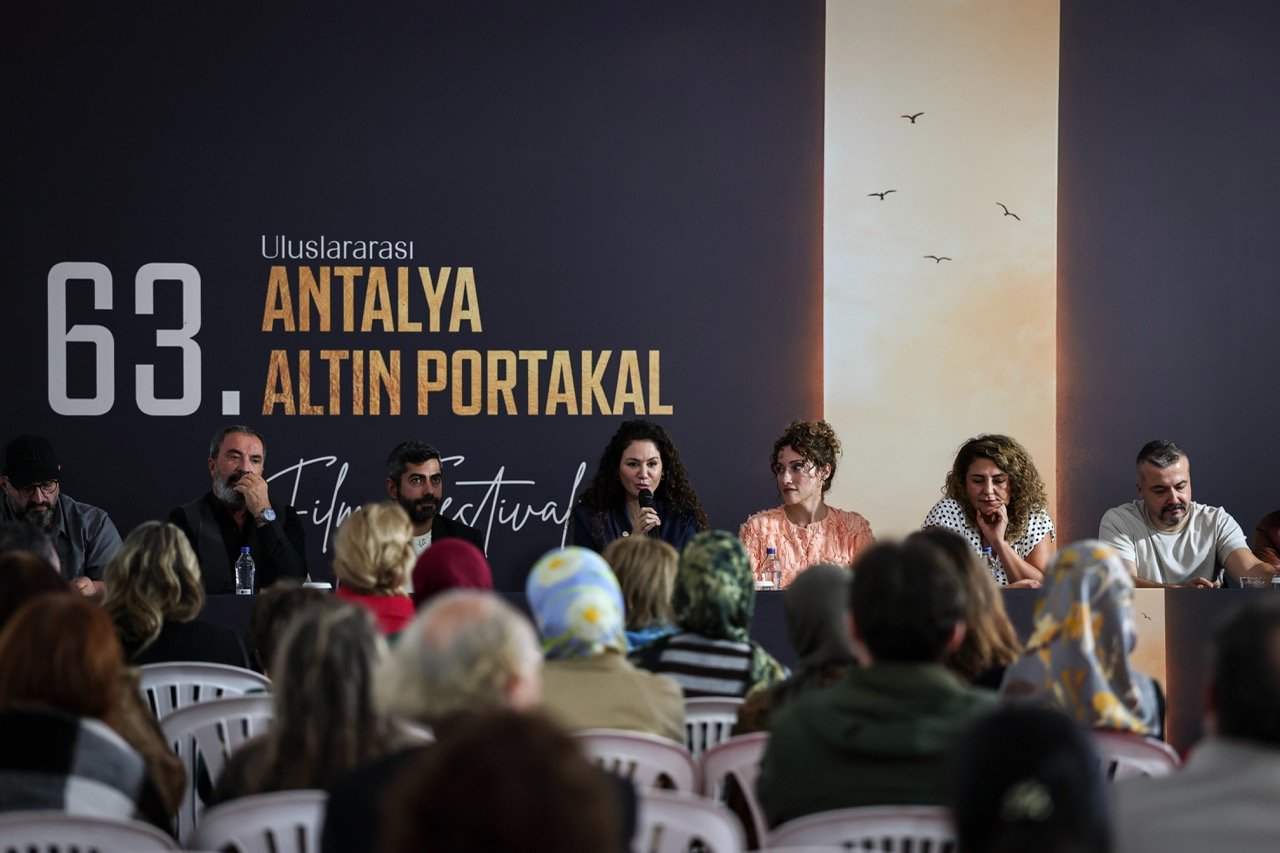
The excitement of the competitions at the 63rd International Antalya Golden Orange Film Festival is in full swing. Feature films and their teams in the national and international categories are meeting filmgoers. Yesterday, the films presented to audiences alongside their teams included Elisa, Kadim Mavi, Hakikatin Ölümü, Babalarımdan Biri Ay’dır, Umut Işığı and Riverstone.
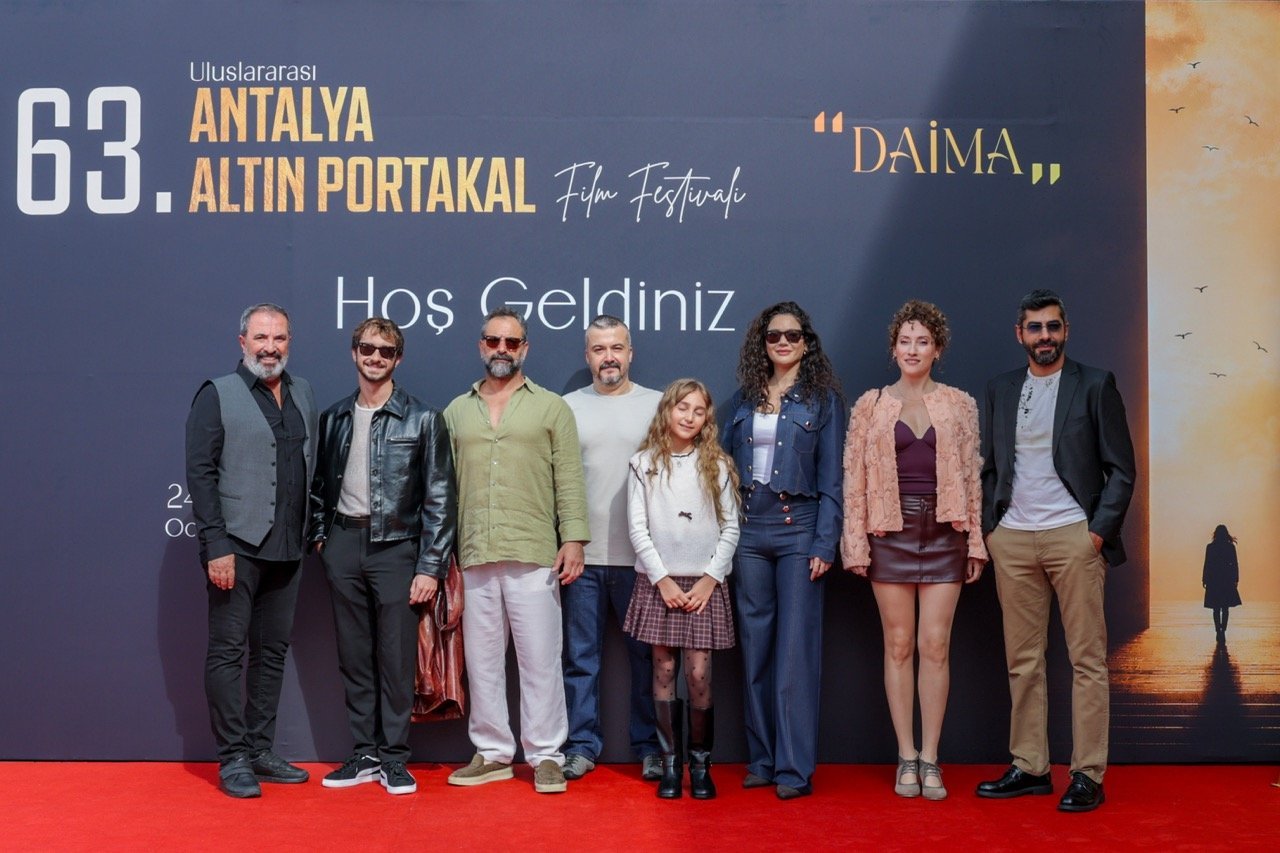
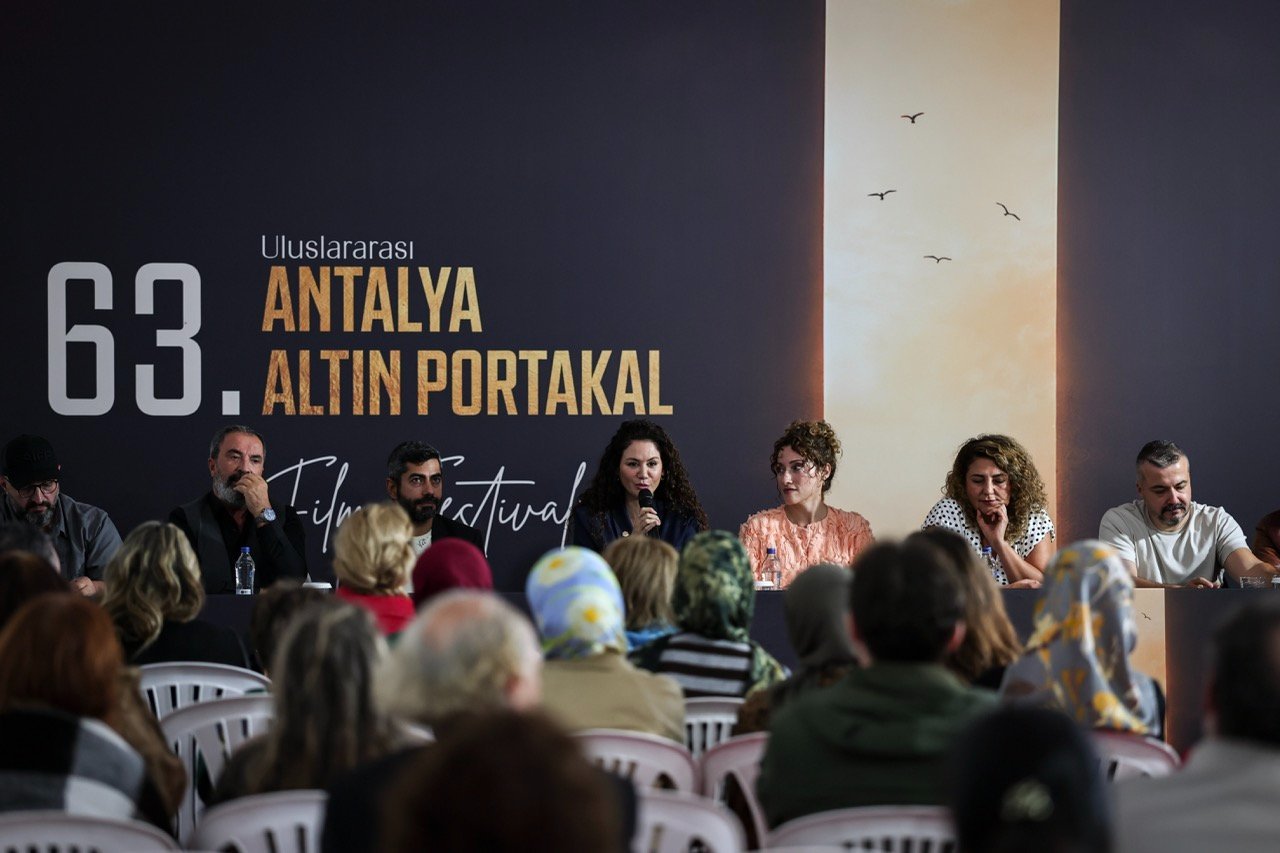
The team behind Elisa, one of the National Feature Film Competition titles making its world premiere at Golden Orange, answered questions after the screening at the Aspendos Hall of the Atatürk Cultural Center (AKM). Despite being a science-fiction film—a genre rarely seen in Turkish cinema—it received great interest from the audience. The Q&A was attended by director Sinan Sertel, screenwriter Selman Kılıçaslan, actors Sabahattin Yakut, Cemil Büyükdöğerli, Berfu Öngören, Ekin Türkmen, Mehmet Çepiç and Serkan Altıntaş, child actor Defne Doğar, and editor Naim Kanat.
Director Sinan Sertel, who said he had been a science-fiction fan since childhood, explained: “My previous film was also a superhero film. But unlike the genre’s usual conventions, this film has no single main character. In science fiction, there is generally a protagonist whose story we follow. You could say our film has no lead; we enter everyone’s story—even the stories of the dead.”
When asked how he viewed the possibility of his film being compared with successful science-fiction works from world cinema, Sertel said: “This is not just science fiction; it is a way of telling science fiction through the lens of our own lands. So I’m not putting myself in that competition. I’m playing on my own field.”
The actors echoed this sentiment, saying that one of the main reasons they accepted the project was the chance to “take the risk of doing something unique.” Sabahattin Yakut recalled, “We spent our entire day inside a cave spanning 30 square kilometres,” while Berfu Öngören supported her colleague, saying, “It gave me the opportunity to see what I could and couldn’t do as an actor.” Ekin Türkmen said her claustrophobia made working in the mine difficult, adding: “I’d like to take this opportunity to send my greetings and respect to all mine workers. Alongside the physical risks, it is also psychologically very challenging work.”
Veteran actor Mehmet Çepiç humorously noted that this was the first time in his career he had played a character like this:
“I’m usually offered roles as mafia bosses, intelligence agents, terrorists, traitors and despicable men. I was deeply affected when I read this screenplay. On the last day of filming, our assistant director Vural asked, ‘If you could say just one thing about the film, what would it be?’ Thinking of Sinan, I said, ‘gratitude.’ When you are grateful, you succeed; he was very grateful.”
Naim Kanat said that the film’s editing had also taken shape alongside the screenplay from the very beginning, explaining:
“I came on board during the screenplay stage, and we discussed everything from the start. It is genre cinema, but it is deeply connected to these lands; it incorporates the early Christian period as well as the Islamic period. And because we wanted to be bold, we discussed our limits and tried many things. That is why the editing process was so enjoyable and fulfilling.”
The second National Competition film screened at Aspendos was Kadim Mavi. After the screening, director Emir Ziyalar, producer Ahmet Ziyalar, line producer Deniz Bilol Büyükgüral, actors Umut Aksoy, Merve Kaya, Barış Kolik, Bilgi Aydoğmuş, Musa Öztep and Öykü Su Okur, and production designer Natali Yeres answered questions.
Asked whether he was concerned that the film’s meaning might be overshadowed by its unconventional visual aesthetic, the director replied:
“For me, there is no single meaning that the film must be understood to convey. I invite everyone to search for their own meaning in it. One audience member said, ‘I didn’t understand the film, but I loved it.’ That is enough for me; that was what I wanted to achieve.”
In response to an audience member’s comment that the film alluded to many mythological elements but did so subtly, the director said:
“Honestly, I tried to stay away from traditional Greek mythology, because they are already doing that. I wanted to explore the mythology of our own land. Rather than offering clear-cut signs, we set out to weave our own mythology by moving around archetypes.”
Production designer Natali Yeres summarised her work on the film’s visual world from a similar perspective:
“As mentioned, we drew on certain myths and archetypes, but we created our own mythological heroes. Every object you see was designed and made from scratch. A personal trauma forms the backbone of this story. Since we wanted to keep it somewhat understated, I tried to create an aesthetic world in which these elements felt natural, conveying them subtly rather than explicitly.”
Hüseyin Karabey, who won international awards with Benim Marlon ve Brandom, his directorial debut, competed in the National Feature Film Competition with his latest film, Hakikatin Ölümü. After the screening, the director and actors Mert Fırat, Mehmet Günsür, Yağmur Elif Seber, Ümit Çırak, Emre Yıldızlar and Taylan Karabey, cinematographer Orçun Özçelik, assistant director Ali Çakmak, production designer Çağlar Narler, line producer Serdal Doğan, and producers Doruk Acar, Cem Doruk, Ozan Kılavuz and Abdullah Bozan answered questions.
The director described the elements behind the film, which portrays two old friends confronting one another over a heavy burden, from his own perspective:
“We have problems that have accumulated and been passed down through generations. Even when we do not pass them on to young people directly, they understand them from our attitudes and behaviour. When I asked myself why I keep choosing these subjects, I realised that I do it so we do not forget. In a way, I make these films for myself. I tell myself that if we don’t forget, perhaps we can be a little better prepared for new traumas we may face in the future. Making films like these is not easy.”
When asked how he approached the contradictions of his character and what kind of relationship he formed with him, actor Mert Fırat said:
“I had heard a lot about the novel before. There is a great deal of content about the dark period of the 1990s, but works written with this kind of quality are rare. Feridun captures very well how people’s lives were consumed during that period and how people turned into walking corpses. He does this without bombast or taking a political side, remaining entirely focused on the human experience. For me, the story concerns years we lived through right in the heart of Ankara. We witnessed and experienced many assassinations, incidents in the southeast, incidents in major cities, university protests and clashes. We listened to and read about the 1970s from the previous generation. In the 1980s, we followed the programme 32. Gün, political newspapers and the television programmes that followed, and then lived through Turkey in the 1990s. As actors, we had already lived through that period—or perhaps that period had lived through us. We had heard about Feridun’s experiences and read about them in books, but experiencing them through this role was entirely different for me. Still, he is a character you have to defend in a way. I believe acting is also an art of defence. No matter how terrible a character may be, you have to place them somewhere and defend them.”
Mehmet Günsür, who plays Timuçin—the character who confronts Feridun and reminds him of the truth—was also asked about the opposing positions of the characters. The veteran actor pointed to the concept of “responsibility”:
“There is a responsibility in every story. We have a responsibility to the people who lived through these events to tell what we want to say well, especially if we are talking about genuine emotions, as we are here. If we portray real people, we have responsibilities toward them, too. We must not forget certain things. Our story is about both Turkey and the whole world. It has always been this way: darkness uses you first, then destroys you. This has happened everywhere, not only in Turkey. Remembering these things is also a responsibility.”
The director added to Günsür’s comments:
“There is a very fine line between traitors and heroes. They have been subjected to pressure; some have broken, while others have carried on. But neither traitors nor heroes can ever escape these wounds. As Mehmet said, this did not happen only in Turkey. From the 1960s onward, during the Cold War, coups and civil wars occurred repeatedly and intensely in countries of the Global South, including Greece, Latin America and Iran. Unfortunately, we have begun to experience things beyond that as well; those in power know how to exploit what has accumulated. What I am trying to say is simply that if we do not forget these things, perhaps they will not happen again. Young people cannot know everything that happened in the past. There must be a reason for them to learn, see and read about it again. Art can serve as a catalyst in this regard.”
Experienced actor Ümit Çırak, who plays a police officer in the film, interpreted the story as follows:
“My character is a police officer who is nearing retirement. He just wants to close a file; that is all he cares about. But the file never gets closed. What I liked most about the film was this: those in power write history, but people live it, and art records what they have lived through. I really liked the sense of helplessness in my character. It is a frightening role, because you wonder whether it will come across as funny, become absurd, or how you will strike the right balance. We had a very limited range of tools to work with, and we tried to do the best we could.”
Karabey also spoke about the “risks” of adapting literature for the screen, describing his relationship during the filmmaking process with Hasan Öztoprak, the author of the novel on which the film is based:
“We are often disappointed when we see film adaptations of novels we love. But I ask myself: will I squander this inheritance, or will I honour it? If I bring it to cinema through a good interpretation, I will feel that I have honoured it. If I lose myself inside the story, I will have squandered it. I told Hasan, ‘I want to adapt this into a film, but I will discuss everything with you. If we cannot agree, I will make the final decision. Will you allow that?’ Cinema has its own rhythm. Thankfully, Hasan agreed. I had to make some key decisions, and he supported most of them. He even said, ‘You’ve found exactly the men I had in mind. How did you do that?’”
The international films were also part of the competition excitement. The International Competition title Babalarımdan Biri Ay’dır (The Moon Is a Father of Mine), directed by George Ovashvili, met audiences at AKM’s Aspendos Hall. Ovashvili was in Antalya and joined the post-screening Q&A.
The director described the film as a highly personal work about the father-son relationship that had been with him since childhood, and continued:
“This is also the story of my country. The homeland and the father are intertwined. With the father’s death, the problem is in a sense resolved—and civil war breaks out following his death.”
When asked why he prefers to work with child characters in his films, Ovashvili replied:
“There are children in most of my films. For me, nature and children are the same; both are very genuine. It is a great pleasure for me to walk alongside them. Of course, working with them is not easy; once they begin to trust you, they follow you. But when I work with professional actors, they all have faith in me.”
Umut Işığı (A Bit of Light), another International Competition title, met audiences at its Turkish premiere. Producer Milad Khosravi, whose film was directed by Ali Asgari, answered questions after the screening.
Speaking about the production of the film, which portrays the suicide of a doctor whose profession is to save lives, Khosravi explained that work began in Iran but filming later had to continue in Istanbul because of the war:
“The screenplay began to be written in February last year, after the protests. Pre-production took place in Tehran, and then the war began. We had actually started shooting and tried to continue despite the war. But bombs fell nearby during filming—one landed in the neighbourhood where our director Ali Asgari lived, just five buildings away from his apartment building. We realised that we could no longer continue filming in Iran. We moved the entire production from Tehran to Istanbul. In fact, all the interior scenes were filmed in homes in Istanbul where Iranians live.”
When asked what drives him to turn dark periods and events into art, Khosravi said:
“One reason is to speak the truth. The media does not tell the truth or talk about mass deaths. In wartime, it also becomes merely a propaganda tool, sharing only information from the powers directing or participating in the war. Another reason to keep going is that we cannot talk about dark subjects all the time. That is also where the film’s title comes from: we want to give people at least some hope.”
The screening of the award-winning Riverstone, Sri Lanka’s Oscar submission, was followed by a Q&A with director Lalith Rathnayake. He shared the following insights into the film and the political circumstances behind it:
“The film deals with something that has been widespread in our country for about 30 years. The state creates an underworld to meet its covert needs and then kills members of that underworld itself. It does so by making the public believe that these killings are carried out legally, using police officers who are supposed to maintain peace in the country. However, the film does not address this situation directly; it focuses on a more specific incident and the human exchange between the killers and the person who is to be killed.
In our country, it is difficult for an artist to criticise the state publicly. Retaliation is inevitable. I am prepared to face the consequences by addressing this subject. I wanted people in the underworld—and especially police officers—to understand a truth they had failed to see. After the film was released in our country, officers involved in such activities thanked me.”